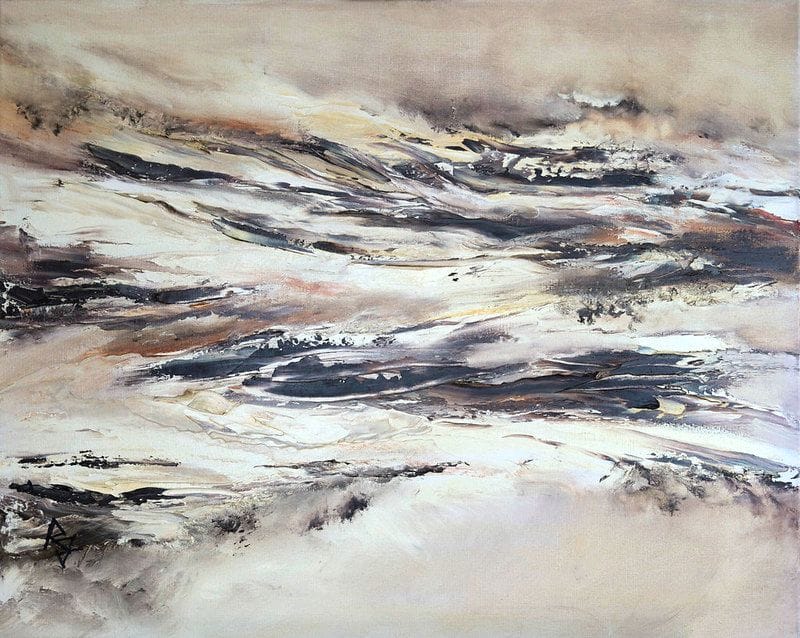
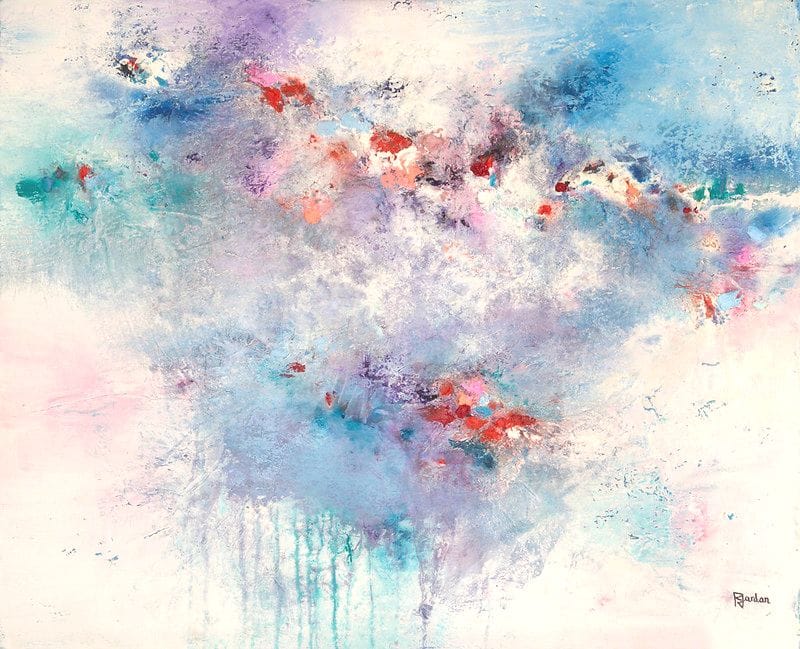
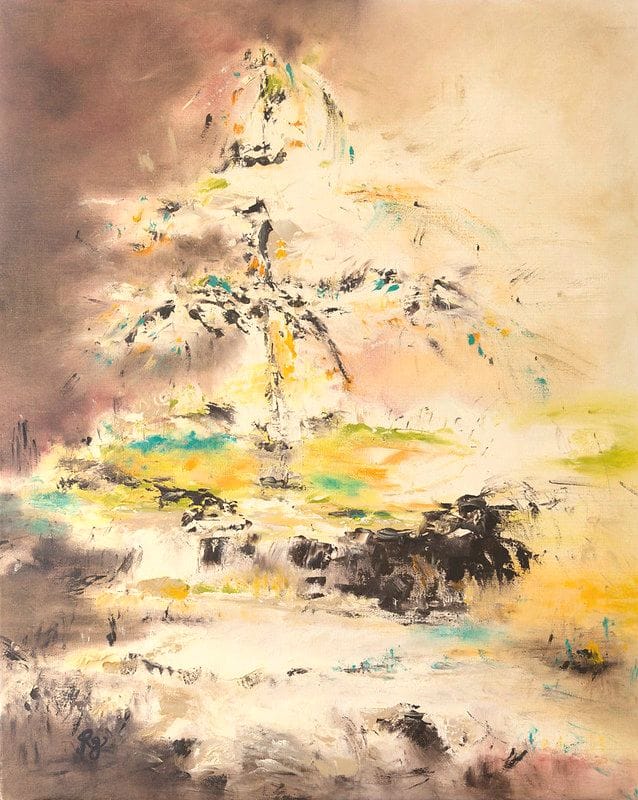
9 original works in this collection.
Luminous canvases in settled tones, warming a light interior without ever weighing it down.
See all the worksScandinavian decorating rests on one simple idea: let the light in. White or pearl-grey walls, pale wood, natural textiles, few objects. In an interior built that way, a painting should not fight the room. It should give it a warm point, somewhere for the eye to rest.
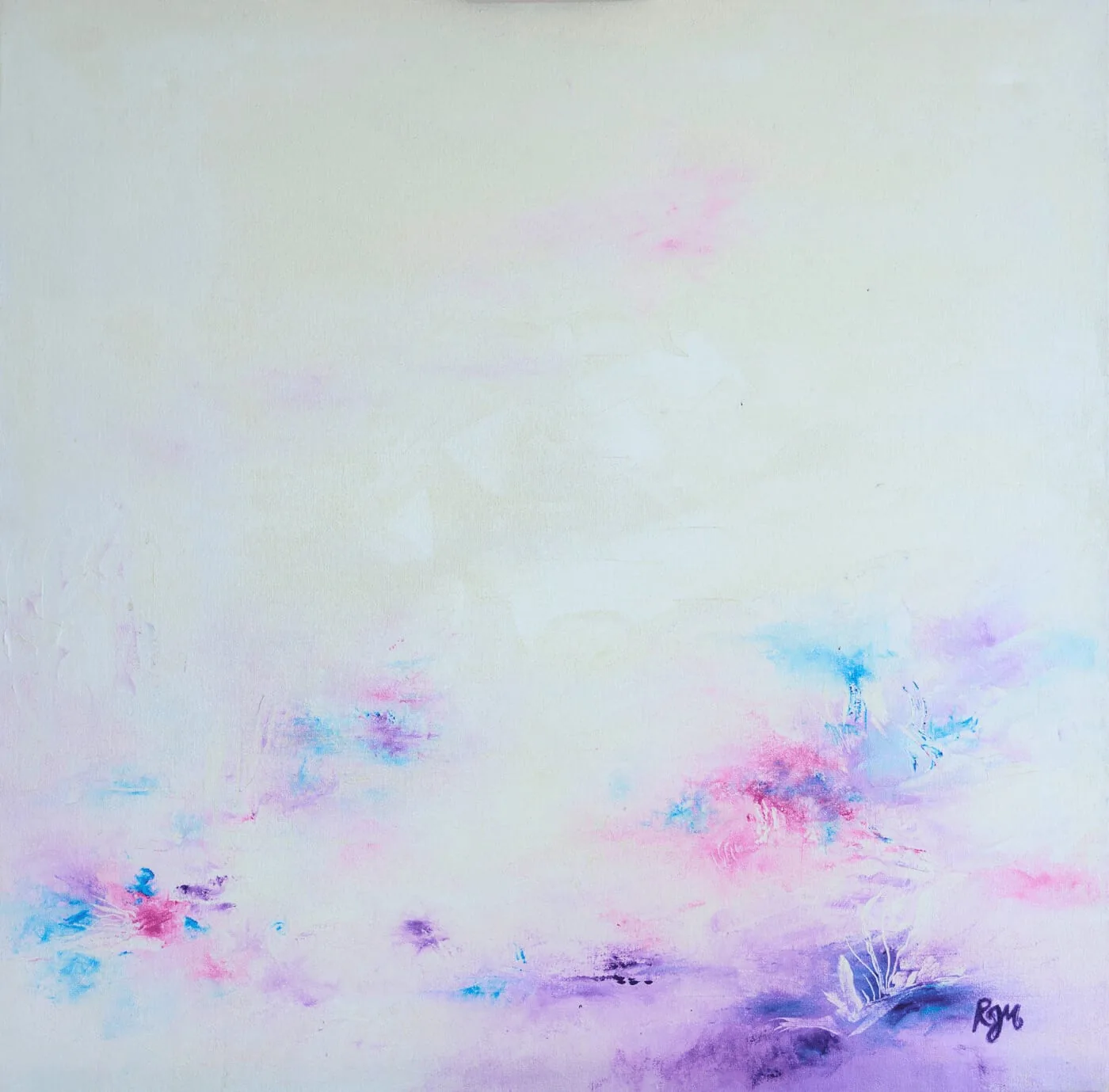
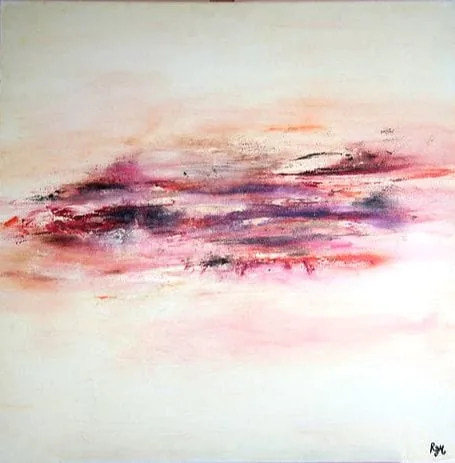
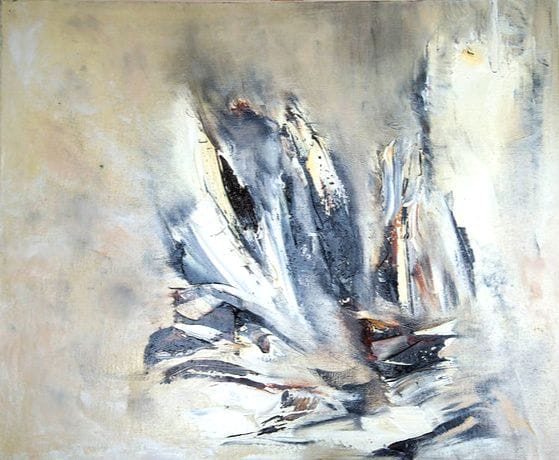
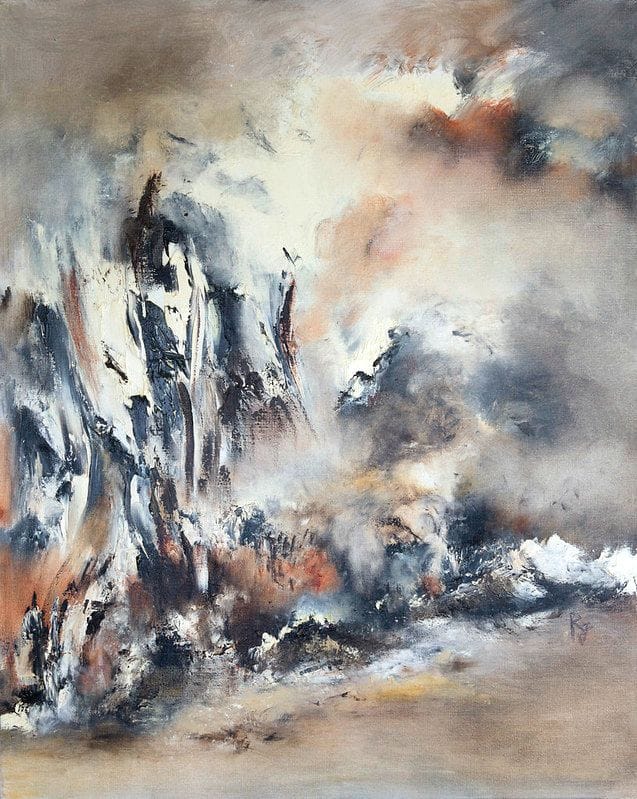
That is exactly what the canvases gathered here do. Light dominants, off-whites, washed blues, water greens, sometimes a powdered pink or a pale yellow that wakes the whole thing up. The gestures of Régine Gardan are more restrained here than elsewhere in her work: fewer bursts, more settled material, soft transitions between colours.
In a Scandinavian interior, the colour of the painting becomes the accent of the room, often the only one. So the choice matters more than it would elsewhere.
The blues are the easiest to live with: they sit well against pale wood and calm a very white room without chilling it. The greens do the same work while bringing something more botanical, ideal in a room that holds few plants. If your living room lacks warmth, a soft pink or yellow is enough to warm an entire wall without breaking the overall harmony.
If you hesitate, our article on the psychology of colour explains what each shade actually triggers, beyond personal taste.
Scandinavian style does not tolerate clutter. Two approaches work well.
The first: a single canvas, large enough to hold the wall. Above a sofa, aim for around two thirds of the width of the seat. Our large formats are made for that. The second: several small formats in a row, five to eight centimetres apart, creating rhythm without crowding. Avoid mixing the two, which breaks the clarity this style is after.
To see the result before deciding, our hanging simulator places the work to scale on your wall.
The living room remains the obvious place, and our living room paintings cover the right formats. But Scandinavian style suits the bedroom particularly well, where the softness of the tones accompanies sleep: see the bedroom selection.
Hang the centre of the work at eye level, around one metre sixty from the floor. Our guide on how to hang a painting details the measurements according to your ceiling height.
The first is a format that is too small. It is by far the most common: a forty-centimetre canvas lost in the middle of a large white wall does not create a landmark, it creates an even more visible emptiness. When in doubt, go larger than you first imagined.
The second is piling up cool tones. White on the wall, grey on the floor, blue in the painting: the whole thing turns clinical. You need at least one warm element in the field of view, whether that is the wood of a piece of furniture, a textile, or the canvas itself.
The third is hanging too high. We almost always hang too high, out of reflex. The centre of the work should fall at the eye level of a standing person, not in the middle of the free space between the furniture and the ceiling.
No, and that is good news. The canvases are painted on a wooden stretcher, with the edges painted too: they hang as they are, without frame or glass. It also sits well with the spirit of the style, which prefers the bare object to the dressed one.
A pale wood frame remains possible if your interior already has several, for harmony. But it is never necessary, and glass would remove precisely what gives an oil painting its value: the visible relief of the material.
Scandinavian style is heavily reproduced, and most canvases sold under that label are digital prints run off in their thousands. Here, every work is an oil painting on cotton canvas, laid down by hand in a studio in Isère, signed, delivered with its certificate of authenticity.
That changes what you see. The material keeps the relief of the knife and the brush, and morning light does not catch it the way evening light does. That is what we describe on our page about hand-painted abstract art. The collection has been closed since 2018: every canvas that leaves does not come back.
Original artwork or reproduction: what really changes
| Original artwork (oil on canvas) | Industrial reproduction | |
|---|---|---|
| Texture | Real relief of the pigments, light catches the surface differently through the day | Flat surface, identical look whatever the light |
| Uniqueness | One of a kind: a single one in the world, yours | Mass-produced, thousands of identical copies |
| Authenticity | Signed by the artist, certificate of authenticity included | No original signature, no certificate |
| Over time | Oil paint lasts for generations and can be passed on | Wears out and gets replaced like a decor item |
| What you own | The real work of an artist, with its story | A licensed printed image |
Start from emptiness rather than fullness: light walls, pale wood, natural textiles, and few objects. Keep one strong point of colour per room and let it breathe. An abstract canvas often carries the whole space on its own, provided you leave clear wall around it and hang its centre at eye level.
It is art built on restraint and light: pale dominants, off-whites, washed blues and water greens, with soft transitions rather than sharp bursts. The work is meant to give the room a warm point without competing with it, which is why abstraction in light tones suits the style better than busy figurative imagery.
White and pearl grey on the walls, pale wood, and one accent colour per room. Blues sit most easily against light wood and calm a very white space; greens bring something botanical; soft pinks and yellows add the warmth that a cool palette otherwise lacks. Saturation stays moderate throughout.
The two terms cover the same family, though Nordic sometimes includes Finland and Iceland while Scandinavian refers strictly to Denmark, Norway and Sweden. In decorating, the codes are identical. Some use Nordic for a slightly rawer, darker register and Scandinavian for a softer, lighter one.
Each painting is hand-painted, signed by the artist and delivered with its certificate of authenticity.
Careful, free delivery across the European Union and Switzerland, with a tracking number.
Pay securely by bank card, through the Stripe platform.
A question about an artwork or an order? We're happy to help.