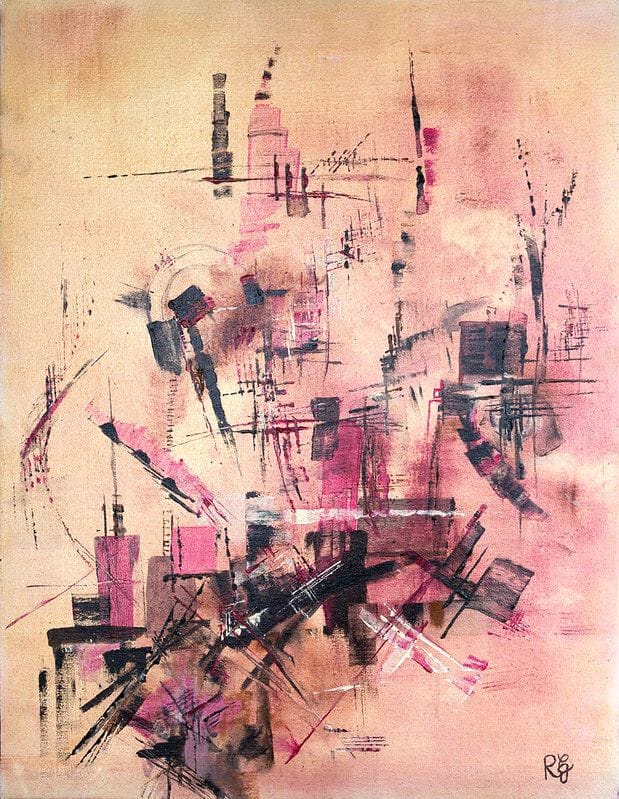
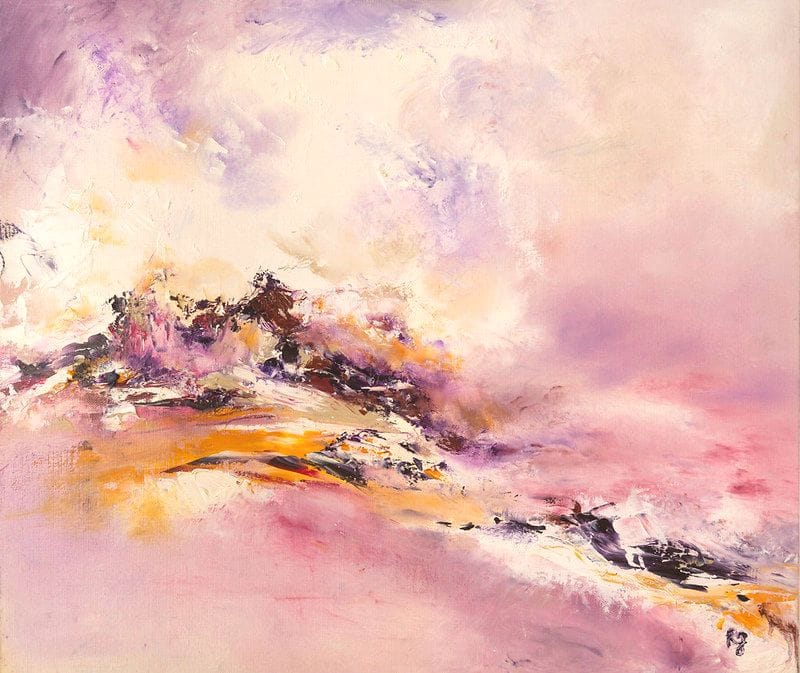
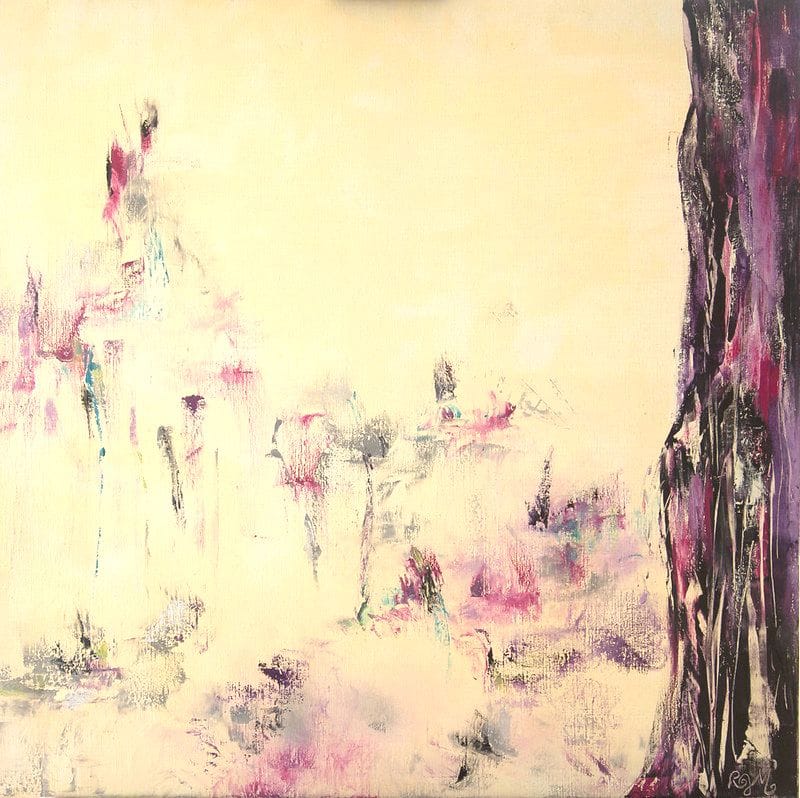
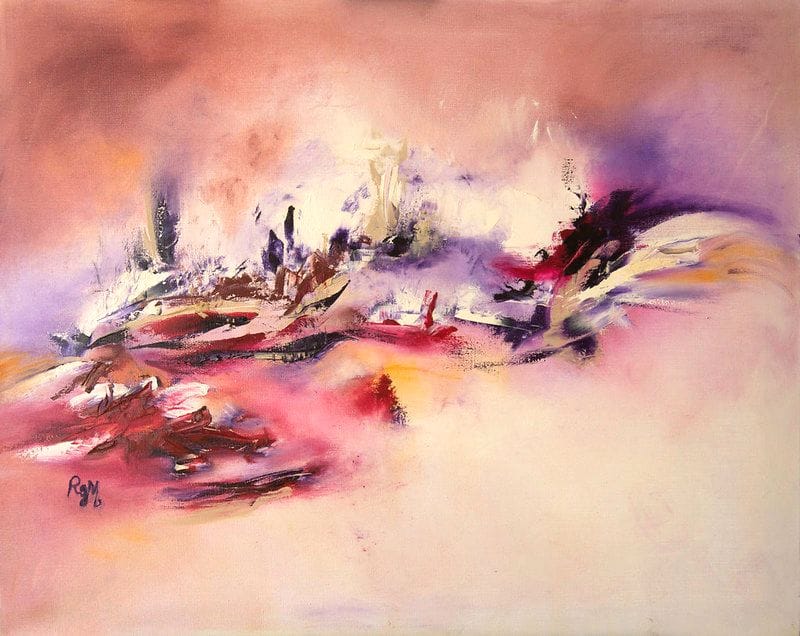
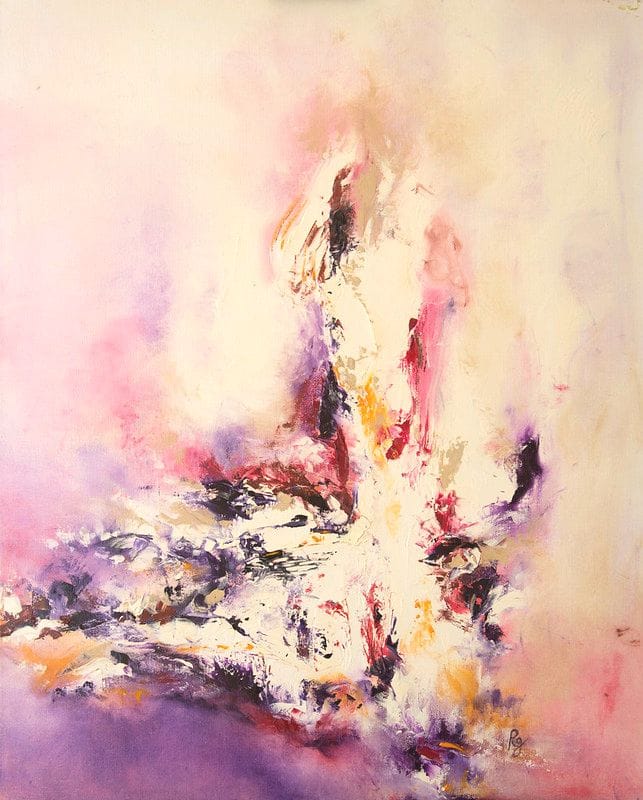
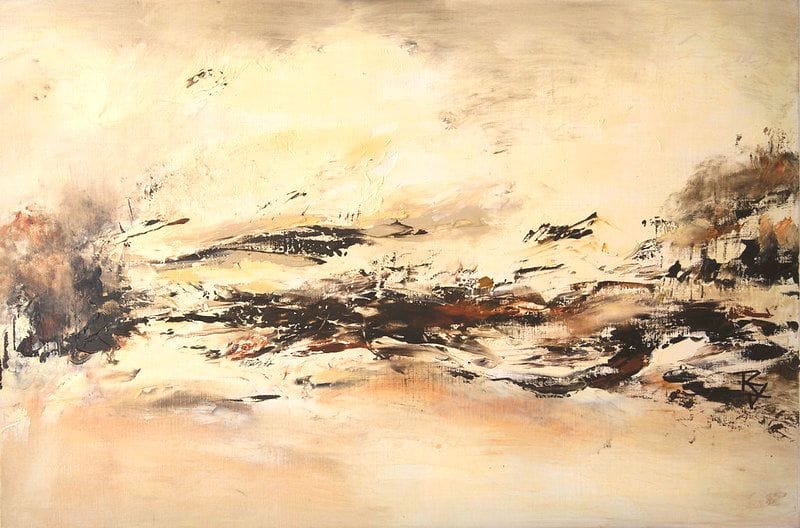
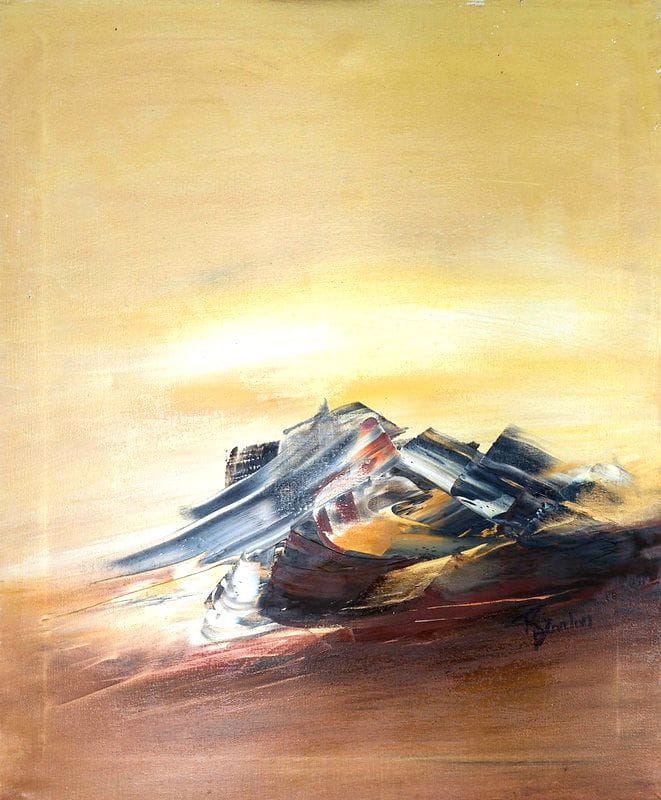
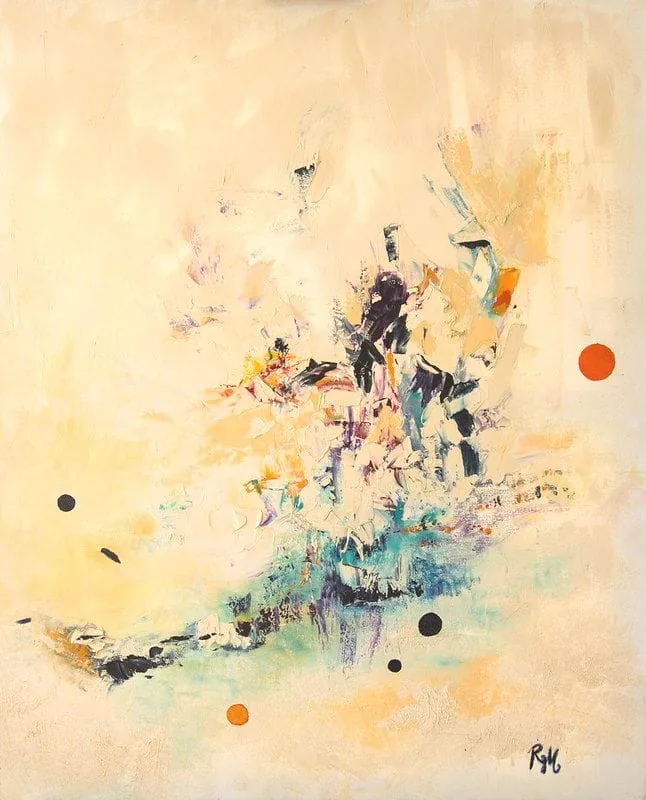
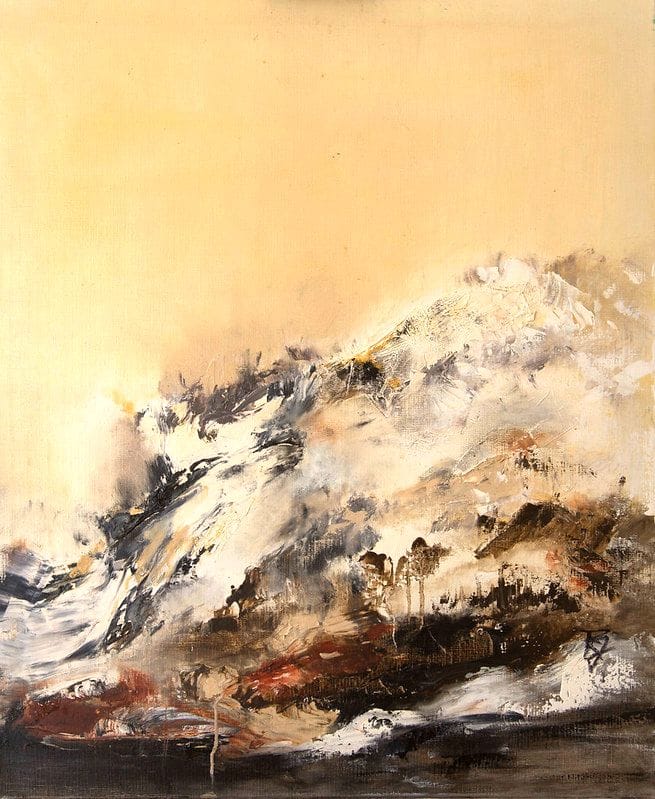
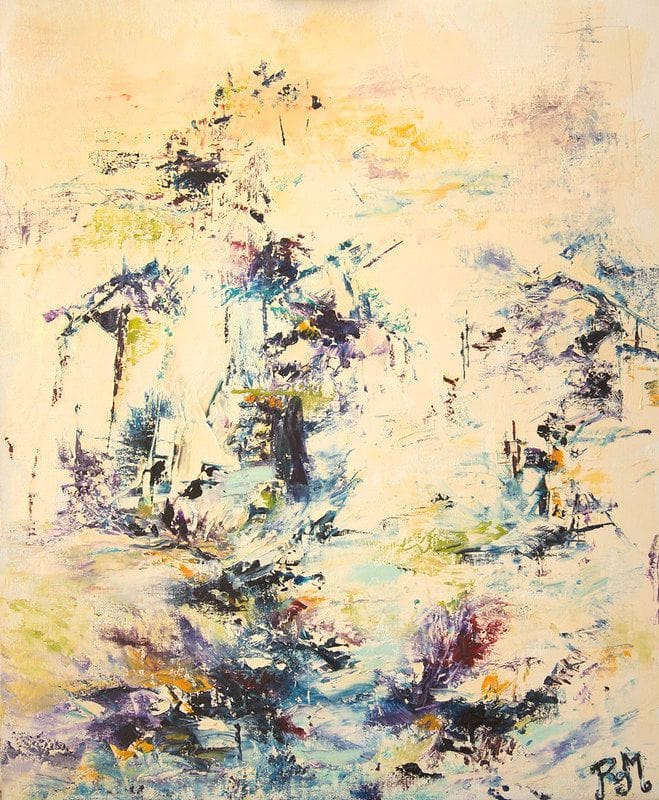
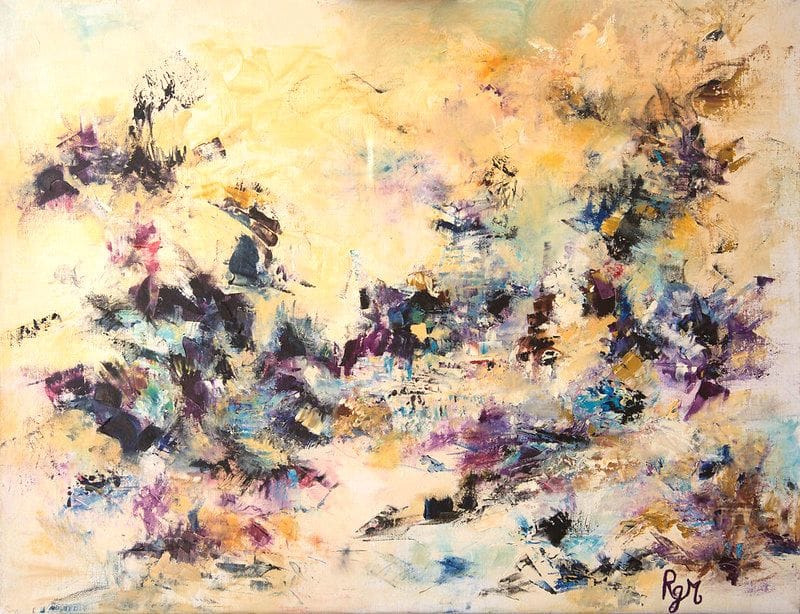
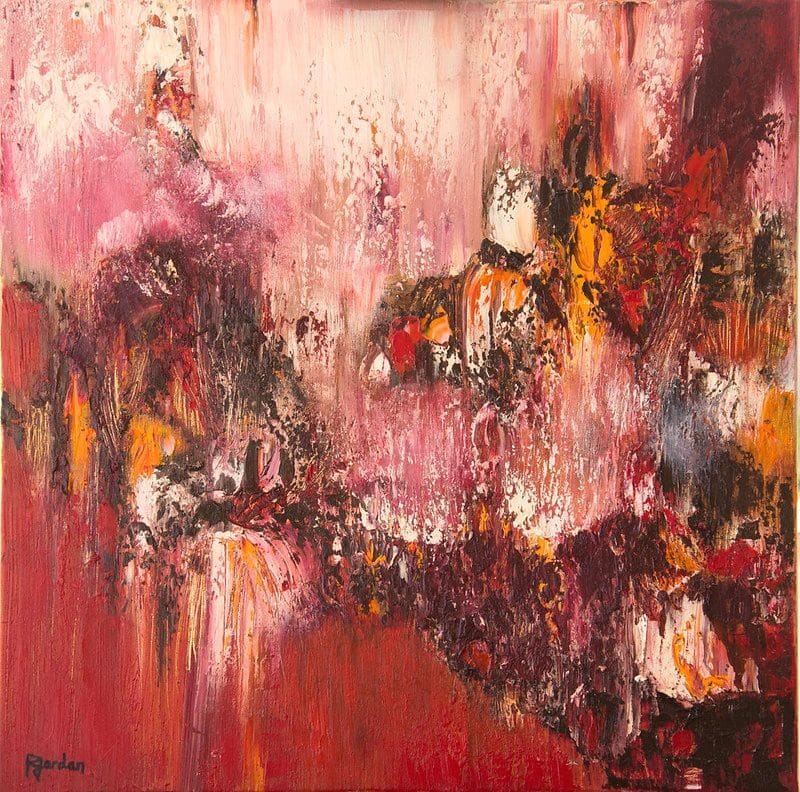
12 original works in this collection.
Warm, generous canvases in terracotta and ochre, for interiors that like to mix materials and origins.
See all the worksBohemian decorating follows no strict rule. It assembles: a Berber rug, a rattan chair, plants, textiles brought back from elsewhere, objects that do not share a provenance and cohabit anyway. It is a style of happy accumulation, the opposite of minimalism.
In an interior like that, a painting has to bring warmth and hold its own against the rest. A timid canvas would be swallowed by the patterns in the rug.
The works gathered here share warm, saturated dominants: terracotta, ochre, mustard, rust, earth red. These are the shades that sit naturally with rattan, raw wood, copper and the plant fibres of bohemian style.
In the work of Régine Gardan, this register matches her canvases richest in material, often worked with a palette knife, where colours layer without fully mixing. Our red canvases and oranges extend this palette if you are after a more precise shade.
Bohemian style allows a lot, but not everything. Three markers help hold it together.
First, a chromatic dominant. Even in accumulation, one colour should return three or four times in the room: in the painting, in a cushion, in an object. That thread is what stops the whole thing scattering.
Then, emptiness somewhere. A bare wall, a lightly filled shelf, a clear corner of floor. Without that breathing space, the style tips into clutter.
Finally, a hierarchy. A room cannot have five focal points. If the painting is the focal point, everything else should sit a notch below, in intensity and in pattern.
This is one of the few styles where a gallery wall genuinely works. Several works of different sizes, hung with irregular gaps, produce the effect you want: something built up over time rather than composed in one go.
The simplest method is to lay all the canvases on the floor first, move them around until the balance feels right, then transfer that arrangement to the wall. Mix formats: our small formats combine well with one larger piece acting as an anchor. The guide on hanging a painting details the gaps to keep between frames.
The living room is the natural home of this style, and our living room canvases give the right formats. The dining room works very well too: warm tones stimulate conviviality there, something colour psychology observes fairly consistently around reds and oranges.
For a bedroom, lean towards the least saturated canvases in this selection: bohemian works there, but in a softened version.
Both styles love abundance, but not in the same way. Bohemian stays within a natural, earthy palette and favours plant materials. Maximalism owns clean bright colours, strong contrasts and unlikely pairings.
If you are torn between the two, look at your floor and your textiles: natural materials and muted tones call for bohemian, bright colours and graphic patterns call for maximalism.
A bohemian canvas does not stand alone: it is the dialogue with surrounding materials that produces the style. Four families work particularly well.
Plant fibres first, rattan, seagrass, wicker, jute. They share the same chromatic family as the ochres and terracottas of these canvases, and their irregularity echoes that of the paint.
Raw wood next, unvarnished if possible. Pale wood softens a very saturated canvas; dark wood, by contrast, makes it stand out. Both work, the question is whether you want to calm or to underline.
Patterned textiles, finally, with one rule: a single strong pattern per room. If the rug is busy, the cushions should be plain. The painting itself counts as a pattern.
Copper and brass complete the set in small touches. They pick up the ochres of the canvas and bring the only shine this style readily accepts.
This is a deep consistency with the style: bohemian values the handmade object, what someone made rather than what was mass-produced.
Every canvas shown here is painted in oil on cotton canvas, by hand, in a studio in Isère, signed and delivered with its certificate of authenticity. None exists twice. Our hand-painted abstract art page explains what that changes in practice, to the eye and over time.
Original artwork or reproduction: what really changes
| Original artwork (oil on canvas) | Industrial reproduction | |
|---|---|---|
| Texture | Real relief of the pigments, light catches the surface differently through the day | Flat surface, identical look whatever the light |
| Uniqueness | One of a kind: a single one in the world, yours | Mass-produced, thousands of identical copies |
| Authenticity | Signed by the artist, certificate of authenticity included | No original signature, no certificate |
| Over time | Oil paint lasts for generations and can be passed on | Wears out and gets replaced like a decor item |
| What you own | The real work of an artist, with its story | A licensed printed image |
Three. Having no dominant colour, so nothing ties the room together: one shade should return three or four times. Leaving no empty space, which tips the style into clutter. And giving the room several focal points at once, when a single strong element should lead and the rest sit a notch below.
A gallery wall works genuinely well here. Lay all the canvases on the floor first, move them until the balance feels right, then transfer the arrangement to the wall. Mix sizes, with one larger piece as an anchor, and keep the same gap between edges, around six centimetres, even as sizes vary.
None in practice: boho is simply the shortened form, and it is the one used most in decorating. Both refer back to a nineteenth-century artistic and nomadic way of living, from which the style keeps the idea of freedom and of mixing origins without seeking uniformity.
A canvas hung above furniture should be around two thirds of its width. Above a sofa, that generally means going larger than you first imagined: an undersized canvas on a wide wall does not create a focal point, it makes the emptiness around it more visible.
Each painting is hand-painted, signed by the artist and delivered with its certificate of authenticity.
Careful, free delivery across the European Union and Switzerland, with a tracking number.
Pay securely by bank card, through the Stripe platform.
A question about an artwork or an order? We're happy to help.