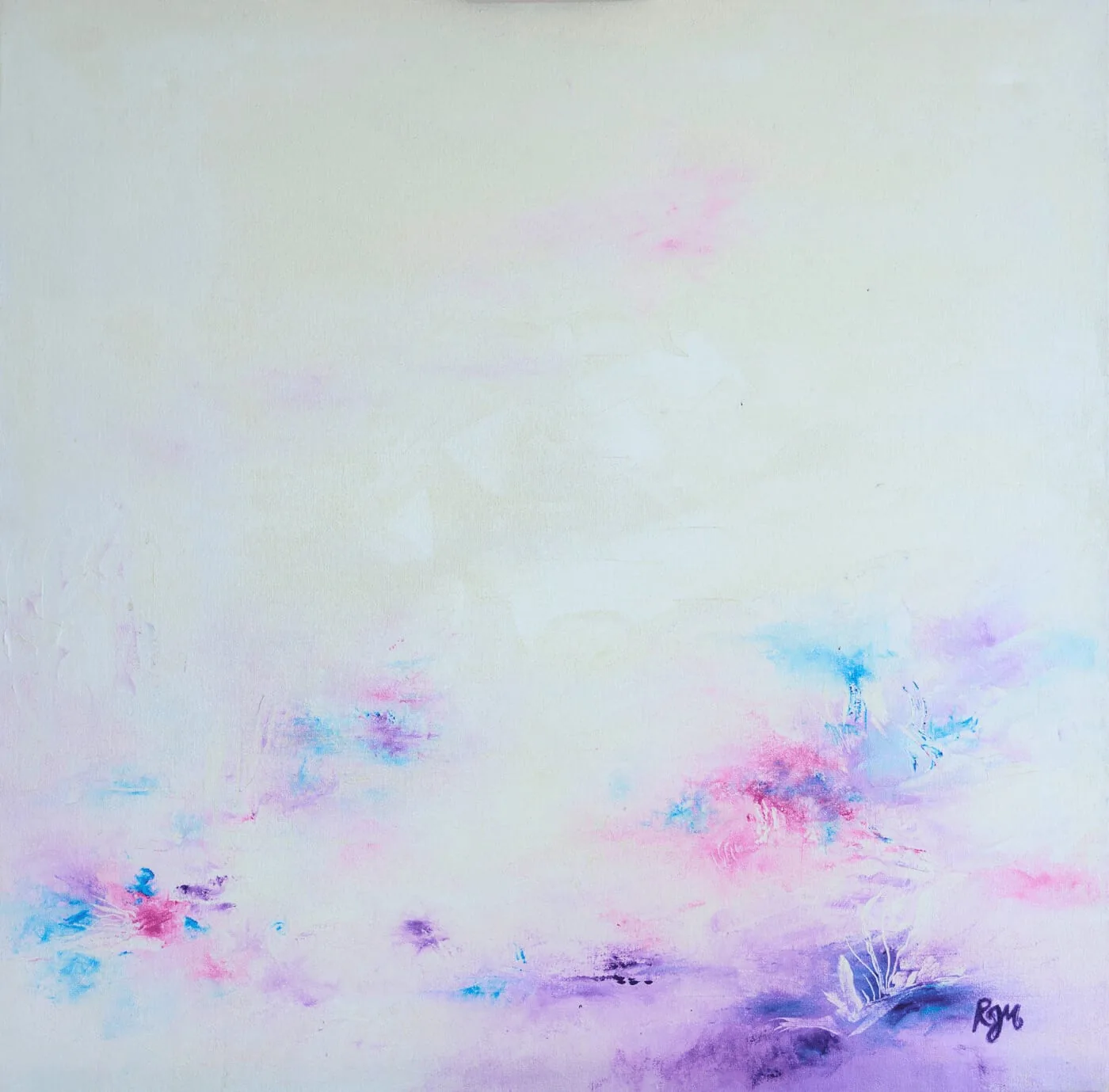
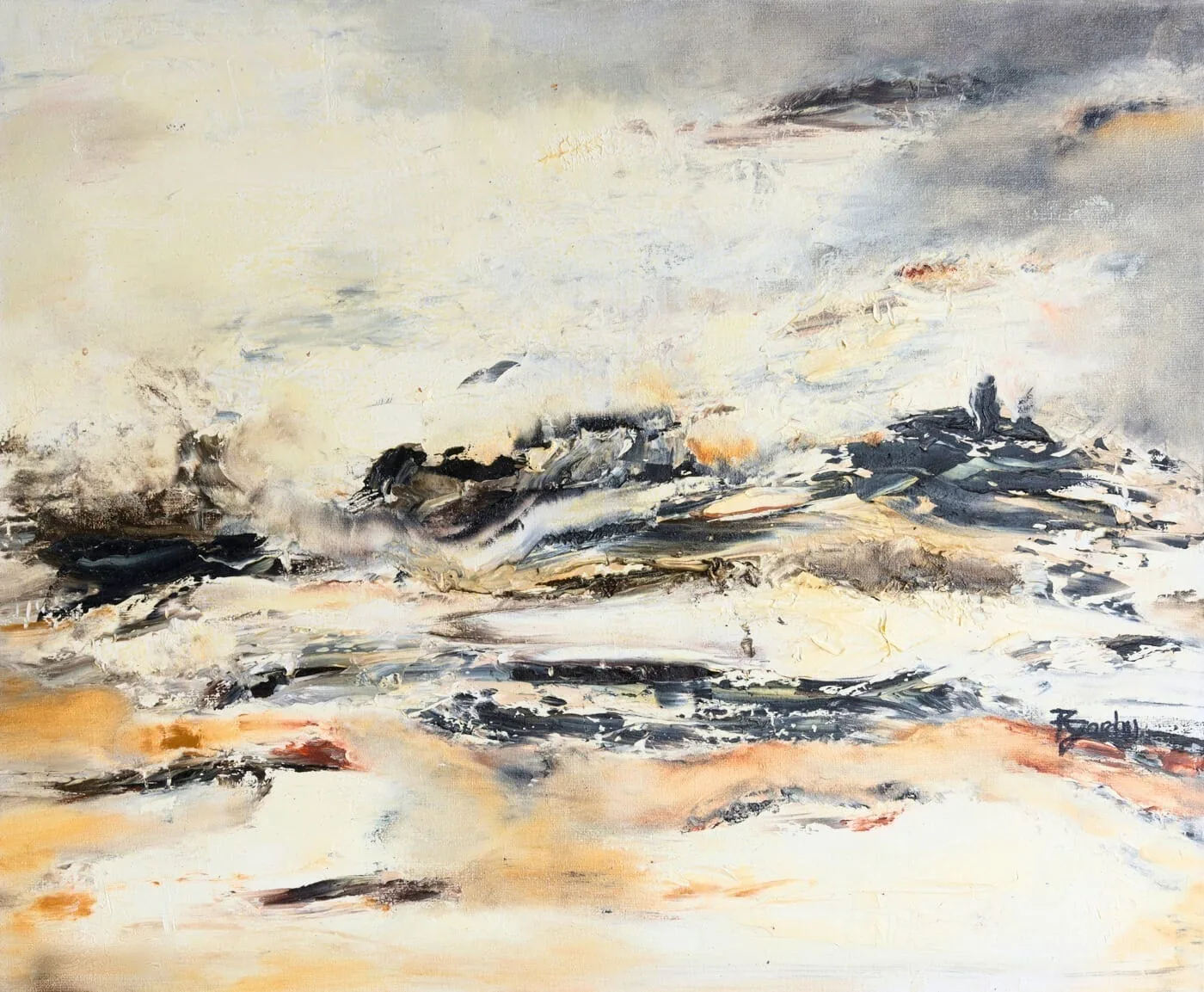
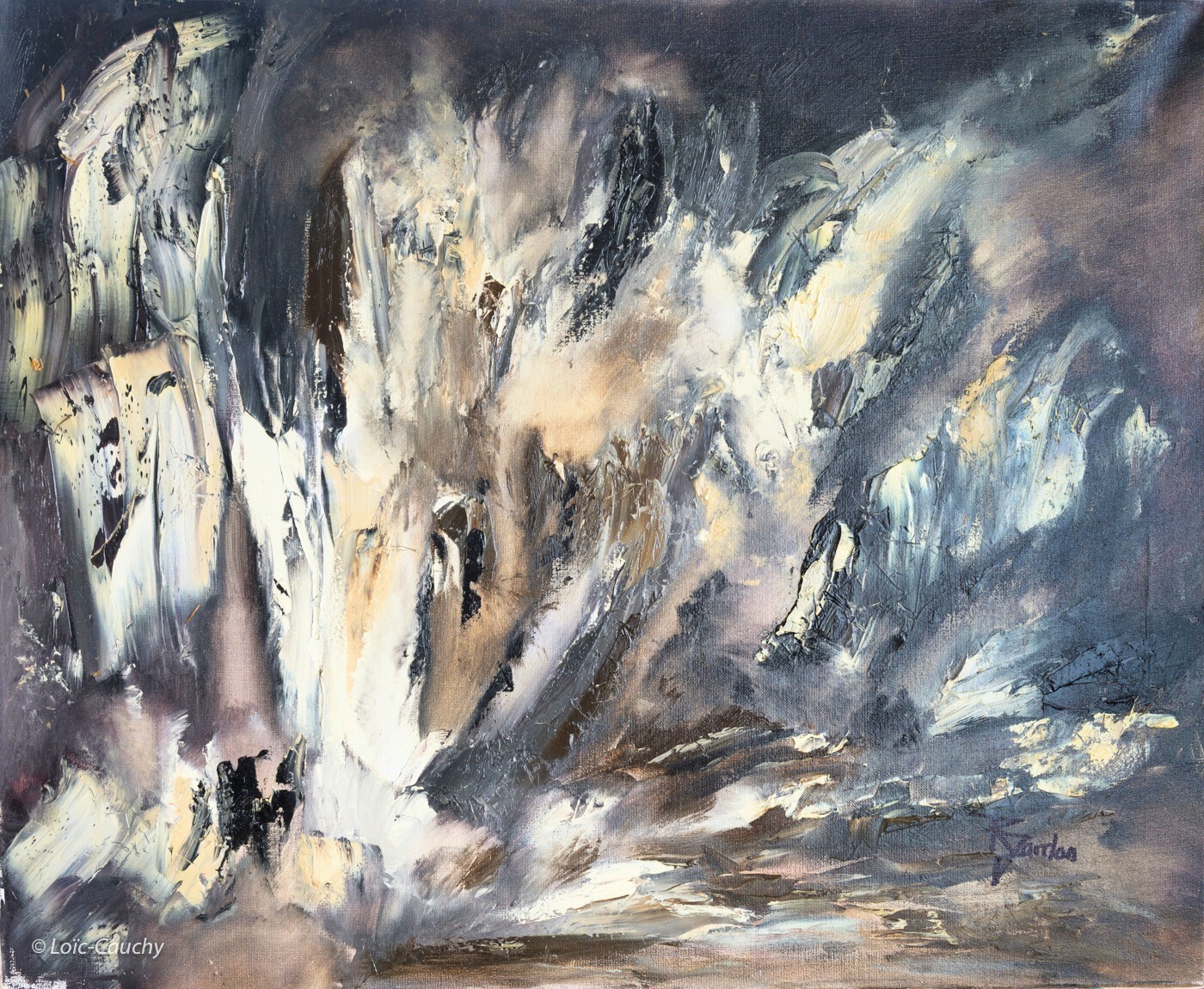
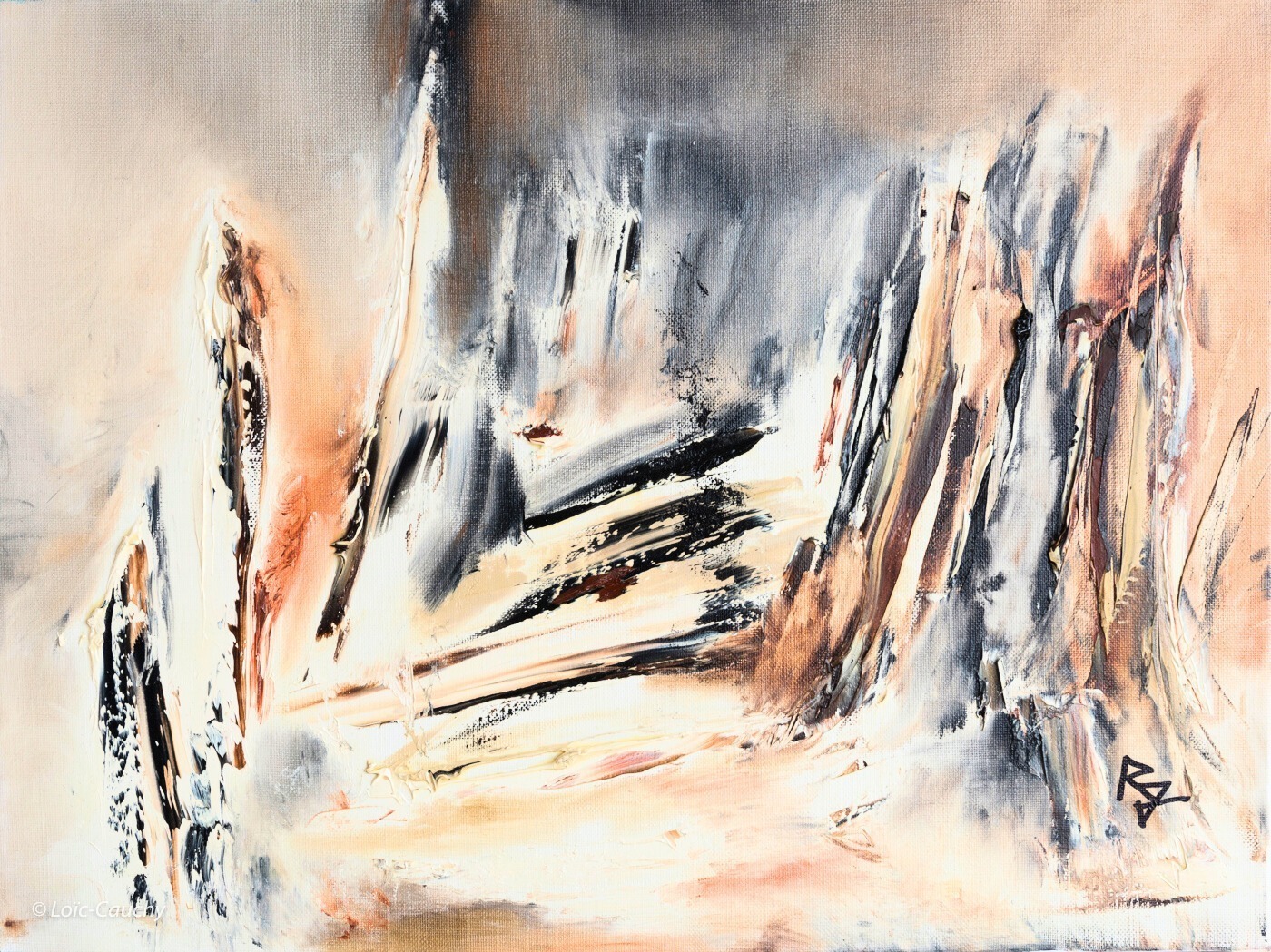
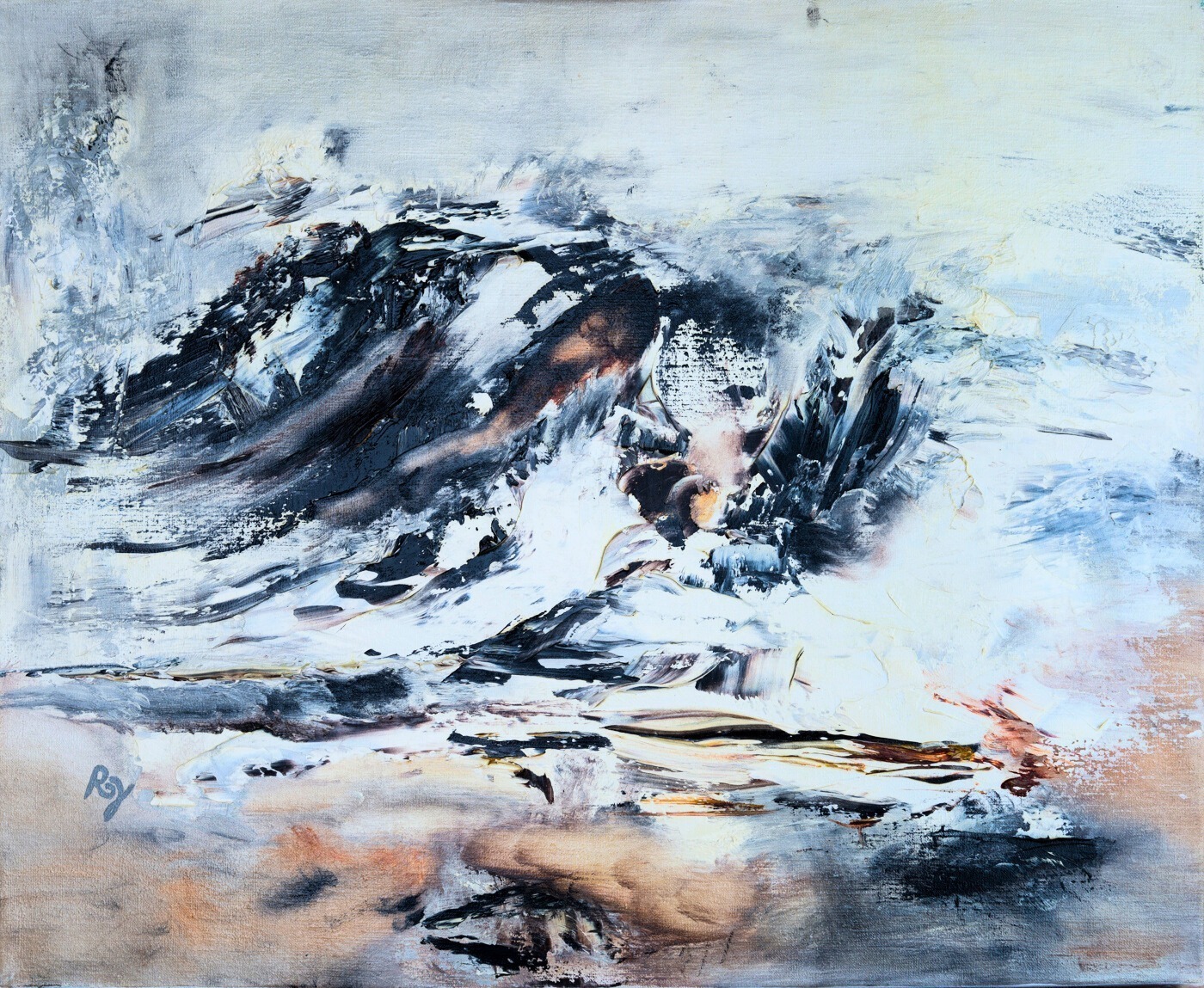
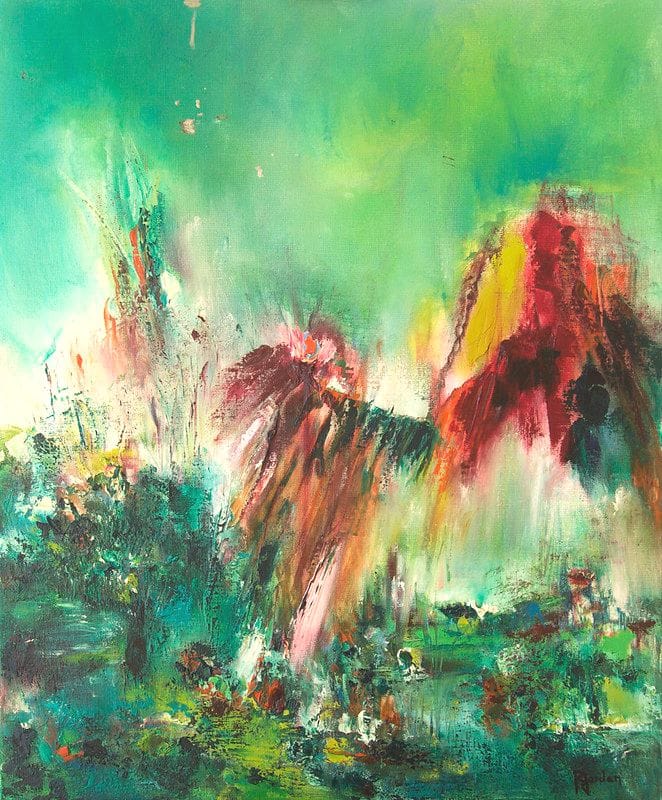
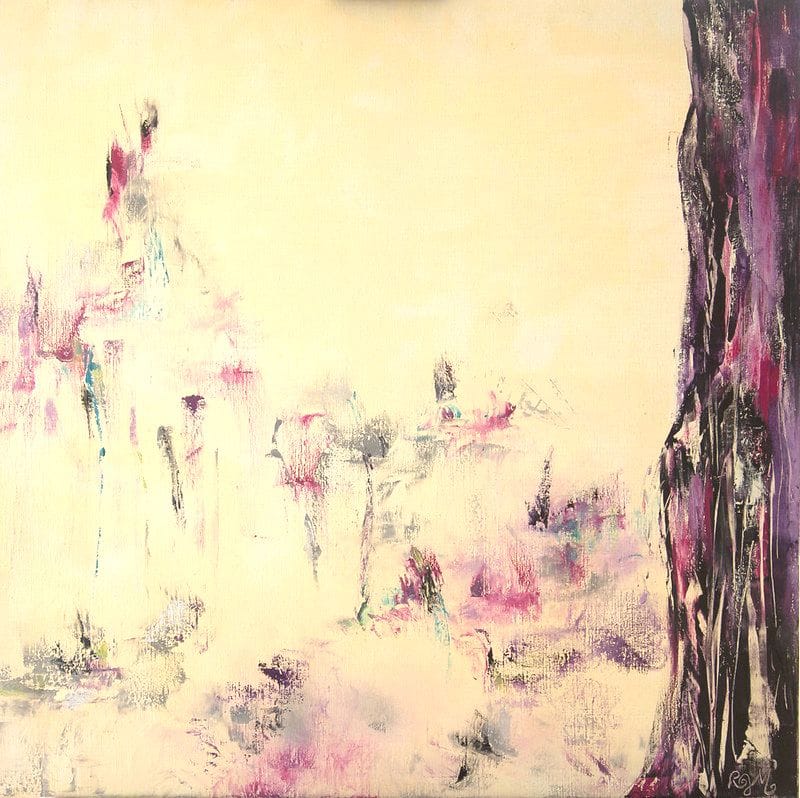
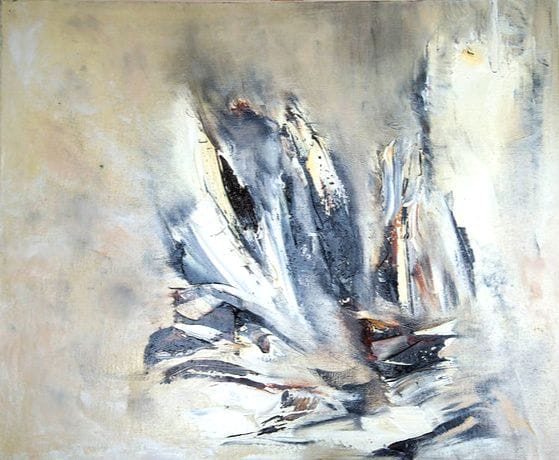
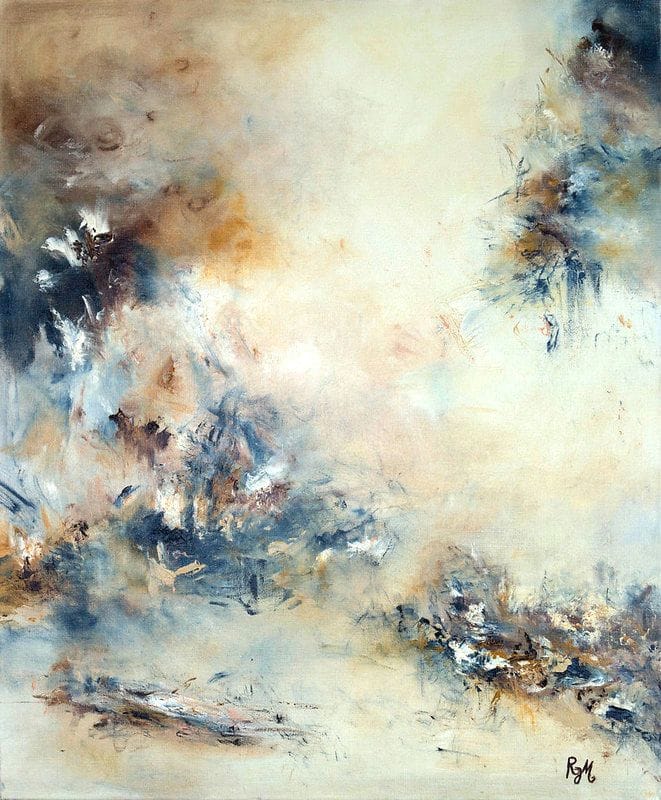
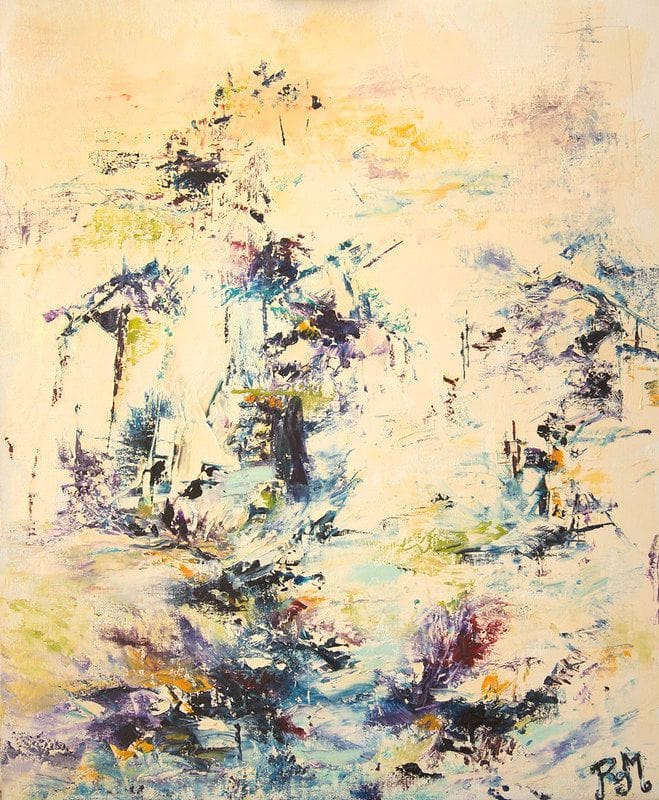
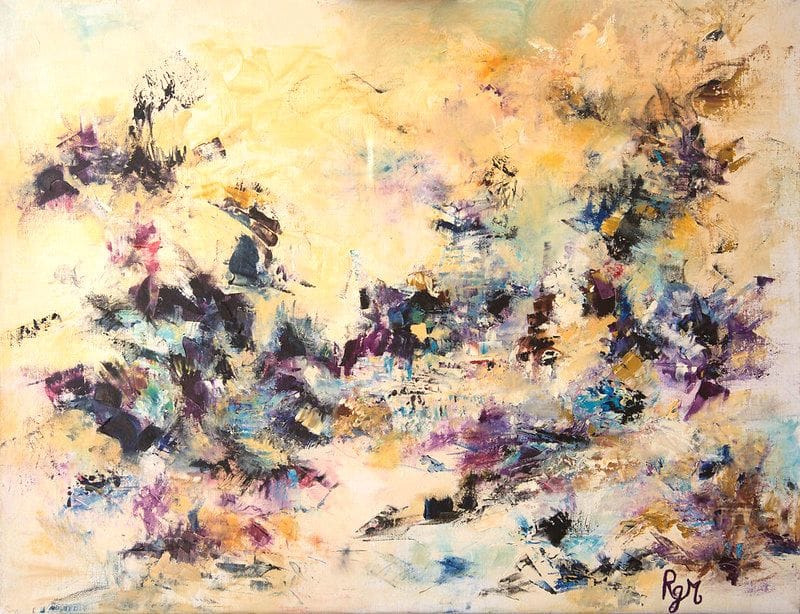
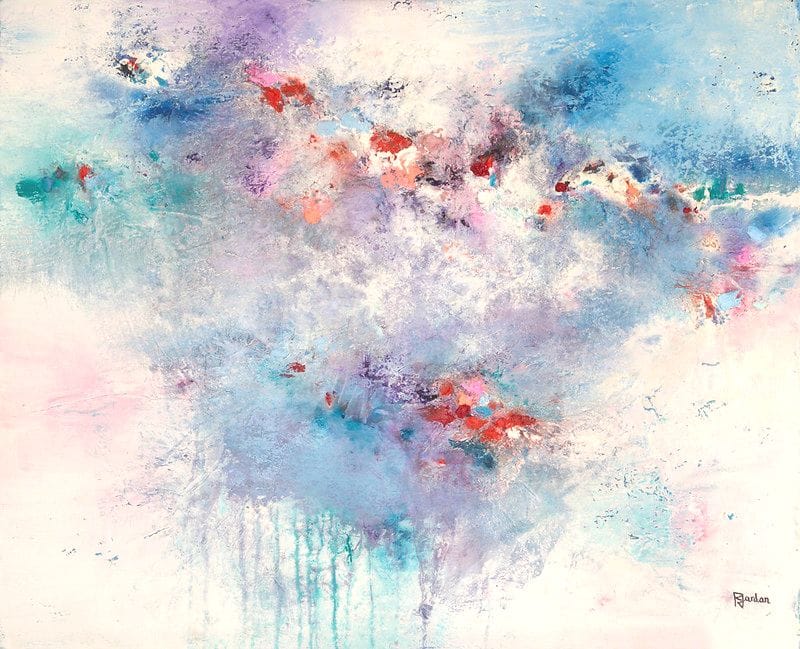
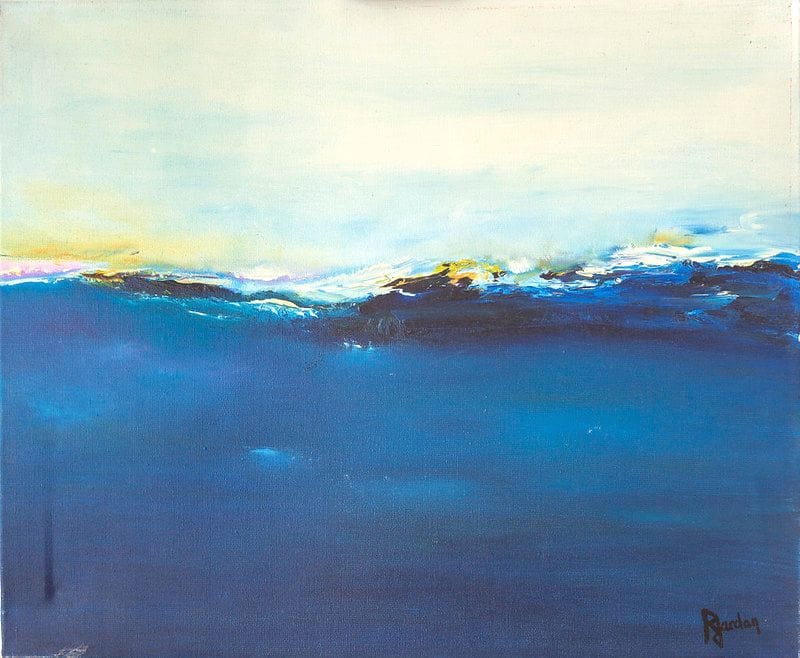
16 original works in this collection.
Small formats in blues and greens, calming, with what you should know before hanging an oil on canvas in a damp room.
See all the worksWhat size of painting for your wall?
Hang it with the centre about 1.60 m from the floor, leaving 15 to 25 cm above the furniture.
Bare wall (no furniture)? An 80 to 100 cm format structures the space on its own.
It is the first room of the day. You spend between twenty and forty minutes there daily, often with nothing to look at but tiles.
A work genuinely changes something there, because it is a moment when attention is available. And contrary to what is often assumed, it is not incompatible with an oil painting, provided a few rules are respected.
Better to be direct. An oil on cotton canvas copes badly with prolonged damp: the canvas can slacken, and extreme, repeated variations eventually tire the paint layer. That is no reason to rule out the bathroom, but it calls for three checks.
First, ventilation. A bathroom with a working extractor, or a window opened regularly, returns to a normal humidity level within an hour of a shower. In that case, no problem. A windowless bathroom with no extraction, however, is not a good place for an original work.
Then, distance from the shower or bath. Keep a metre and a half at minimum, and avoid any wall that takes direct splashes.
Finally, the wall itself. A poorly insulated external wall is colder, and therefore more prone to condensation. Prefer an internal partition wall.
If those three conditions are met, a canvas lives very well in a bathroom. Our care guide explains how to keep an eye on it and clean it.
The works kept here are seventy centimetres at most. That is no accident: bathrooms offer little free wall, and you always look from close up.
On colour, the selection favours blues and greens, along with light, lightly saturated canvases. For two reasons. The first is aesthetic: these shades naturally extend the world of water and work with the dominant white of sanitaryware. The second is functional: these colours are associated with calm, which suits evening use, and with freshness, which suits the morning.
Our sea and ocean canvases extend this logic if you want a more explicitly marine register.
The wall facing the bath is the best placement when it exists: it is the only spot in the house where you look at a wall for twenty minutes without moving.
The wall above the basin unit works too, provided you keep a good distance from the mirror so as not to create visual competition. Shift the canvas to one side rather than centring it between two mirrors.
The wall behind the door, often forgotten, is an excellent choice in small bathrooms: it is the only completely free stretch of wall, and it is visible from the bath or shower.
Our guide on hanging a painting gives the heights, and the simulator lets you test proportions on a narrow wall.
If the ventilation does not keep up, do not force it. Better to place the work elsewhere than to watch it deteriorate.
Two solutions exist. The first is to choose the adjoining bedroom or the hallway that leads to the bathroom: the work stays on your morning route without taking the steam. The second is to treat the bathroom as seasonal, moving the canvas if you notice significant condensation in winter.
This is a detail you discover too late, once the canvas is up. A bathroom holds at least one mirror, often several, and those surfaces send light back in unpredictable directions.
Two effects to anticipate. The first is direct reflection: if the canvas faces the mirror, you will see it doubled, which can look pleasing but reduces its impact. The second is more of a nuisance: the mirror can bounce the light of a spot straight onto the paint, creating a bright veil that hides the colours from certain angles.
The fix is simple: stand where you usually stand, generally in front of the basin or in the bath, and check where the light comes from before drilling. A matt canvas such as an oil painting reflects little, but its relief catches raking light, which is an asset when the source is well placed and a flaw when it is not.
Every canvas is painted in oil on cotton canvas by Régine Gardan in her studio in Isère, signed and delivered with its certificate of authenticity.
One useful point for this room: as the edges are painted, the canvas hangs without frame or glass. That is exactly what you want here, because glass over a frame in a bathroom traps condensation between the pane and the work, which is far more damaging than the ambient air itself.
Original artwork or reproduction: what really changes
| Original artwork (oil on canvas) | Industrial reproduction | |
|---|---|---|
| Texture | Real relief of the pigments, light catches the surface differently through the day | Flat surface, identical look whatever the light |
| Uniqueness | One of a kind: a single one in the world, yours | Mass-produced, thousands of identical copies |
| Authenticity | Signed by the artist, certificate of authenticity included | No original signature, no certificate |
| Over time | Oil paint lasts for generations and can be passed on | Wears out and gets replaced like a decor item |
| What you own | The real work of an artist, with its story | A licensed printed image |
A small format, seventy centimetres at most, in blues, greens or light tones. These extend the world of water and work with the dominant white of sanitaryware. Choose an unframed canvas: in a bathroom, glass traps condensation between the pane and the work, which is more damaging than ambient air.
An original oil on canvas works, provided three conditions are met: functioning ventilation, at least a metre and a half from the shower or bath, and an internal wall rather than a poorly insulated external one prone to condensation. A windowless bathroom without extraction is not a good place for an original.
Calm, low-saturation work in cool or light tones. The reasoning is both aesthetic and functional: those colours suit the white of sanitaryware, and they are associated with calm in the evening and freshness in the morning, which matches how the room is actually used.
Use the wall behind the door, often forgotten and usually the only completely free stretch in a small bathroom. Shift the work to one side of the mirror rather than centring it between two. And check where the light comes from before drilling, since a mirror can bounce a spot straight onto the paint.
Each painting is hand-painted, signed by the artist and delivered with its certificate of authenticity.
Careful, free delivery across the European Union and Switzerland, with a tracking number.
Pay securely by bank card, through the Stripe platform.
A question about an artwork or an order? We're happy to help.