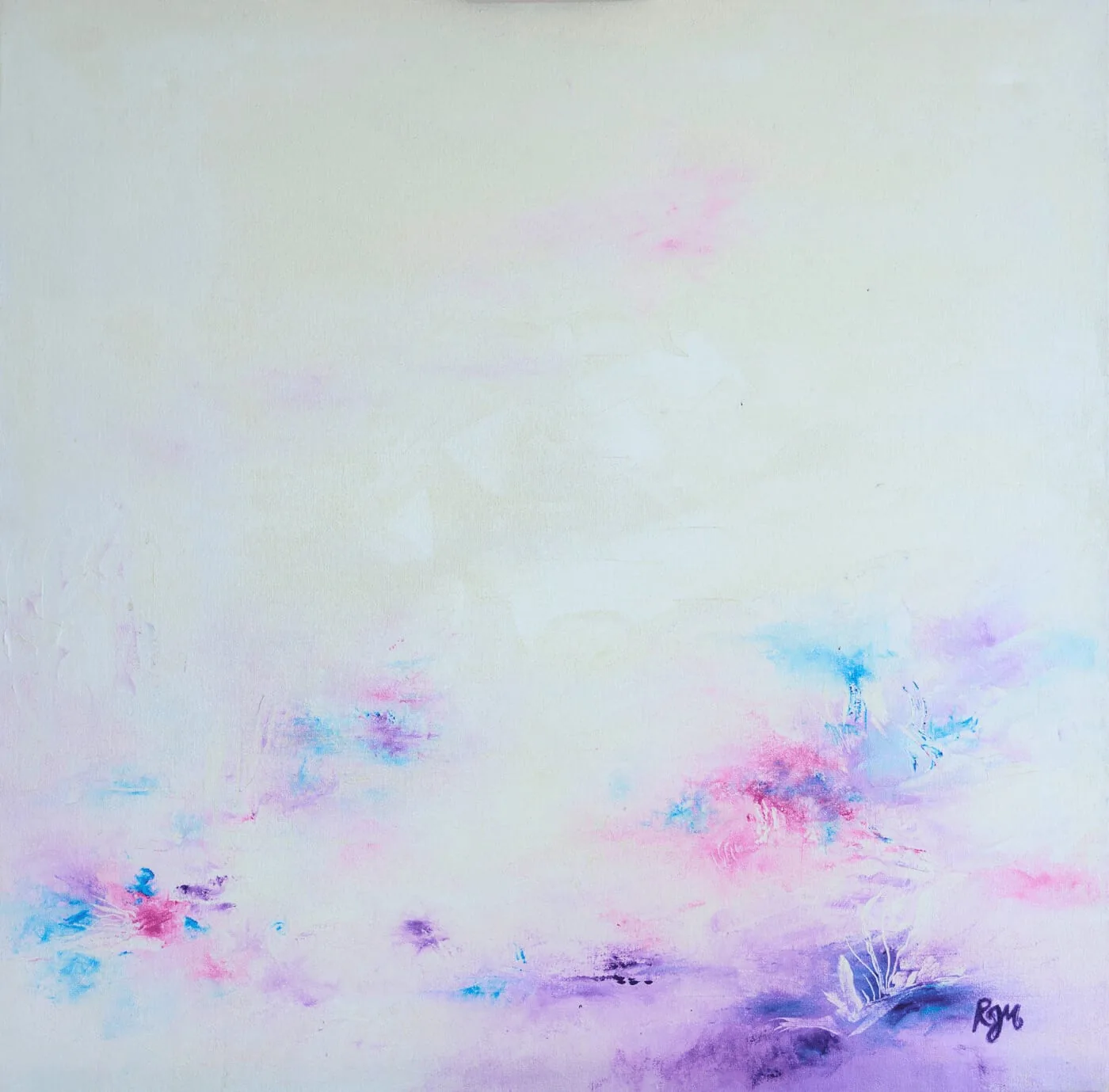
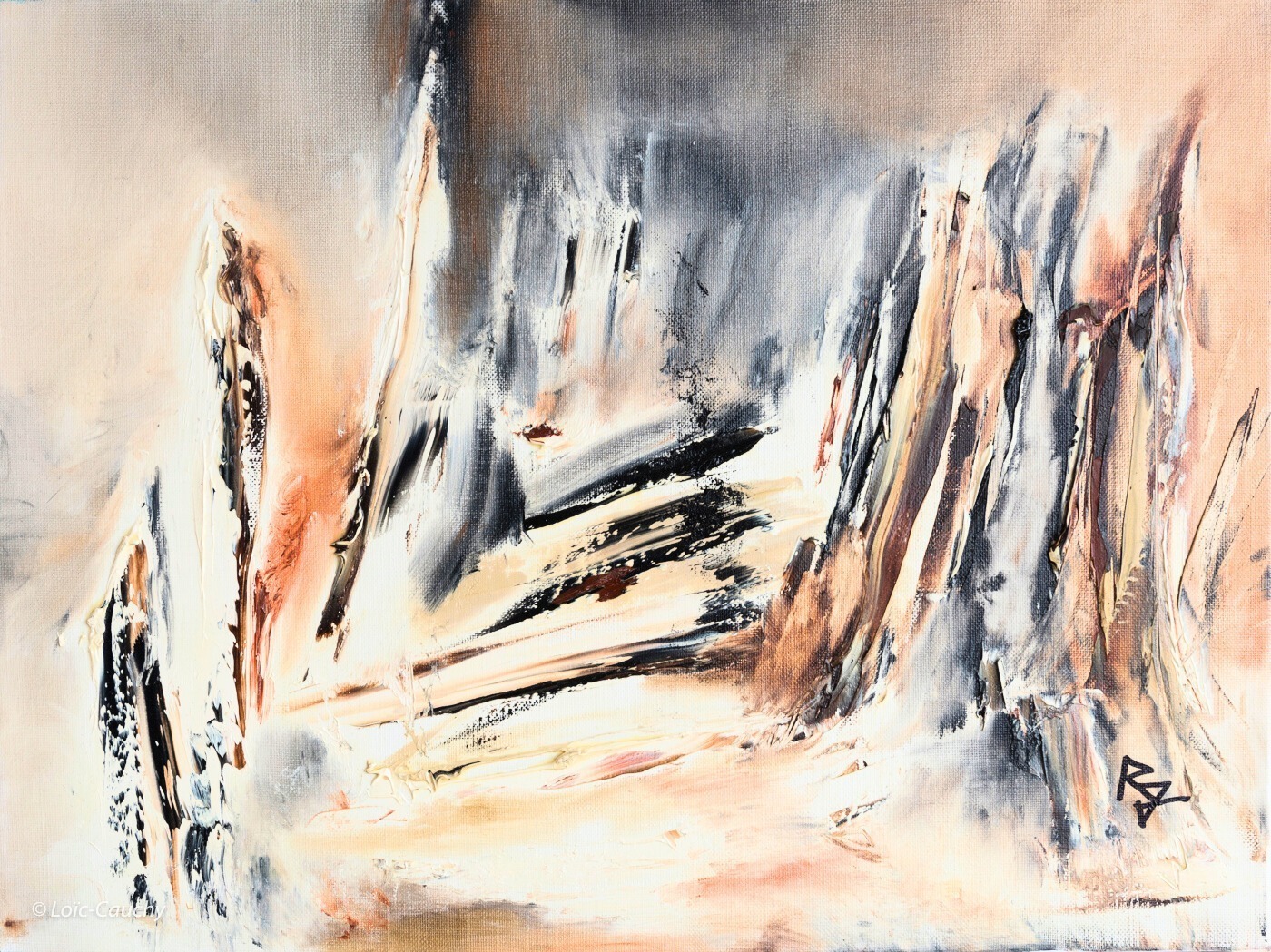
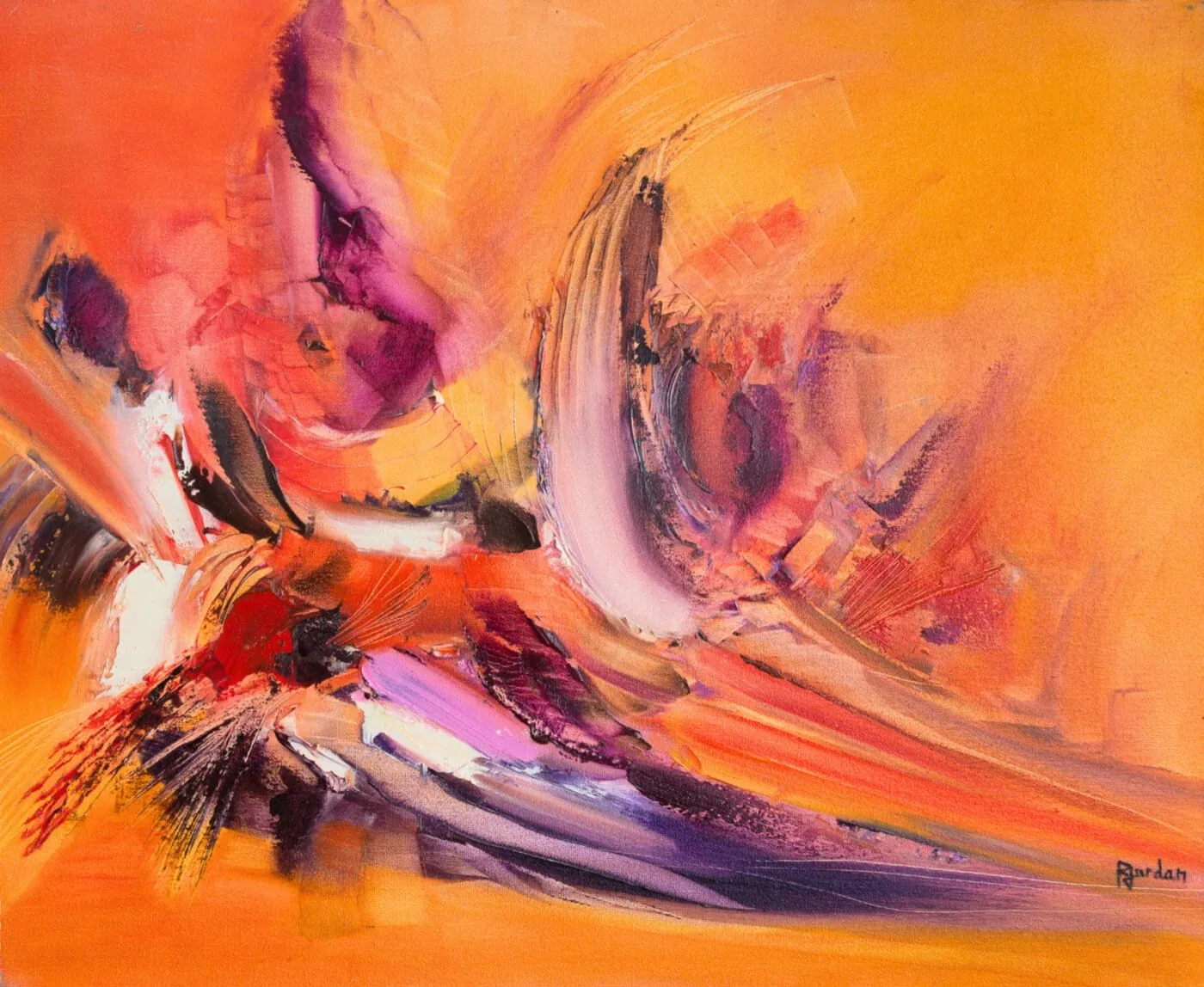
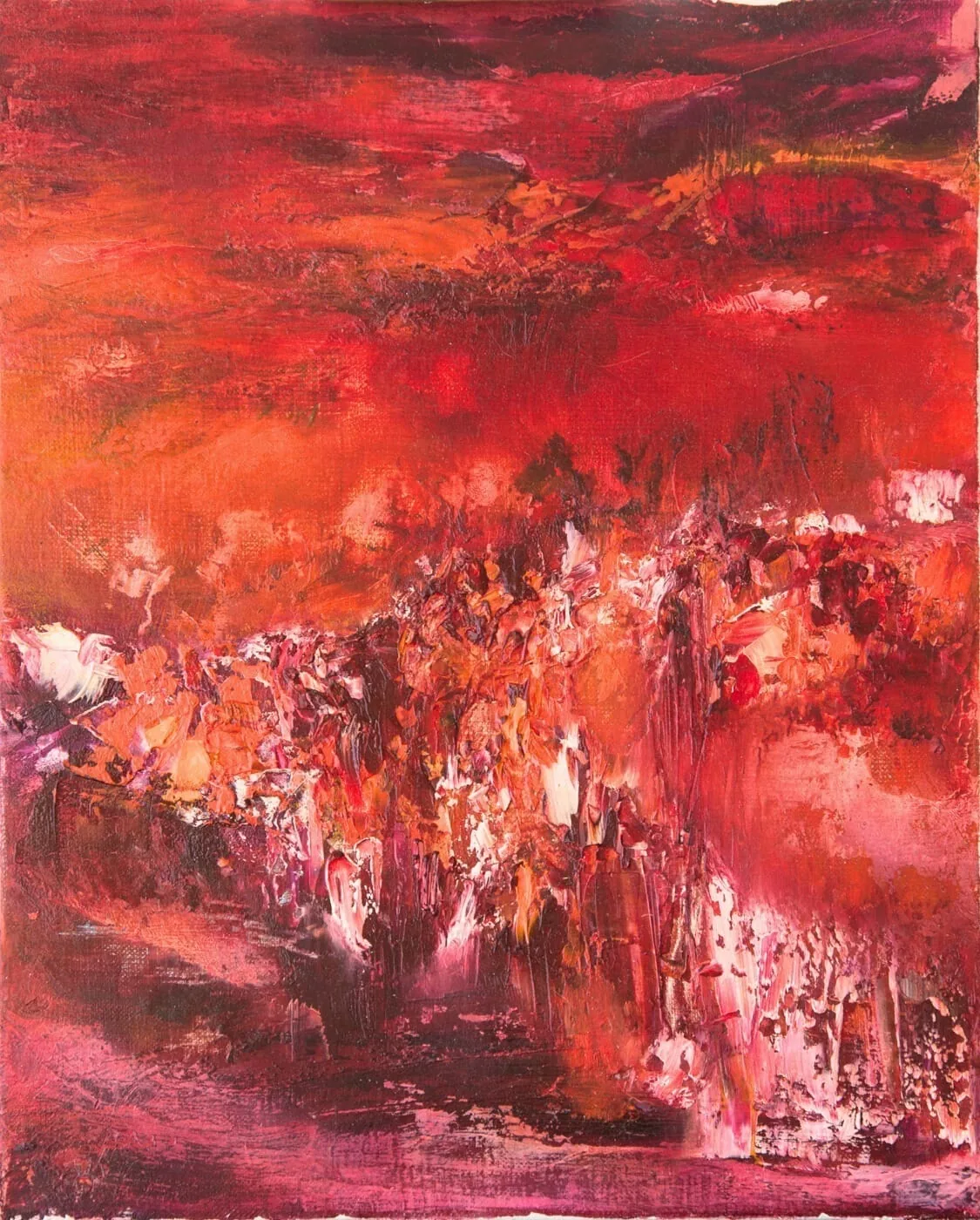
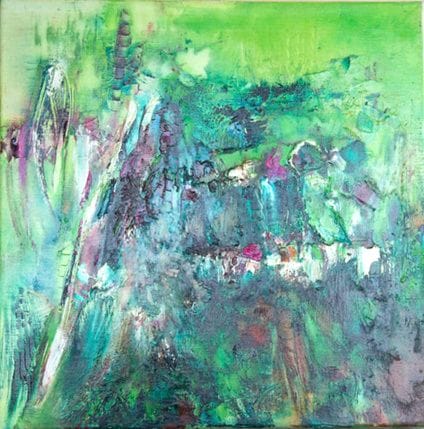
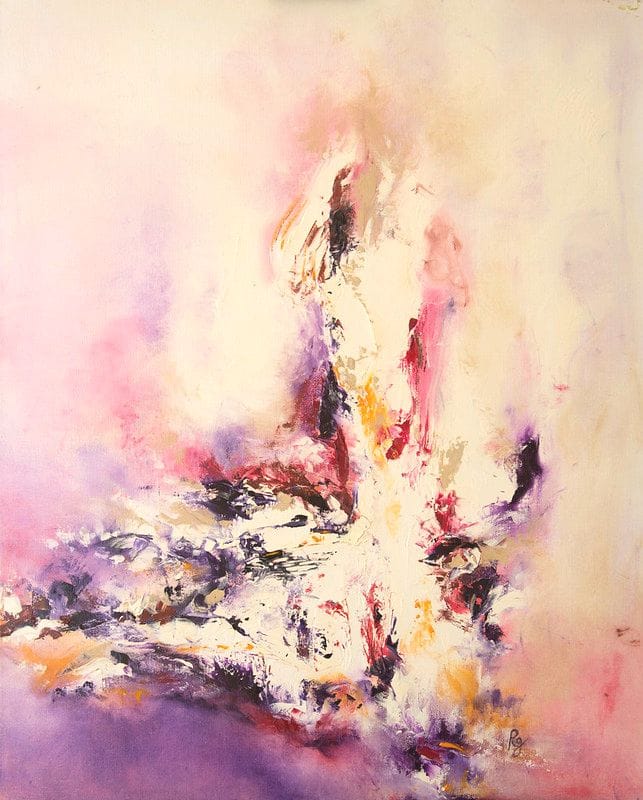
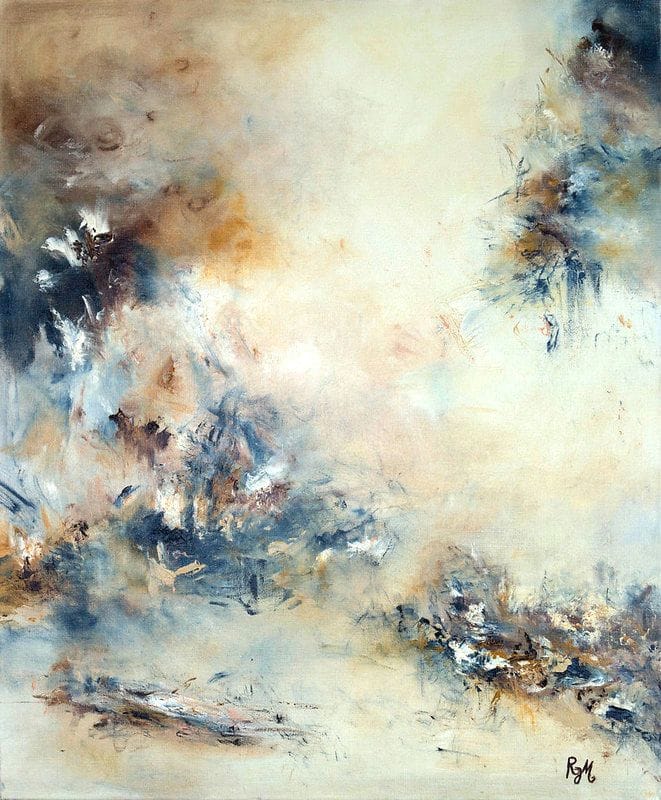
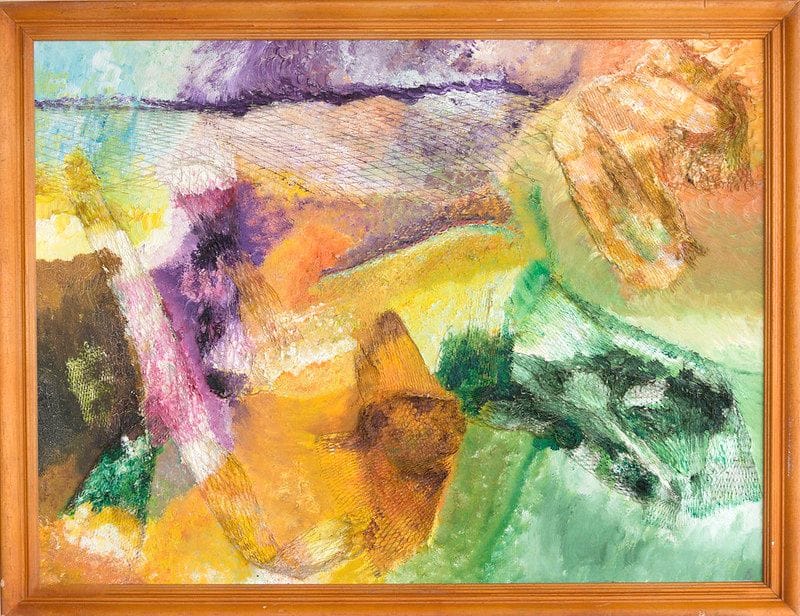
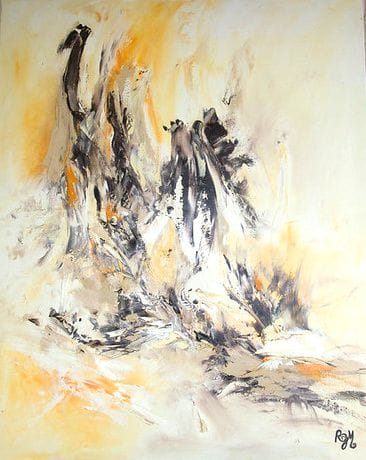
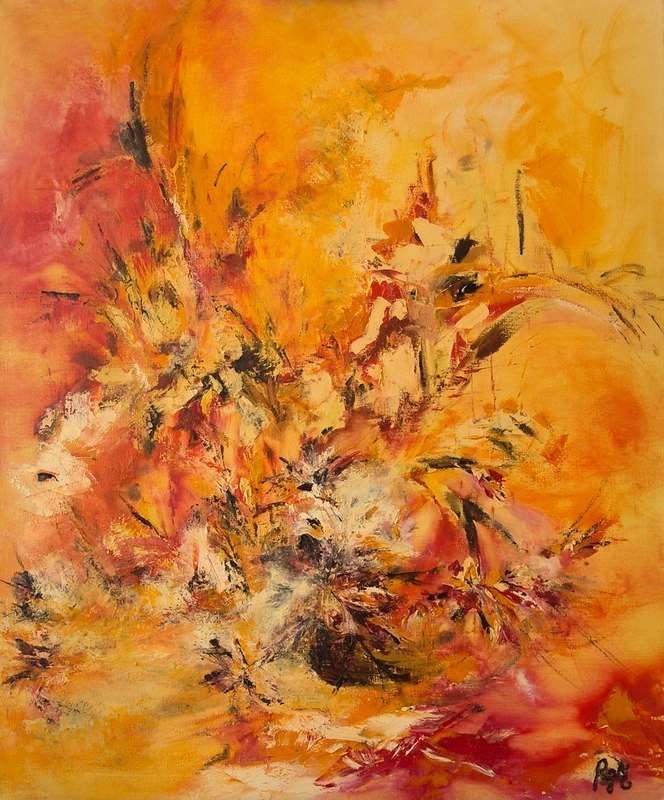
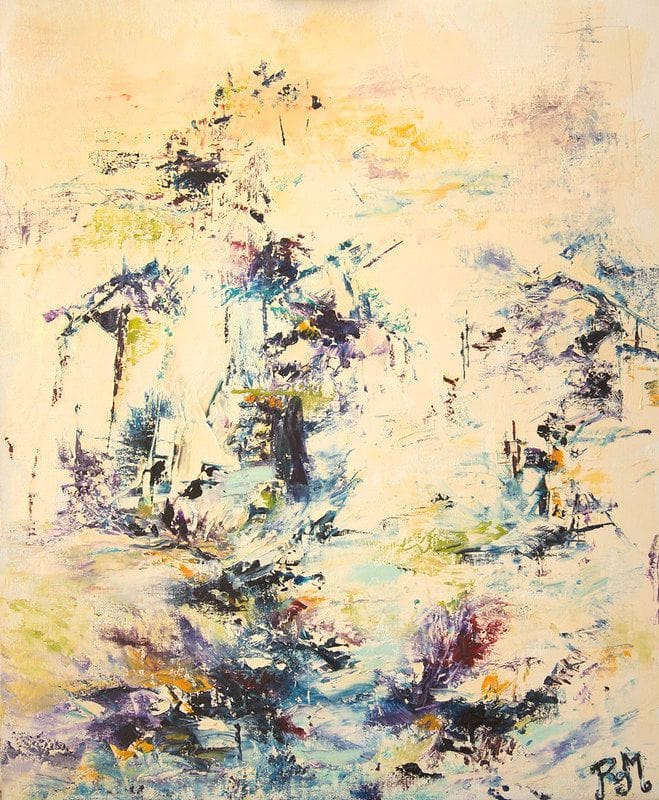
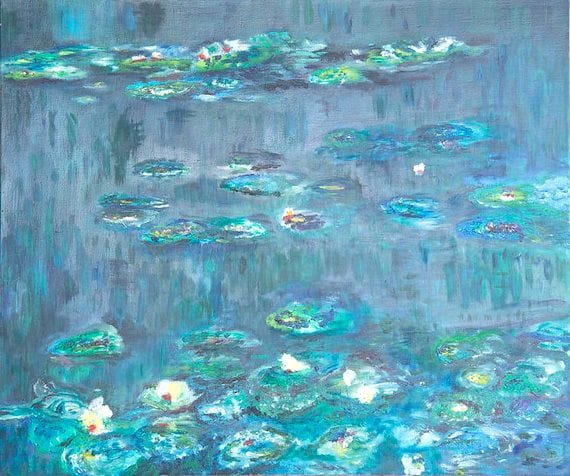
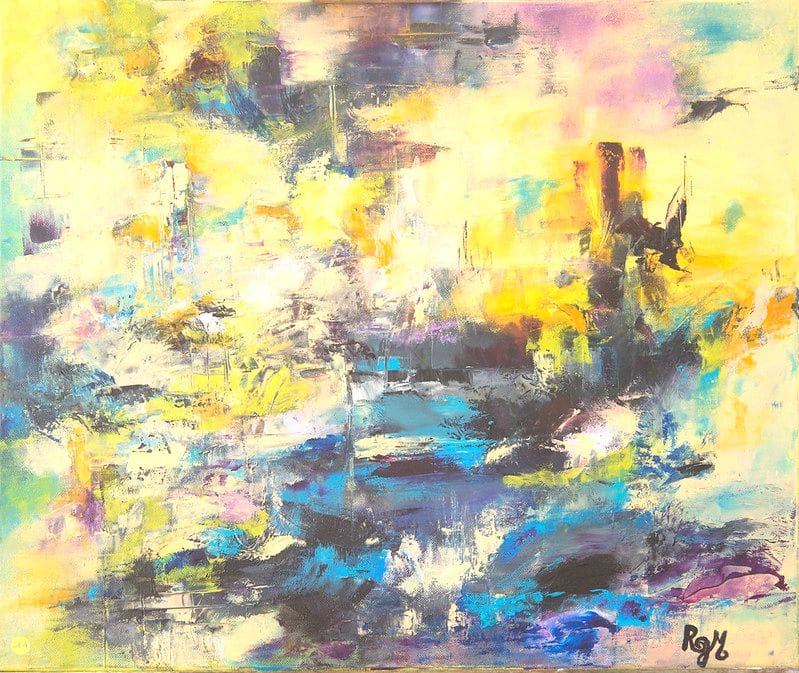
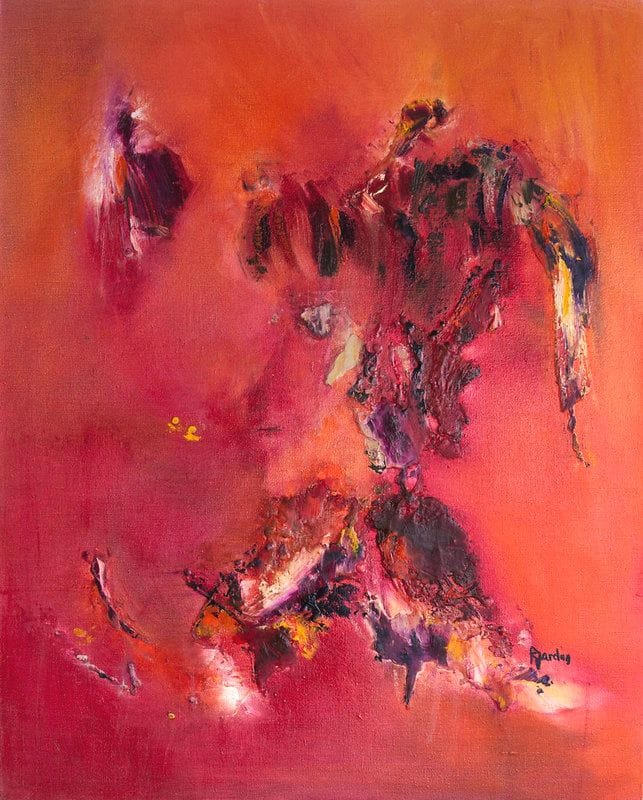
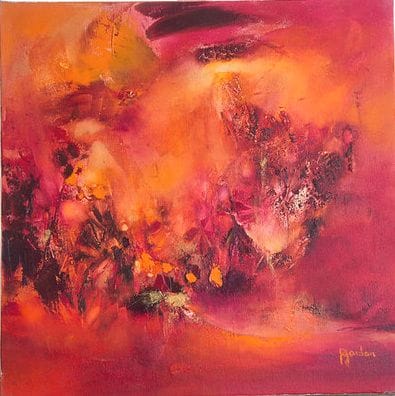
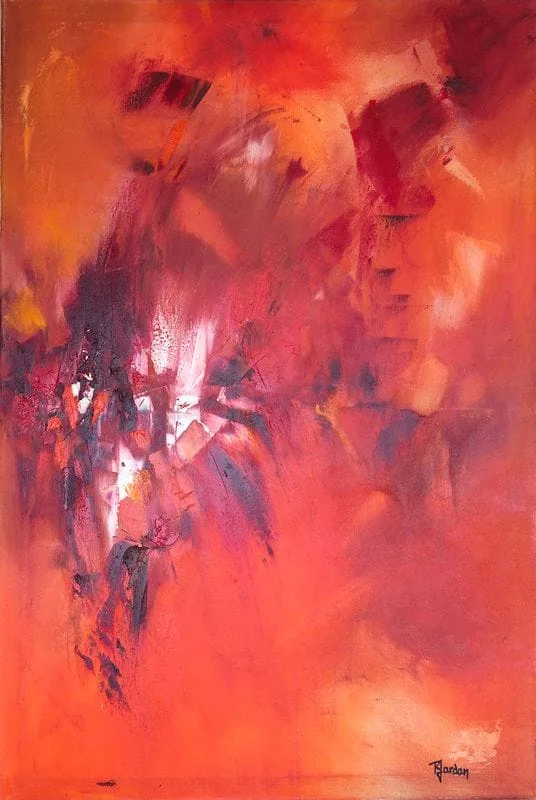
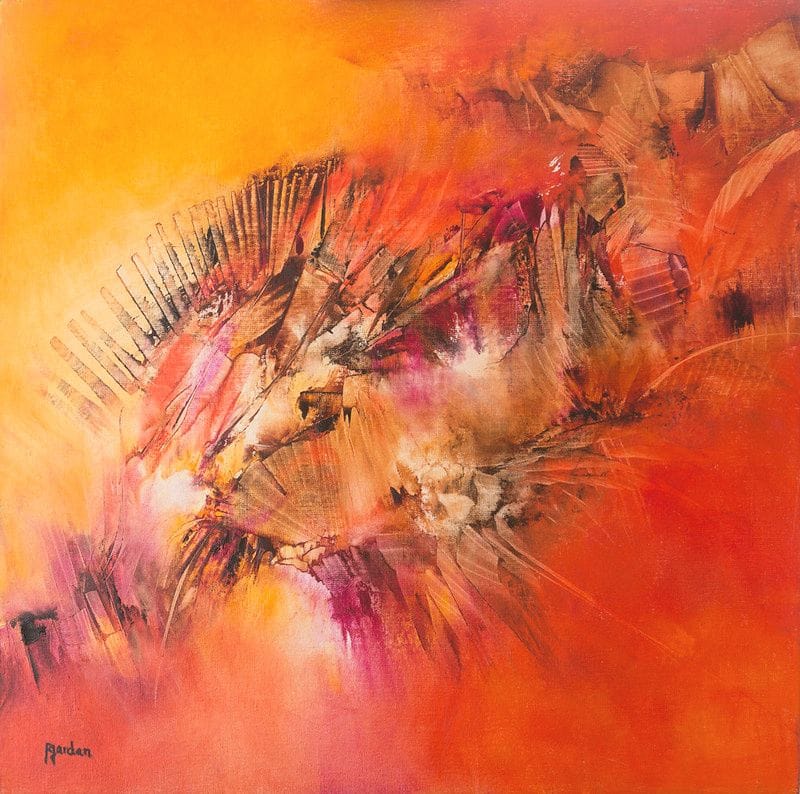
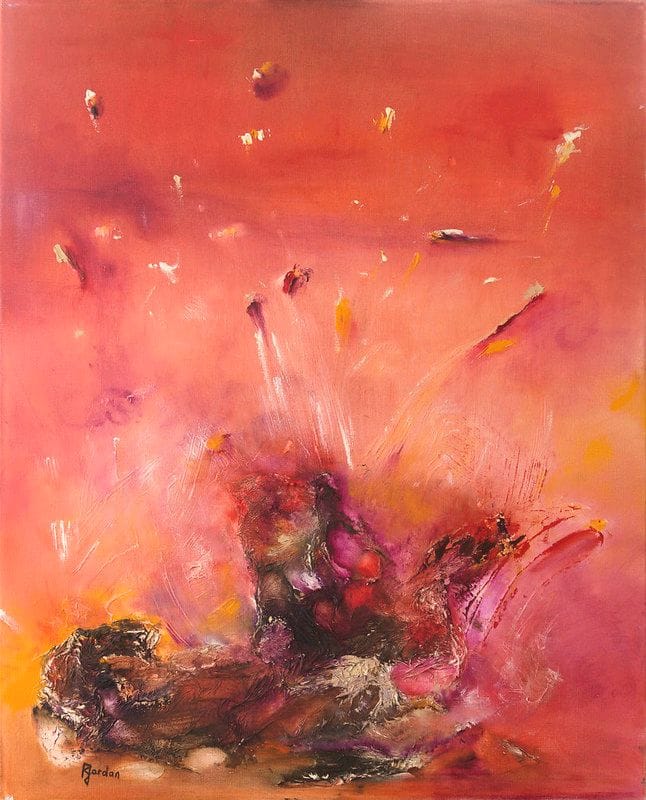
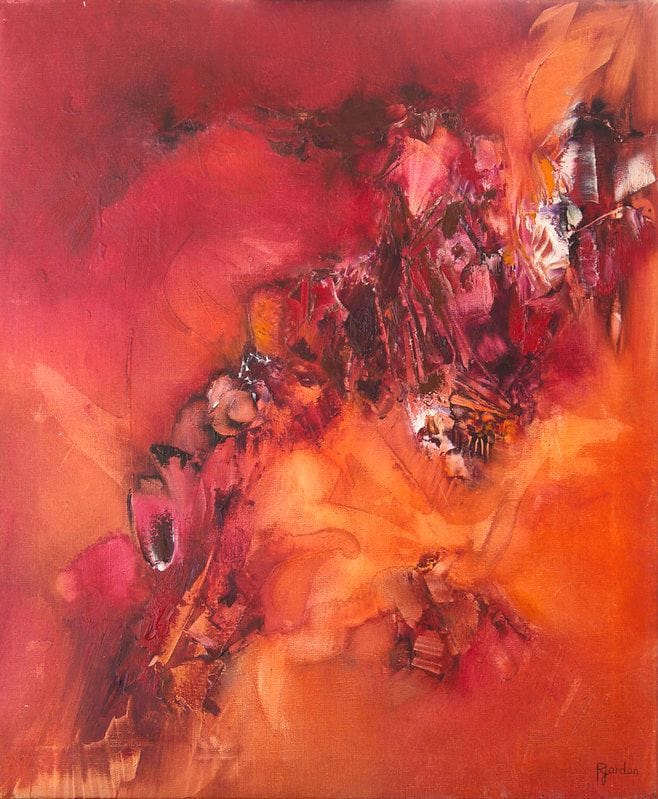
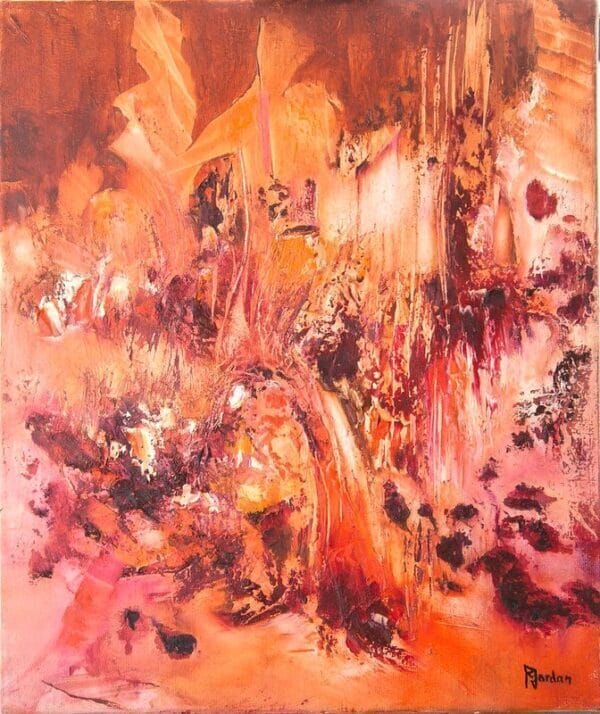
21 original works in this collection.
Vertical, light canvases, designed for a wall you walk along without ever being able to step back.
See all the worksWhat size of painting for your wall?
Hang it with the centre about 1.60 m from the floor, leaving 15 to 25 cm above the furniture.
Bare wall (no furniture)? An 80 to 100 cm format structures the space on its own.
A hallway is a pure passage: nobody stops there, nobody sits there. That is precisely why it stays empty in most homes, and it is a waste. It is often several metres of available wall, with no furniture and no competing use.
Handled properly, it becomes a gallery you cross several times a day. Handled as storage wall, it stays what it is: a tube.
This is the particularity that sets the hallway apart from every other room. You never look at a work head-on and standing still. You see it while walking, at an angle, for two or three seconds.
Three practical consequences follow.
First, legibility beats detail. A clear composition, with identifiable masses of colour, works better than a very fine work whose subtlety will go unnoticed. Monochrome canvases and simple compositions are safe bets here.
Second, the hanging height drops slightly. Since you look while walking rather than standing, hanging a little lower than the norm, around one metre fifty at the centre, reads more comfortably.
Third, the vertical format imposes itself. A hallway is a narrow horizontal space: a vertical canvas breaks that linearity and lets the passage breathe visually. It is the main criterion of this selection, complemented by the vertical formats of the full catalogue.
Hallways are almost always dark, often without any window. That is why the canvases chosen here are the most luminous among the suitable formats: a dark work in a dark hallway becomes an indistinct patch.
If you can act on the lighting, two options change everything. Wall lights placed above the works create a downward light that shows the material at its best. Failing that, a warm rather than cool bulb already renders the pigments properly.
Avoid, though, a spot placed directly in front of the canvas: at that distance it creates a bright point on the oil paint and makes the work unreadable from certain angles.
Both approaches work, but not in the same hallways.
In a short hallway, under three metres, one work is enough and is better. Place it in the middle of the longest wall, or at the end of the hallway facing the approach: that placement is the most effective of all, because it turns the far end into a visual destination.
In a long hallway, a series of three to five evenly spaced small formats creates a rhythm that accompanies your walk. Keep an identical gap between each, between fifteen and twenty-five centimetres, and align them on their centres rather than their top edges if the sizes differ.
A narrow hallway is easier to live with in light tones, which visually push the walls back. Light blues and water greens produce that receding effect, and Scandinavian style canvases are built on that logic.
Conversely, a very dark canvas on a narrow wall visually brings the partition closer. It is not forbidden, but it has to be intended: it is a choice that makes the hallway more intimate and enveloping, which can suit a large flat.
The question comes up often, particularly in rented homes. Several solutions exist, with limits worth knowing before you choose.
Hook-and-loop adhesive strips honestly hold up to two or three kilos depending on the model, which covers small formats. They need a perfectly clean, dry wall, and they dislike recent satin paint, from which they peel away taking a piece of the paint with them.
Picture rails, those tracks fixed at the top of the wall, are the most elegant solution for a hallway: a single fixing in the wall, and the works then move freely along the rail. It is also what lets a series evolve without drilling again.
Finally, in a hallway, weigh the canvas before deciding. An oil on a wooden stretcher of sixty centimetres weighs more than a print of the same size: do not trust the capacity printed on the packaging without checking.
Every work is painted in oil on cotton canvas by Régine Gardan in her studio in Isère, signed and delivered with its certificate of authenticity. As the edges are painted, no canvas needs framing.
One practical point specific to hallways: it is a space where you brush past walls. Hang with a solid fixing and check that the canvas does not stick out beyond a piece of furniture or a door handle. Our care guide explains how to clean an oil on canvas without damaging it.
Original artwork or reproduction: what really changes
| Original artwork (oil on canvas) | Industrial reproduction | |
|---|---|---|
| Texture | Real relief of the pigments, light catches the surface differently through the day | Flat surface, identical look whatever the light |
| Uniqueness | One of a kind: a single one in the world, yours | Mass-produced, thousands of identical copies |
| Authenticity | Signed by the artist, certificate of authenticity included | No original signature, no certificate |
| Over time | Oil paint lasts for generations and can be passed on | Wears out and gets replaced like a decor item |
| What you own | The real work of an artist, with its story | A licensed printed image |
Vertical or small formats in light tones. Legibility beats detail here: you see the work while walking, at an angle, for two or three seconds, so a clear composition with identifiable masses of colour reads better than a very fine work whose subtlety goes unnoticed.
Work from the length. In a hallway under three metres, one canvas is enough, ideally at the far end where it turns the corridor into a visual destination. In a longer one, a series of three to five small formats, evenly spaced fifteen to twenty-five centimetres apart, creates a rhythm as you walk.
Treating the hallway as a room rather than a leftover: considered lighting, one or more works, and a warm bulb instead of a cool ceiling fitting. Hang slightly lower than usual, around one metre fifty to the centre, since you look while walking rather than standing still.
Abstraction in natural tones has dominated for several years, alongside a return of saturated colour after a long neutral period. Trends move quickly though, and a canvas bought for a season dates with it. In a hallway the physical constraint is the better guide: narrow wall, little distance, vertical format.
Each painting is hand-painted, signed by the artist and delivered with its certificate of authenticity.
Careful, free delivery across the European Union and Switzerland, with a tracking number.
Pay securely by bank card, through the Stripe platform.
A question about an artwork or an order? We're happy to help.