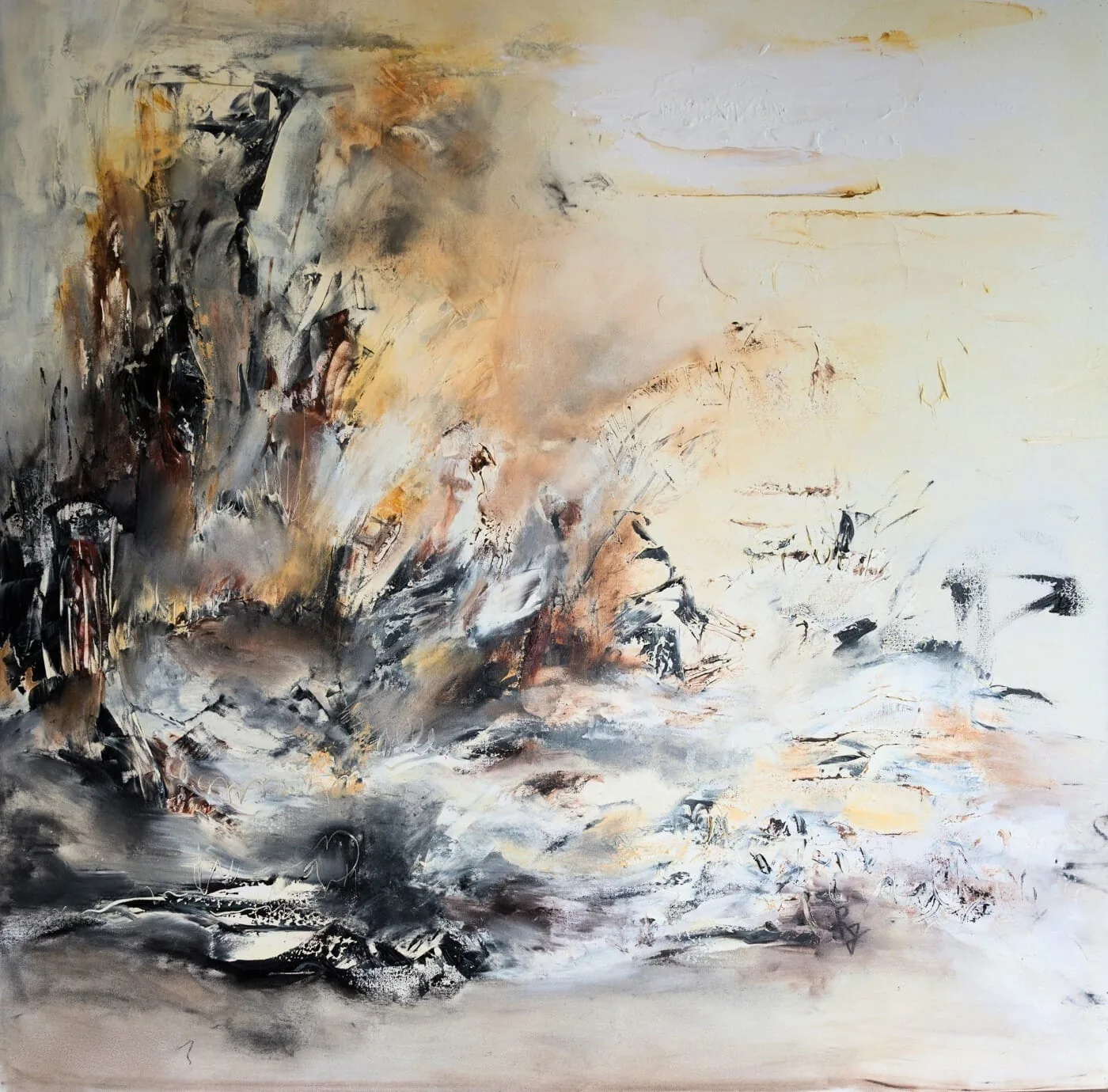
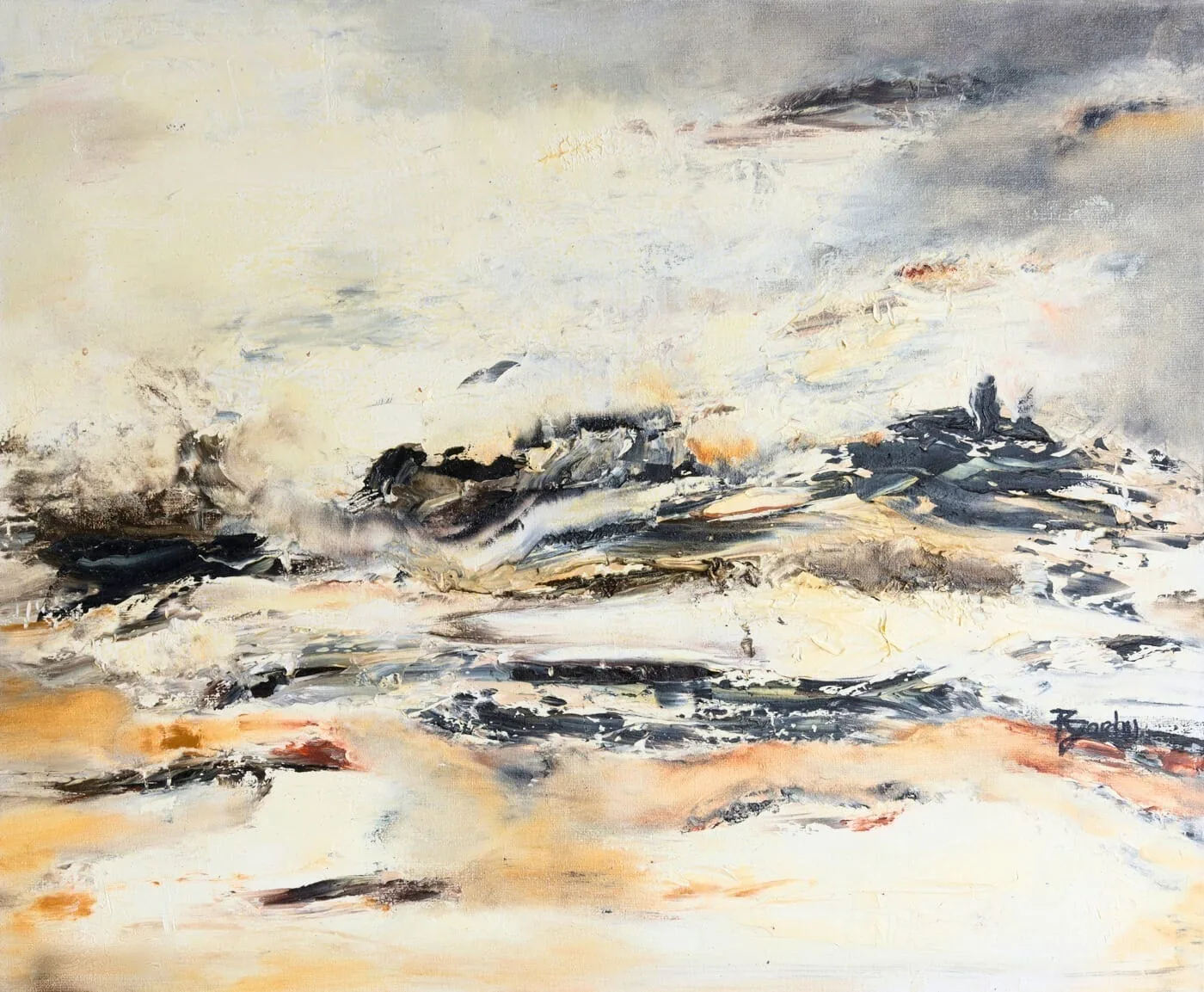
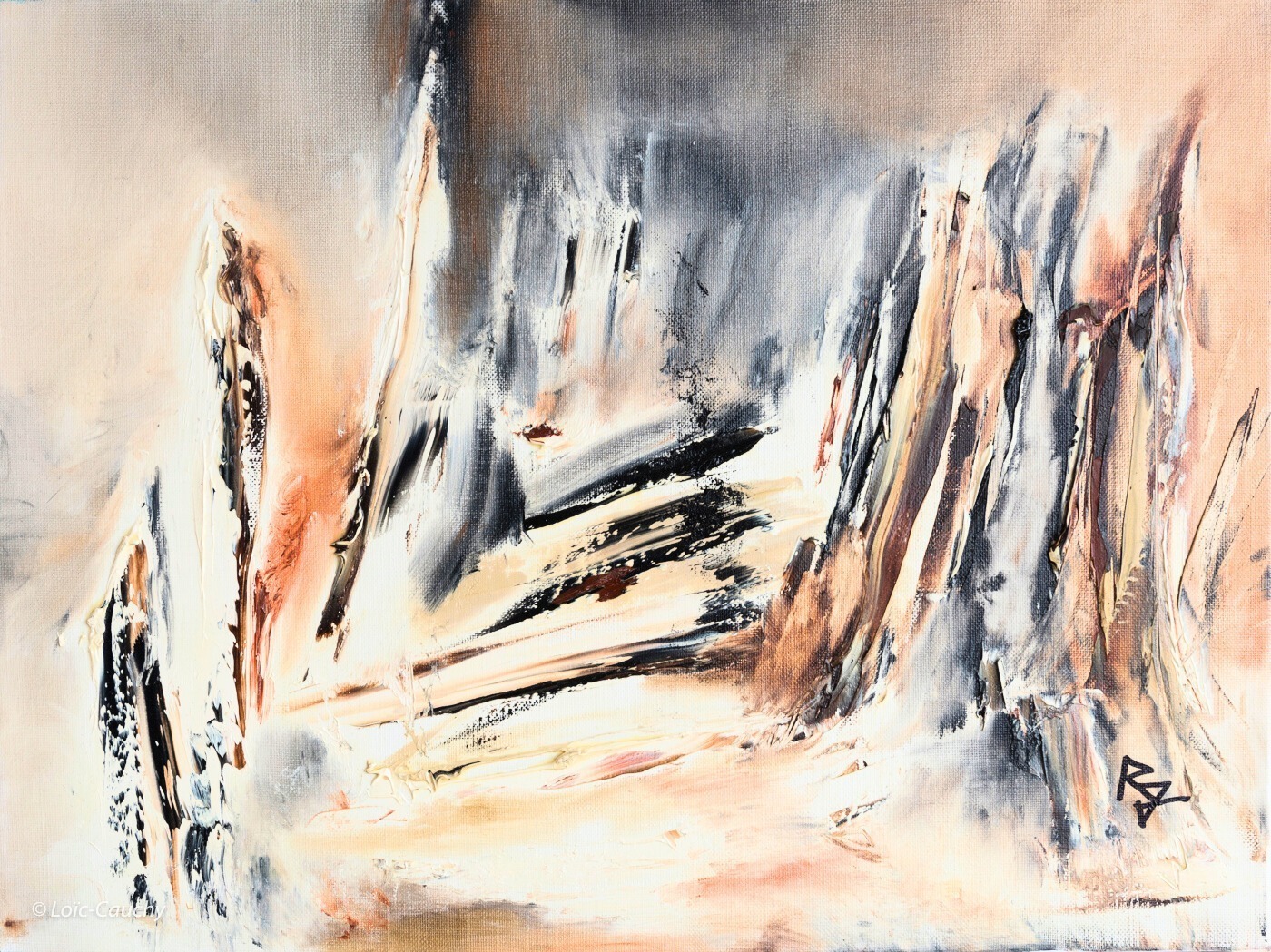
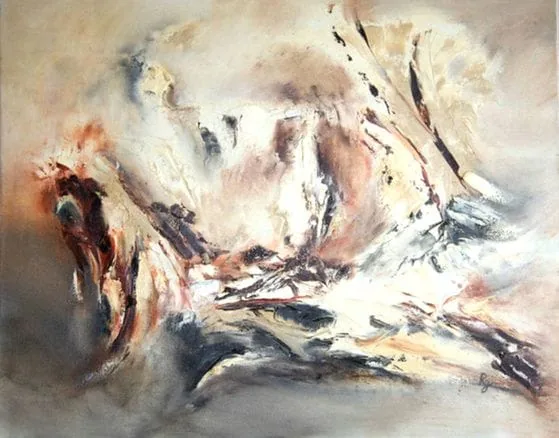
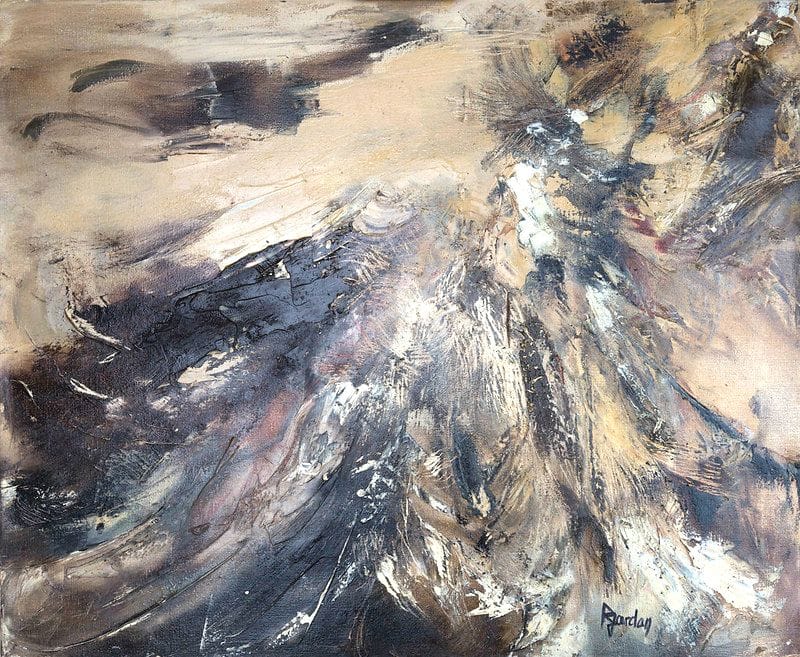
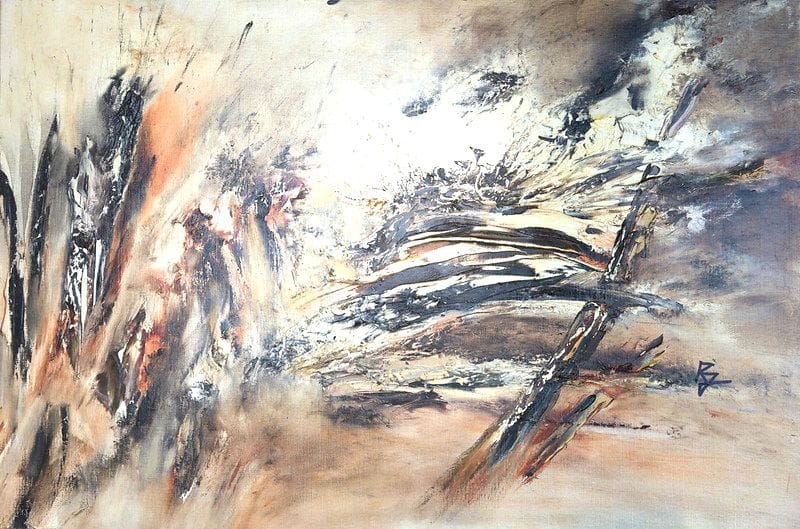
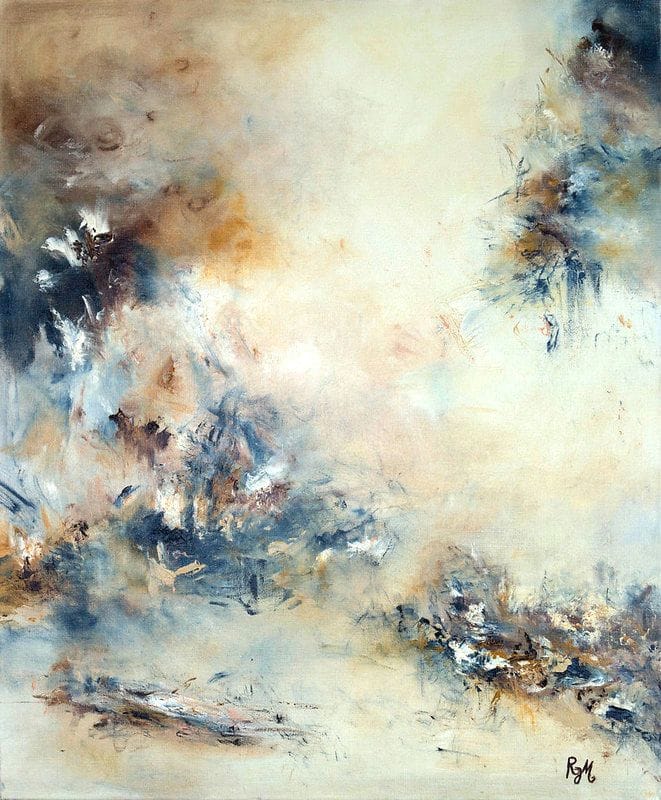
7 original works in this collection.
Canvases in earth tones, where the material and the trace of the gesture count as much as the colour.
See all the worksWabi-sabi is a Japanese notion that resists translation. It names the beauty of what is imperfect, incomplete, marked by time. A bowl whose glaze has run. Wood that has greyed. A handprint left in the material.
Applied to an interior, it gives earth tones, surfaces that do not chase perfection, and a refusal of what is too smooth, too new, too regular. It is a style that prefers the lived object to the perfect one.
This is the style that shows a hand-painted canvas at its best, for one precise reason: wabi-sabi looks for exactly what a print cannot give. The relief of the knife. The uneven thickness of the material. The place where the brush loaded, and the place where it ran dry.
The canvases gathered here are those where Régine Gardan worked in ochres, browns, beiges and terracottas, often with a palette knife. You will also find a selection devoted to that technique in our palette knife paintings, where the material is more present still.
This style does not work off a single element. An earth-toned canvas placed in a white lacquered interior will stay an accident. It needs company: untreated wood, ceramic, crumpled linen, warm indirect light.
On colour, stay within one family. The canvases shown here sit naturally with muted greens and burnt oranges, which extend the palette. Avoid mixing them with clean bright colours, which would tip the whole into another register.
A wabi-sabi canvas is looked at closely: that is where the material reads. A medium format, hung on a wall you walk along, gives more than a very large format seen from a distance. Our small formats and square formats suit this use well.
Light matters a great deal. Raking, side light reveals the relief of the paint; strong frontal light flattens it. If you can, hang the work perpendicular to a window rather than facing one. The hanging simulator helps you picture the placement, and the guide on hanging a painting gives the heights.
The entryway is an excellent spot: it is the first wall you see, and earth tones give an immediate impression of calm. See our entryway canvases. The bedroom also works very well, for the same reasons.
Terracotta is the warmest and the easiest to place. It instantly warms a white or grey wall, and sits well with wood, leather and fired clay. It is the safest way in if this style is new to you.
Ochre and earth yellow bring light without the bluntness of a bright yellow. They work particularly well in a room with little exposure, where they make up for the lack of direct sun. You will find them too in our yellow canvases.
Brown and beige are the most discreet. They do not create an accent, they create a background: the right choice when the room already holds strong elements, a coloured sofa or a patterned rug.
Warm grey, finally, is the hardest but the most elegant. It needs good light to avoid turning drab. Look at it at the end of the day before deciding.
This is the rule that counts most in this style. Wabi-sabi rests on the silence around the object: two canvases on the same wall cancel the effect, because they answer each other instead of letting things breathe.
If you want several works at home, spread them across different rooms rather than building a gallery wall. That belongs to another register, closer to maximalism, which owns accumulation and claims it.
An oil painting ages. It settles, and its material keeps moving imperceptibly for years. That is precisely the wabi-sabi idea: the object is not frozen on the day you buy it.
Each canvas is signed by the artist and delivered with its certificate of authenticity. To keep it in good condition, our care guide explains what to do, and above all what not to do.
Original artwork or reproduction: what really changes
| Original artwork (oil on canvas) | Industrial reproduction | |
|---|---|---|
| Texture | Real relief of the pigments, light catches the surface differently through the day | Flat surface, identical look whatever the light |
| Uniqueness | One of a kind: a single one in the world, yours | Mass-produced, thousands of identical copies |
| Authenticity | Signed by the artist, certificate of authenticity included | No original signature, no certificate |
| Over time | Oil paint lasts for generations and can be passed on | Wears out and gets replaced like a decor item |
| What you own | The real work of an artist, with its story | A licensed printed image |
Wabi-sabi decorating values what is imperfect, incomplete and marked by time. It gives earth tones, surfaces that do not chase perfection, and a refusal of what is too smooth or too new. It prefers the lived object to the flawless one, which is why raw wood, ceramic and crumpled linen belong to it.
It joins two ideas: wabi, chosen simplicity and sobriety, and sabi, the beauty brought by the passing of time. Together they describe an acceptance of the transient and of the trace left behind. That is why an oil painting suits it so well: it keeps the relief of the gesture and keeps settling for years.
It is neither, it is a way of looking. Applied to a home, it tends to make objects last longer, because they are chosen to age well rather than to stay pristine. Its one practical limit is that it needs restraint around it: two canvases on the same wall cancel the effect.
The recurring ones are simplicity, asymmetry, roughness of material, modesty, and the acceptance of time and of the incomplete. In practice, that means one work per room rather than a gallery wall, materials left visible, and light that reveals texture. Raking side light shows the relief; strong frontal light flattens it.
Each painting is hand-painted, signed by the artist and delivered with its certificate of authenticity.
Careful, free delivery across the European Union and Switzerland, with a tracking number.
Pay securely by bank card, through the Stripe platform.
A question about an artwork or an order? We're happy to help.