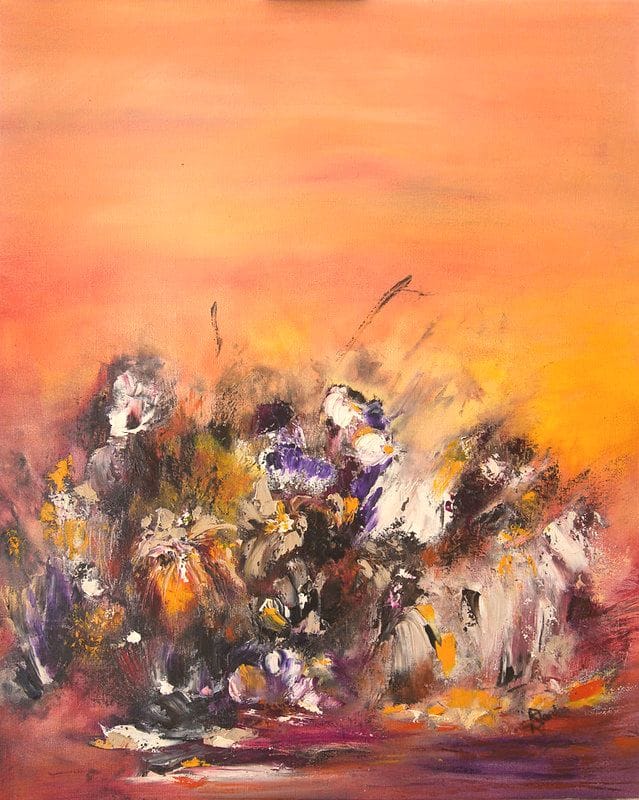
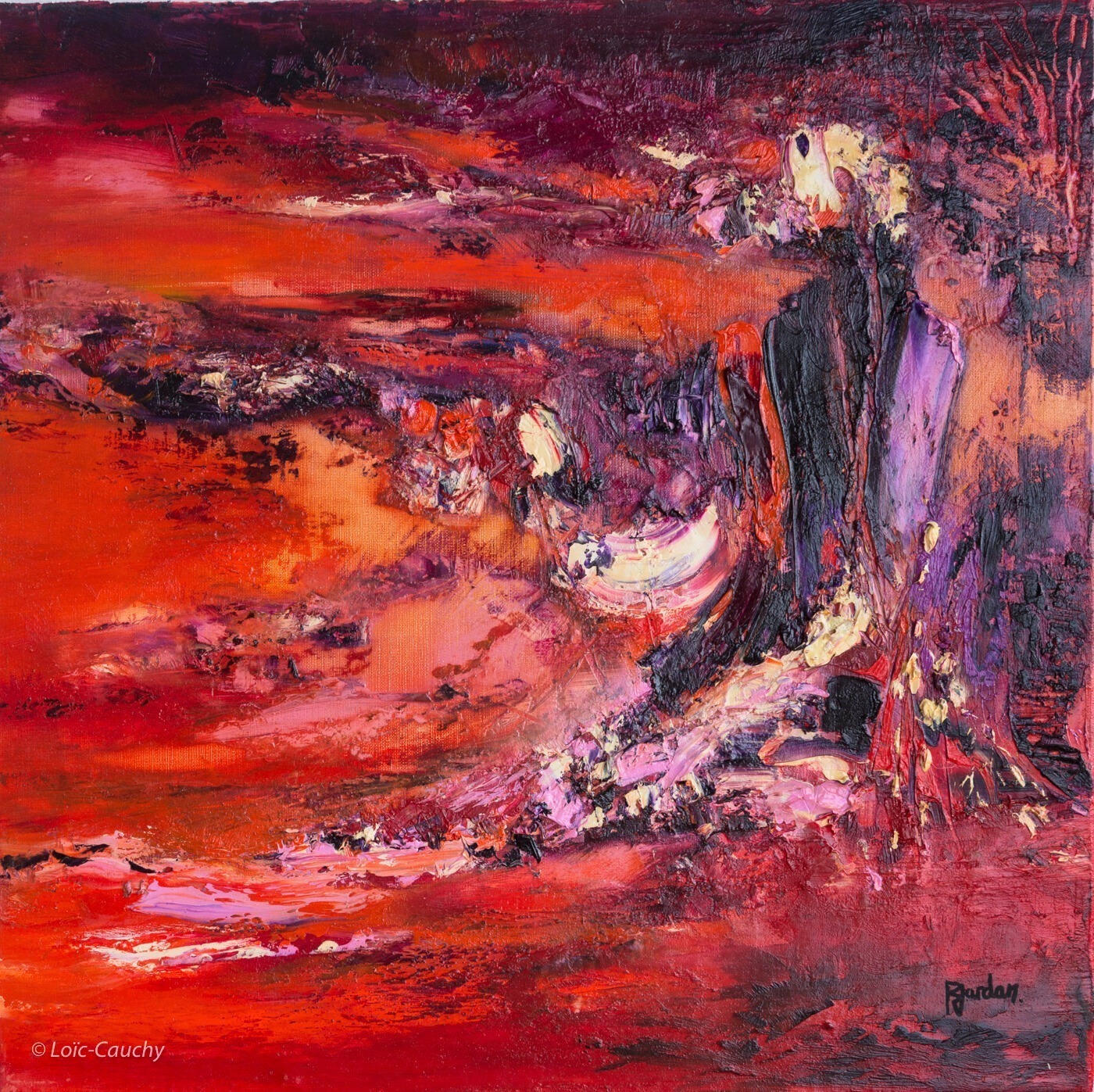
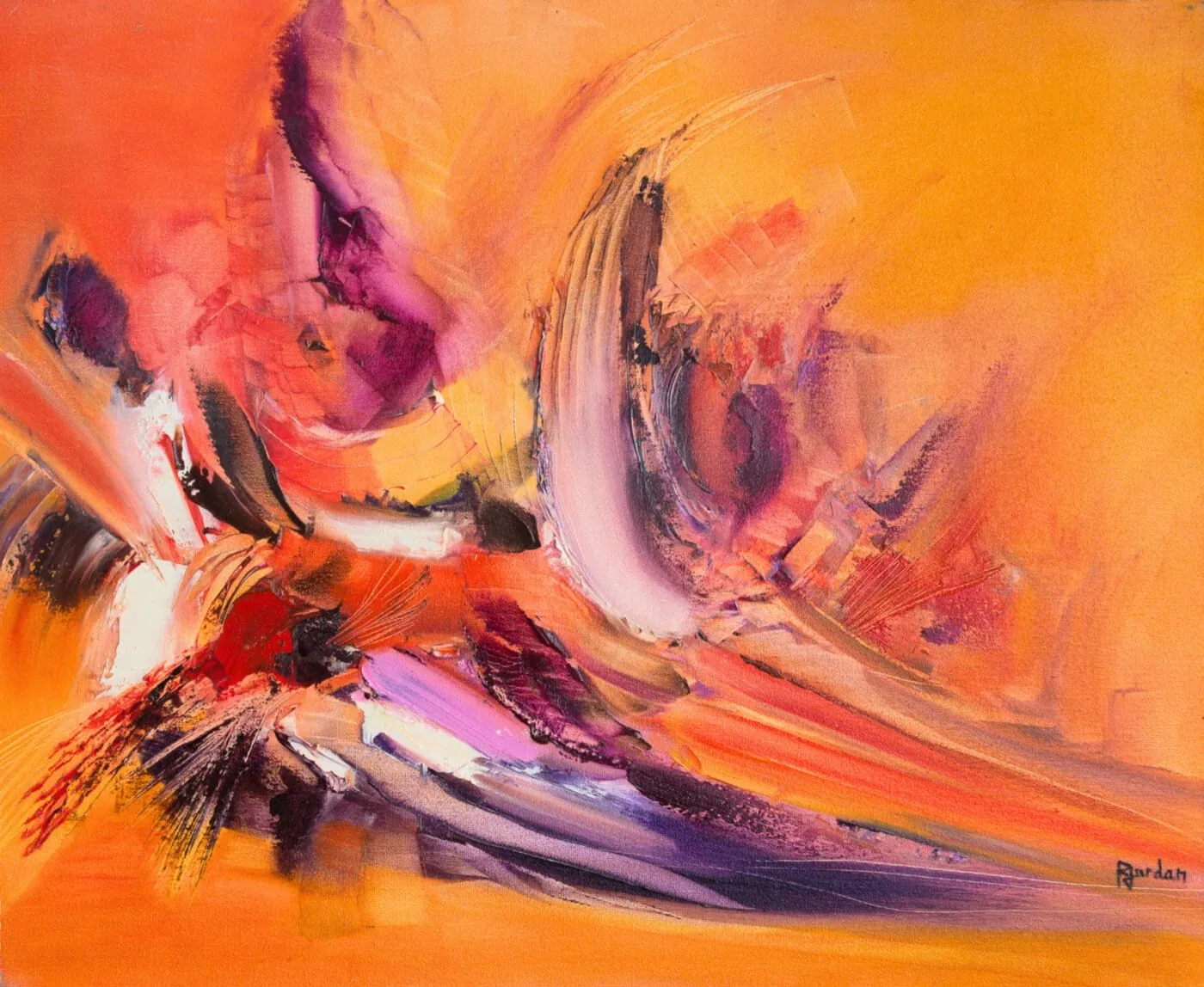
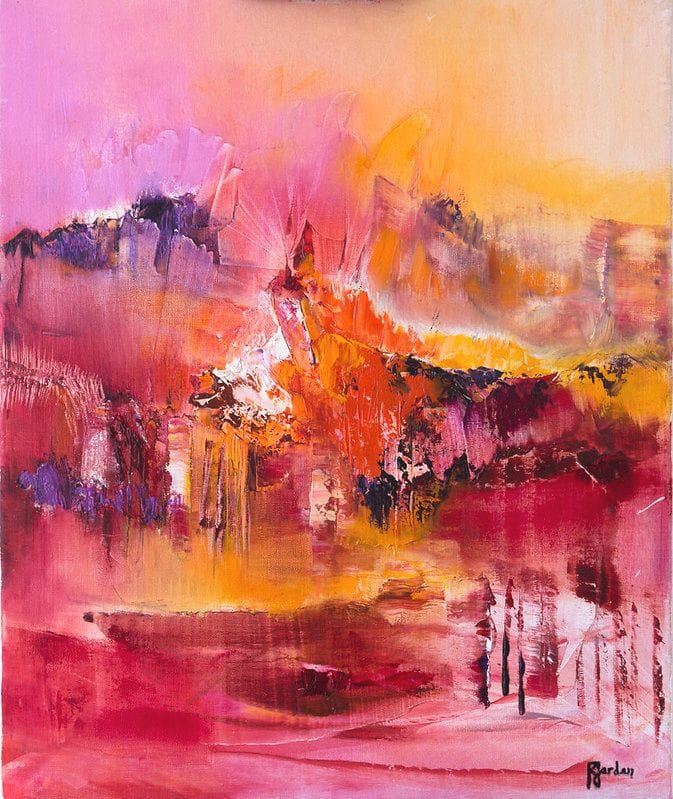
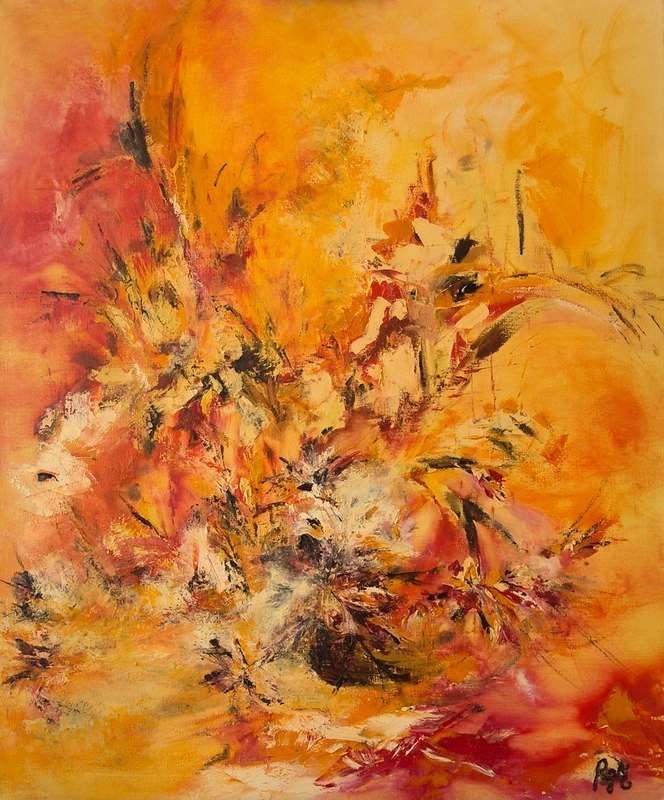
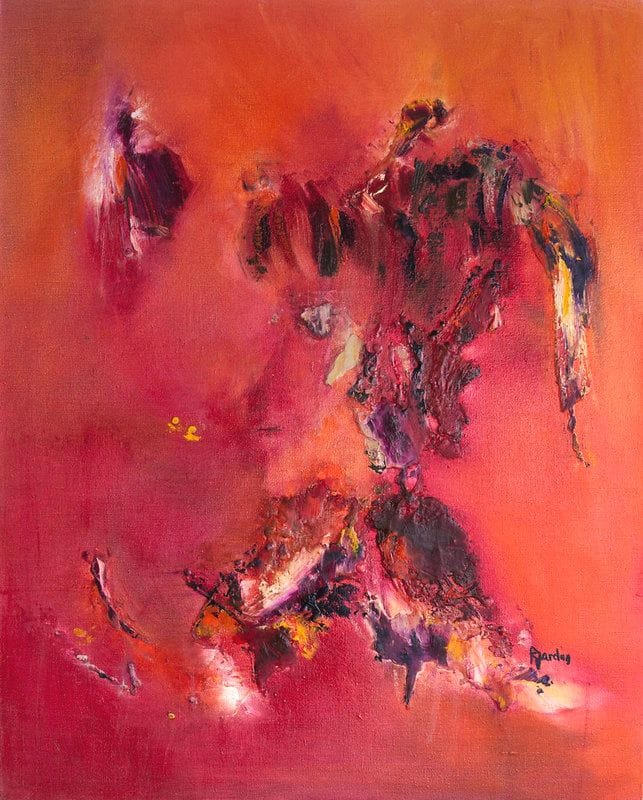
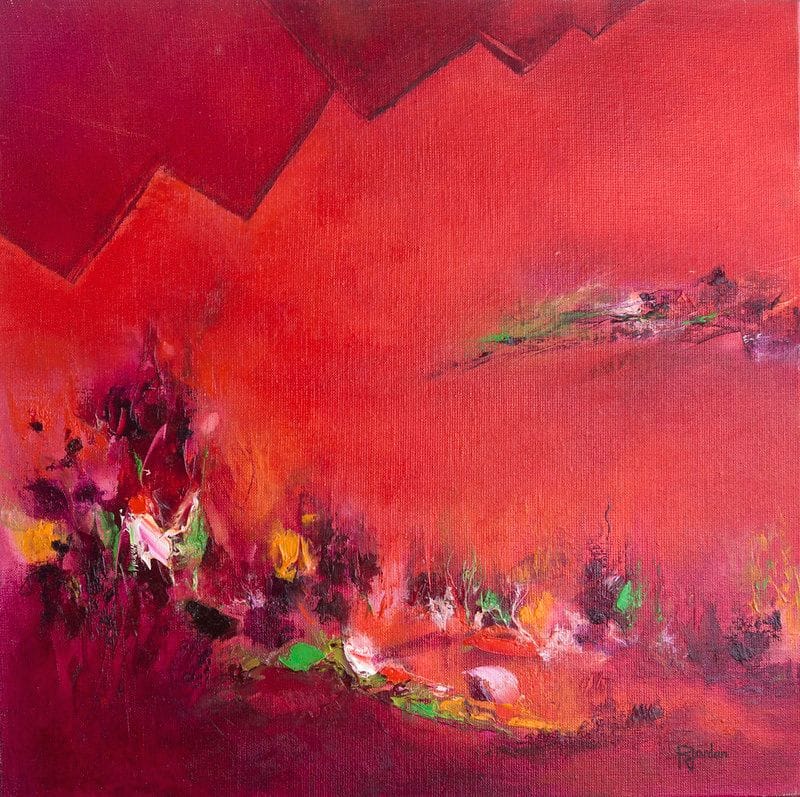
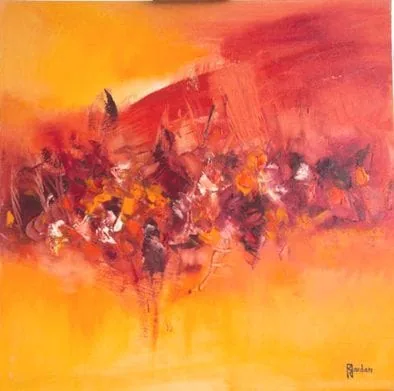
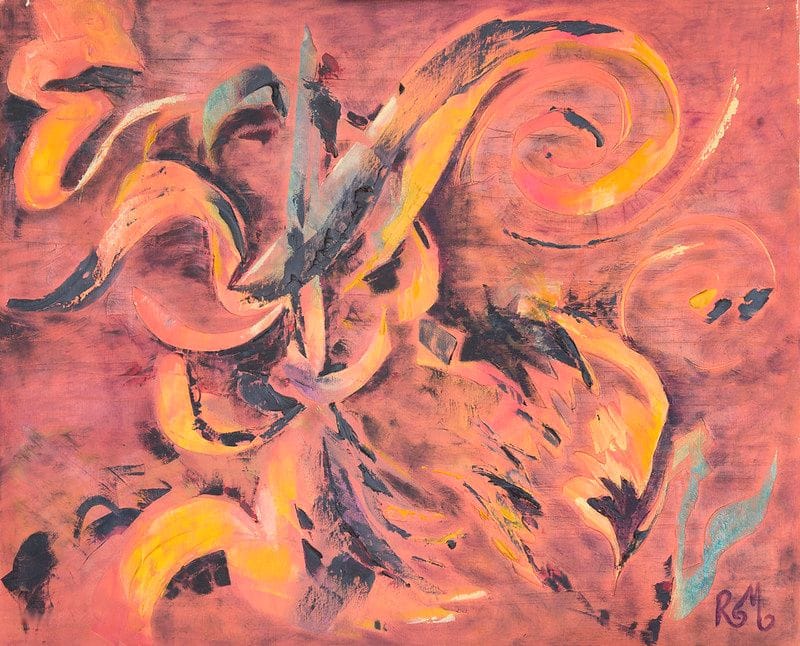
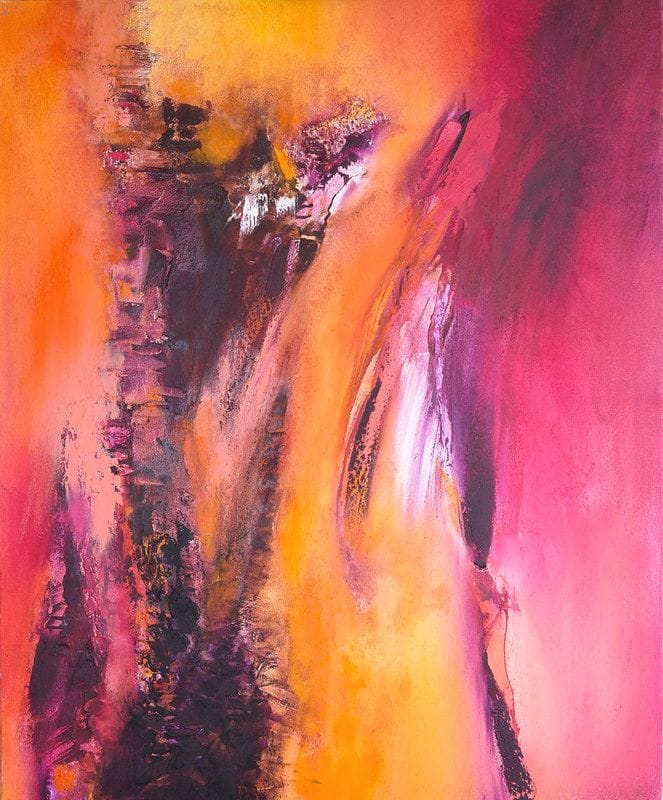
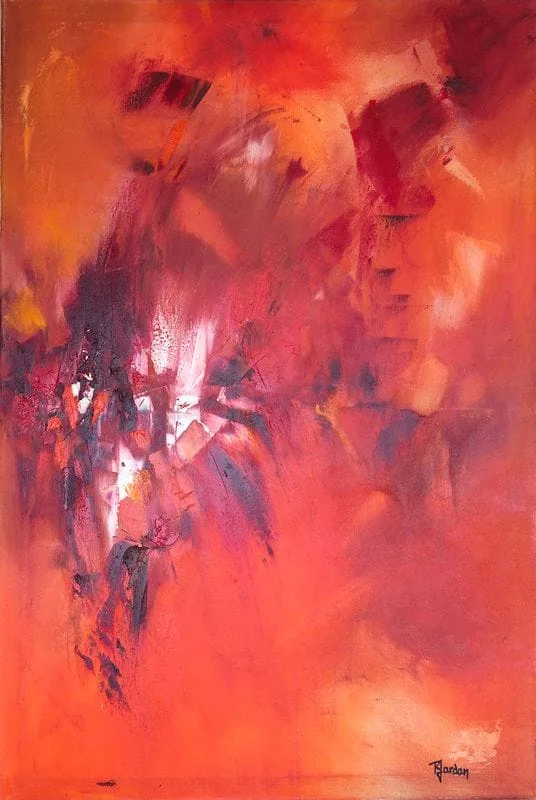
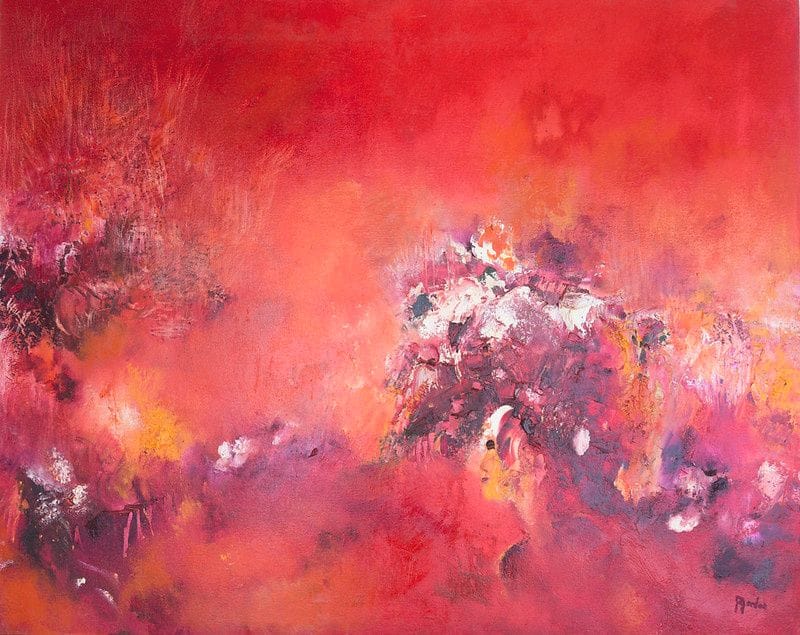
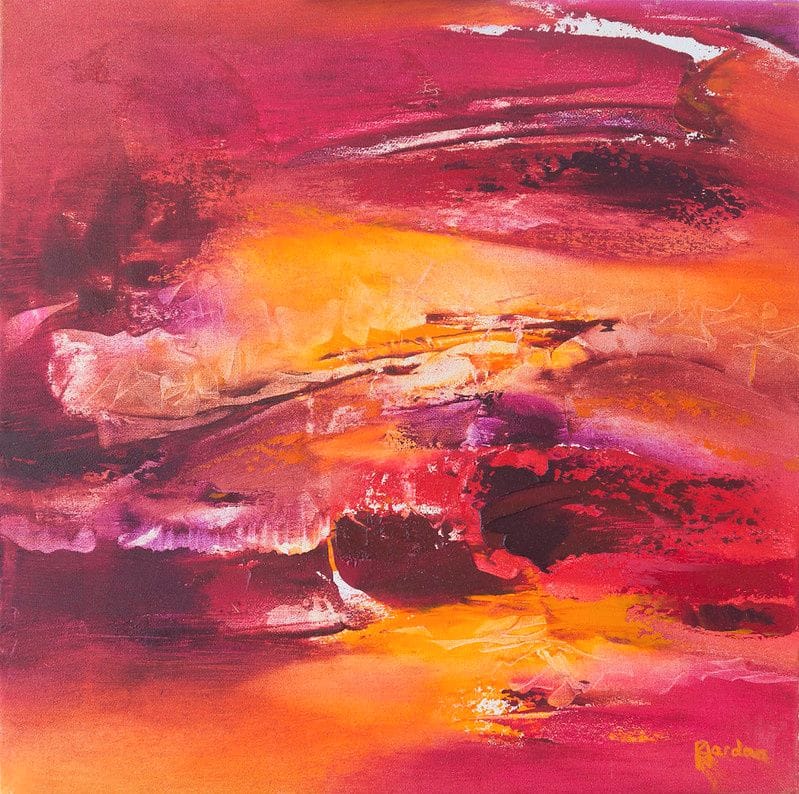
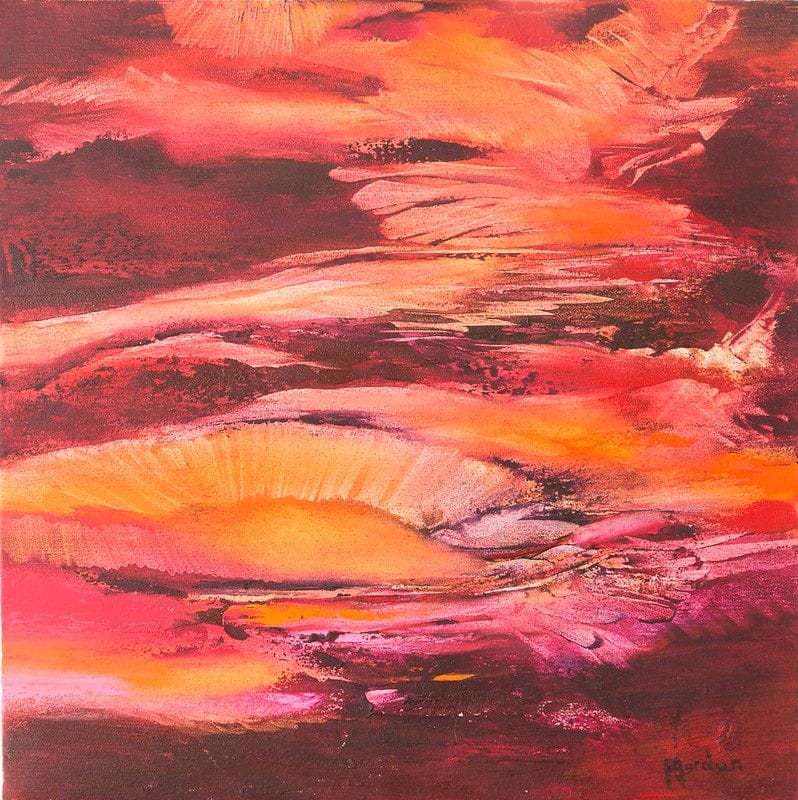
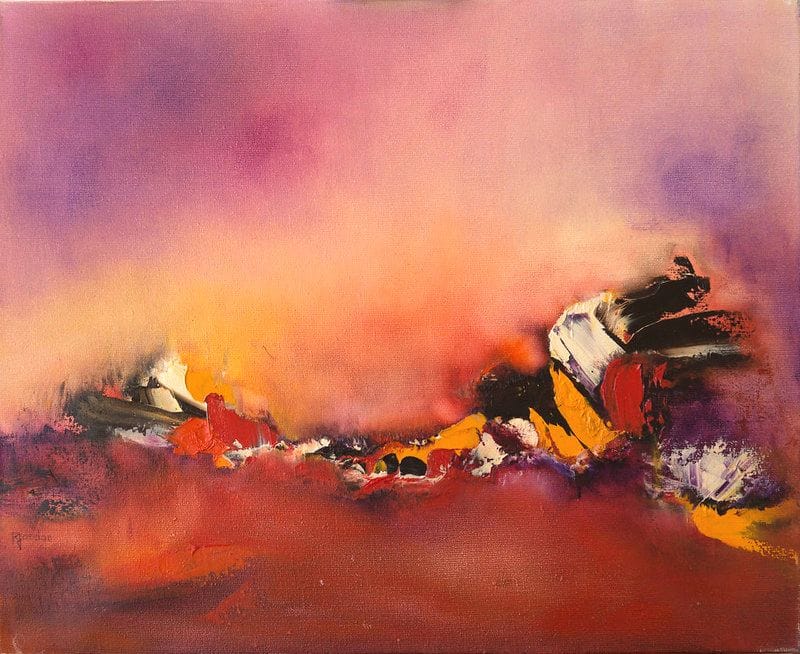
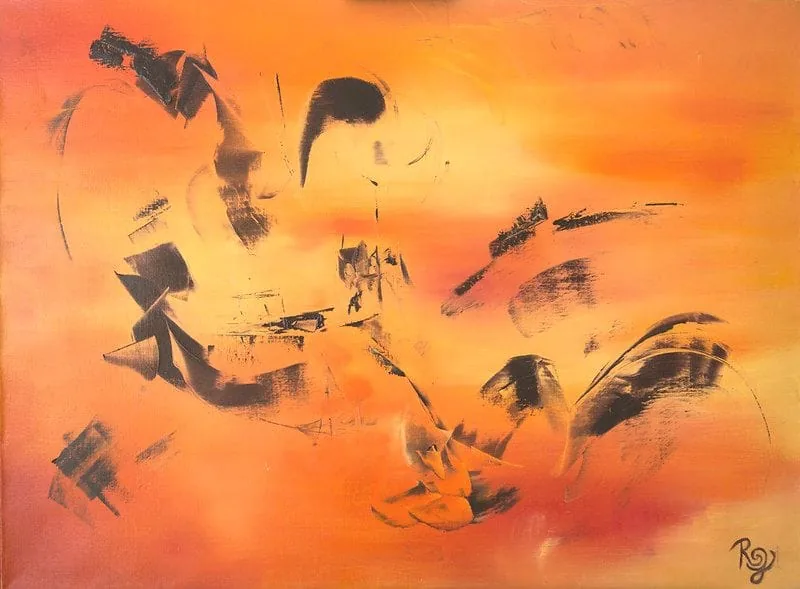
19 original works in this collection.
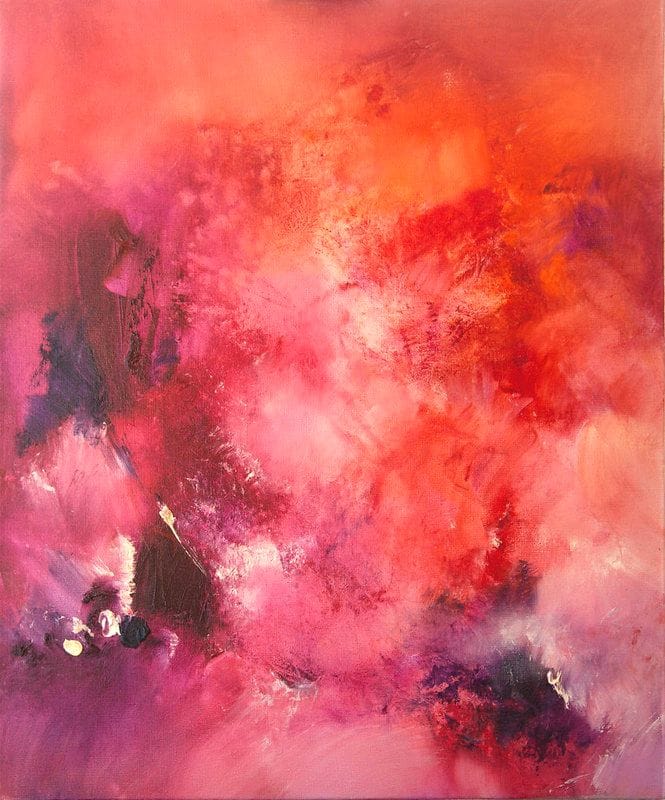
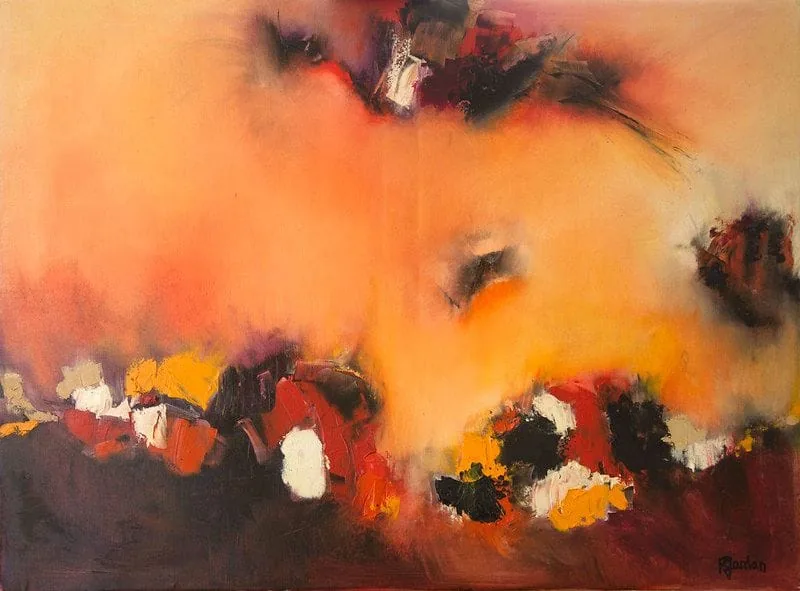
Canvases that do not apologise: clean bright colours, marked contrasts, generous material.
See all the worksMaximalism is often reduced to a slogan, more is more, which does it no favours. It is not accumulation that defines it, but the refusal of neutrality. A maximalist interior owns clean bright colours, patterns that answer each other, objects with a history, and it does so with intent.
The difference from a cluttered room comes down to one criterion: composition. In a successful maximalist interior, you can explain why each thing is there. In a cluttered room, you cannot.
This is the style where a canvas plays its most interesting role: it sets the palette for the whole room. Many decorators work exactly this way, starting from a work and then drawing the colours of textiles and walls out of what it contains.
The canvases gathered here suit that for a measurable reason: they are the richest in the catalogue in distinct hues. Where an ordinary canvas turns around two dominant colours, each of these carries four, five, sometimes six. One canvas therefore hands you the whole palette of a room. The multicolour canvases extend the same logic.
The method is simple and long practised. Choose the canvas first. Identify its three dominant colours. Use the most present one for large surfaces, the second for textiles, the third in small touches, in accessories.
This method guarantees a coherence you cannot get by choosing elements one at a time. On every artwork page of the site, the palette of the canvas is displayed: you can note the colour codes directly and take them to your painter or upholsterer.
Unlike wabi-sabi, which asks for one work per room, maximalism loves sets. Three rules to make it hold.
First, a common thread: a shared colour, a shared format, or a shared technique. Without that thread, the group reads as a pile.
Then, frankly different sizes. Three canvases of similar format produce hesitation; one large surrounded by two small ones produces a composition.
Finally, regular spacing even within irregular sizes: keep the same gap between edges, around six centimetres. Our large formats act as anchors, the small formats as satellites.
The living room and the dining room are the natural ground of maximalism, because they are the rooms where you host. The entryway also works very well: it is a passage, where intensity does not tire you because you do not linger.
Avoid the bedroom, unless you are sure of your tolerance: strong contrasts disturb falling asleep for a lot of people. Our article on maximalist decorating covers this room by room.
Maximalism plays with pairings, but they are not all equal. Three combinations give reliable results.
Complementaries first: blue and orange, yellow and purple, red and green. They sit opposite on the colour wheel, so each makes the other vibrate. It is the most spectacular combination, and the riskiest if both are given equal weight. Dose it two thirds against one third instead.
Analogues next: neighbouring shades, such as pink, red and orange. The effect is gentler but still rich, and it is the safest choice for a first maximalist experiment.
Contrast of value last, independent of hue: the very light against the very dark. That is what gives legibility, and it is what is most often missing when a maximalist wall fails. Our black and white canvases push this principle to its extreme.
What genuinely fights, on the other hand: two very saturated colours of identical value, side by side, with no breathing space between them. The eye no longer knows where to settle and the room becomes tiring.
There is a frequent contradiction in maximalist interiors: personal expression is the goal, and it gets pursued with objects sold in their thousands. The result is a style that looks the same from one flat to the next.
A hand-painted canvas solves that by construction. Every work shown here is an oil on cotton canvas, painted in a studio in Isère by Régine Gardan, signed, delivered with its certificate of authenticity. Nobody else has the same one at home.
Original artwork or reproduction: what really changes
| Original artwork (oil on canvas) | Industrial reproduction | |
|---|---|---|
| Texture | Real relief of the pigments, light catches the surface differently through the day | Flat surface, identical look whatever the light |
| Uniqueness | One of a kind: a single one in the world, yours | Mass-produced, thousands of identical copies |
| Authenticity | Signed by the artist, certificate of authenticity included | No original signature, no certificate |
| Over time | Oil paint lasts for generations and can be passed on | Wears out and gets replaced like a decor item |
| What you own | The real work of an artist, with its story | A licensed printed image |
Contrasted work: clean bright colours paired with marked differences in value, the very light against the very dark. Each canvas therefore holds several usable chromatic leads, which is why maximalist interiors are often built starting from the artwork and drawing the room's colours out of it.
Patterns that share a thread, whether a common colour, a common scale or a common origin. What fails is not the number of patterns but the absence of that thread. One rule keeps it readable: a single strong pattern per surface, so if the rug is busy the cushions stay plain.
Mainly visual fatigue, when two very saturated colours of identical value sit side by side without breathing space, and the eye no longer knows where to settle. It also suits bedrooms poorly, where strong contrasts disturb falling asleep for many people, and it demands genuine composition to avoid reading as clutter.
A canvas above furniture should be around two thirds of its width. In a maximalist grouping, apply the rule to the whole arrangement rather than to each piece: the full set of canvases should occupy about two thirds of the furniture below, with regular gaps between them.
Each painting is hand-painted, signed by the artist and delivered with its certificate of authenticity.
Careful, free delivery across the European Union and Switzerland, with a tracking number.
Pay securely by bank card, through the Stripe platform.
A question about an artwork or an order? We're happy to help.