Feng Shui Living Room Colours: Bringing Your Space Into Balance
22 August 2026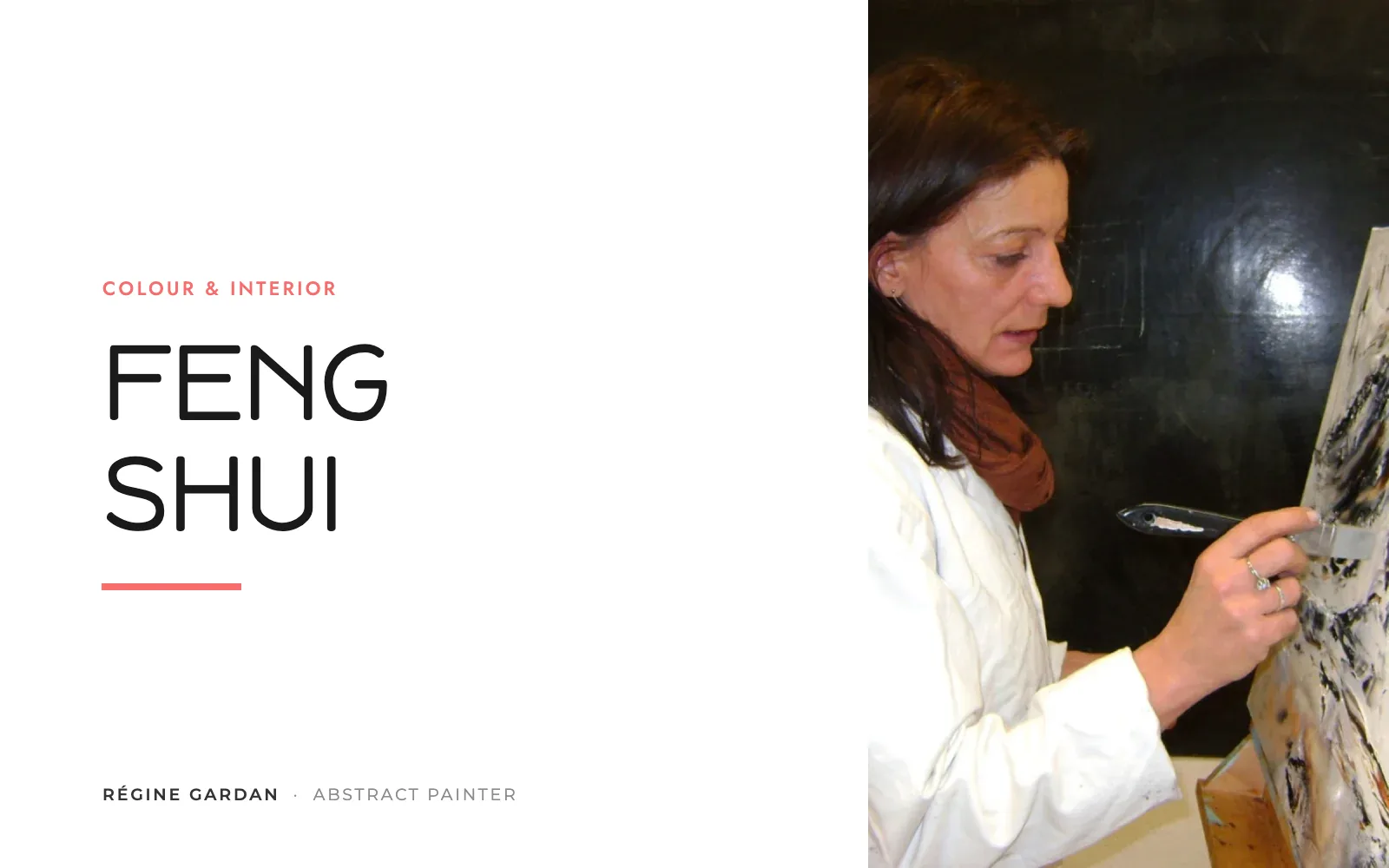
TL;DR
- Feng shui sorts colours into five elements: wood (green), fire (red), earth (yellow and ochre), metal (white and grey), water (blue and black).
- The elements follow a cycle: pick a colour, then the one that feeds it, and you have a pairing that holds together.
- Online advice contradicts itself because two schools coexist: one starts from the cardinal points, the other from the front door.
- A canvas brings an element in without repainting: a smaller surface, a living colour, and it moves when the room does.
Hi, I'm Théo! Among my mother's papers there is a line by Zao Wou-Ki that she had copied out by hand: “emptiness and fullness, the light and the dense, the living and the breath”. Feng shui talks about those same pairs, and about the way they move through a room. Here is what that looks like in colour, in the living room.

Régine Gardan
An Award-Winning Artist, 1964 - 2018
- 25+years of painting
- 200+hand-painted canvases
- 35+exhibitions
- 14awards & honours
Feng Shui Is A Matter Of Circulation
Feng shui is a Chinese practice of arranging space. Its name means “wind and water”, and it starts from a single image: in a house, as in a landscape, something circulates. Tradition calls that breath chi, and holds that the layout of a place either lets it through or holds it back.
Colour has a place of its own in it, because it works all the time without ever having to be moved. A wall, a rug, a cushion, a canvas: each one adds its shade to the whole. The living room is where this shows most, since it is the room where you welcome people, where you settle, and where you spend most of your waking hours at home.
The Five Elements And Their Colours
Feng shui organises the world into five elements, and each one carries its colours. This is the most useful grid when you are looking for a shade for your living room:
- Wood, greens from the softest to the deepest: growth, momentum, whatever is rising.
- Fire, reds, oranges and bright pinks: energy, warmth, presence.
- Earth, yellows, ochres, beiges and terracotta: stability, grounding.
- Metal, whites, greys and metallic shades: clarity, sharpness.
- Water, blues and blacks: calm, depth, rest.
These elements follow a cycle in which each one feeds the next: water grows wood, wood feeds fire, fire leaves the ash that becomes earth, earth yields metal, metal carries water. That cycle gives you a simple rule for pairing two colours in one room: take the element you want to strengthen, then the one that feeds it. Blue with green, green with red, ochre with white.
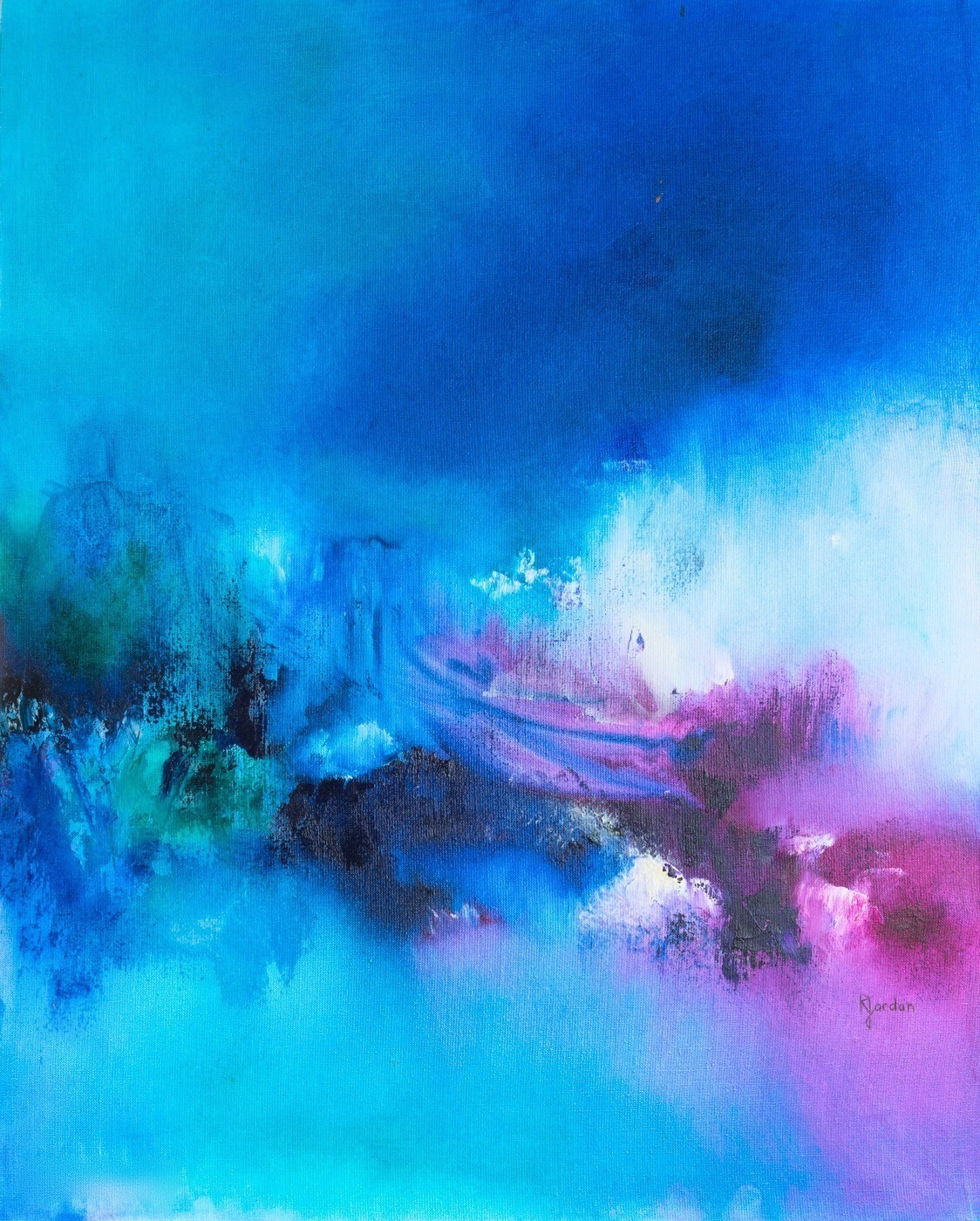
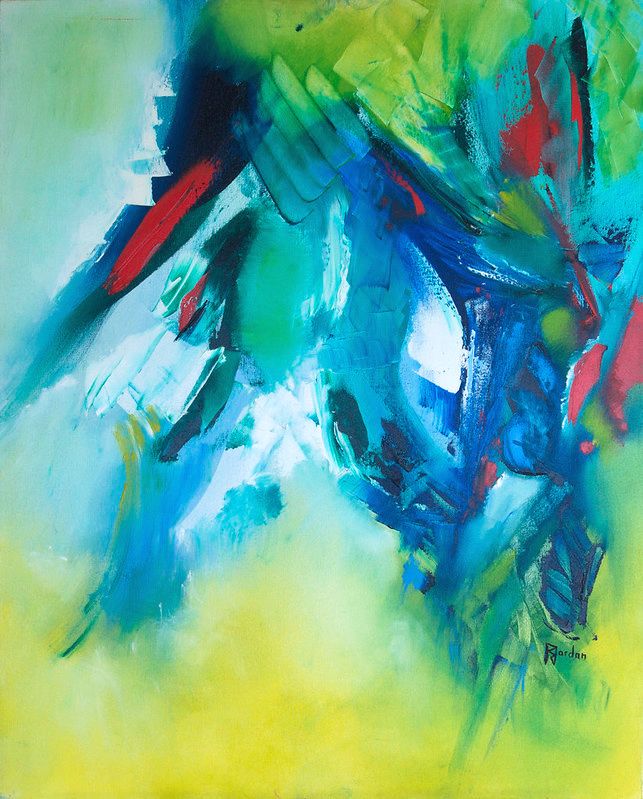
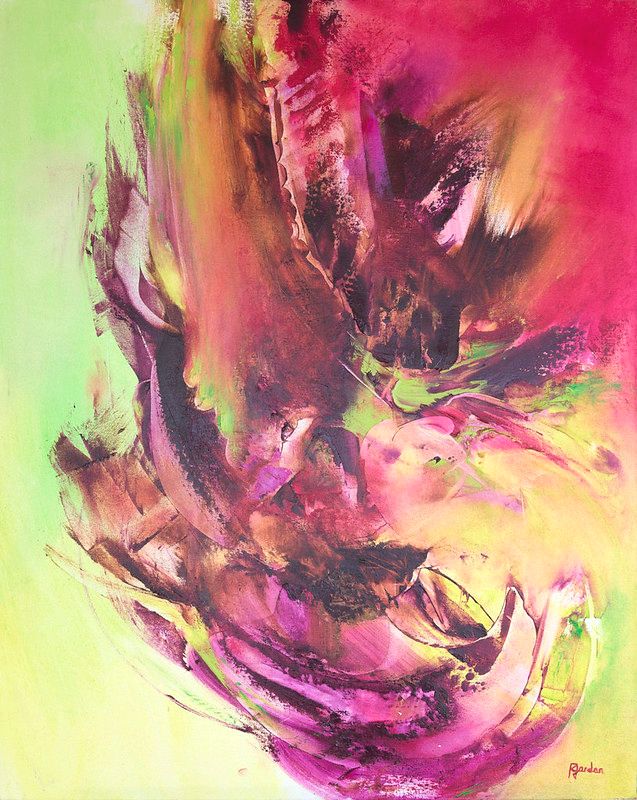
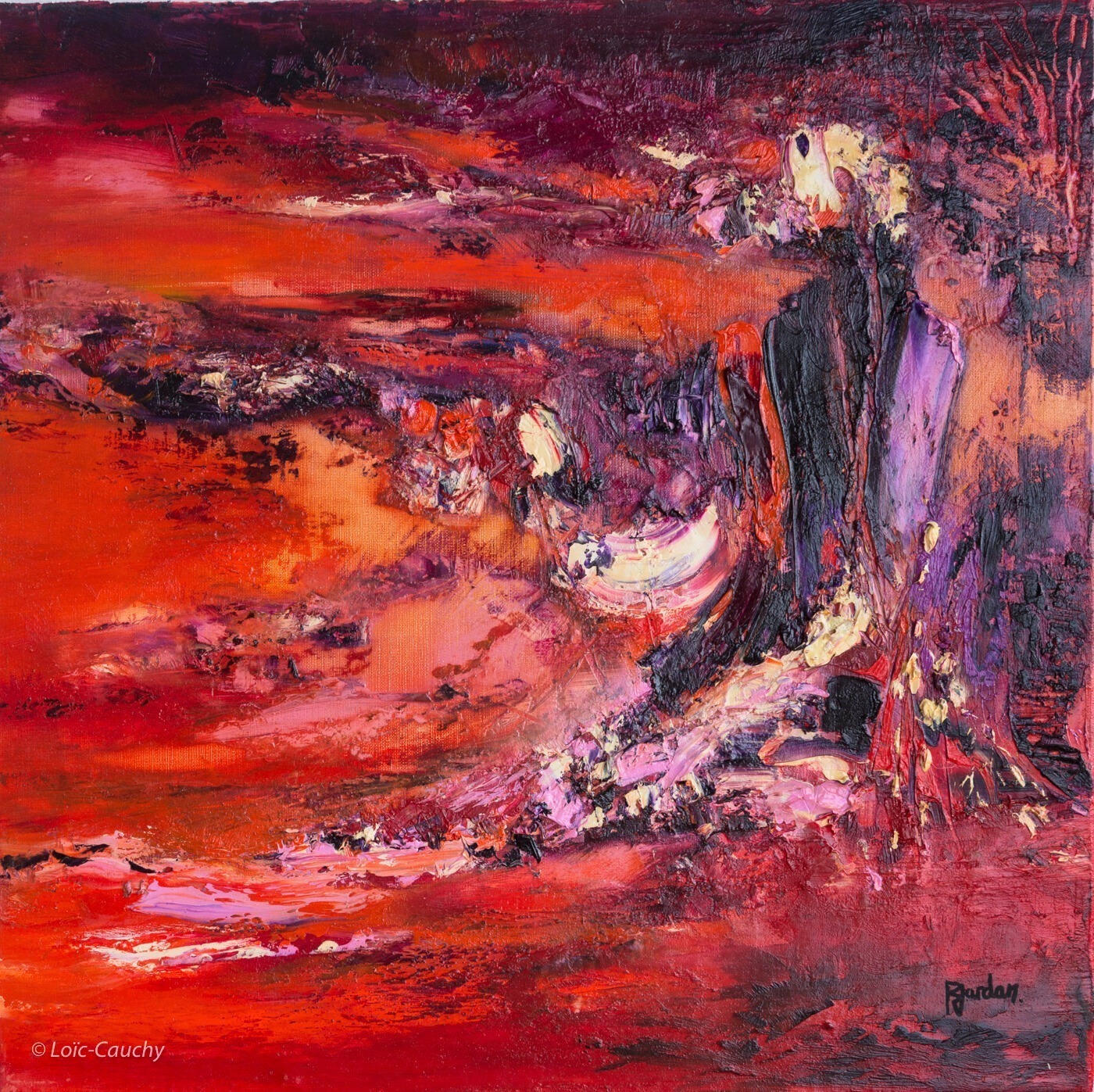
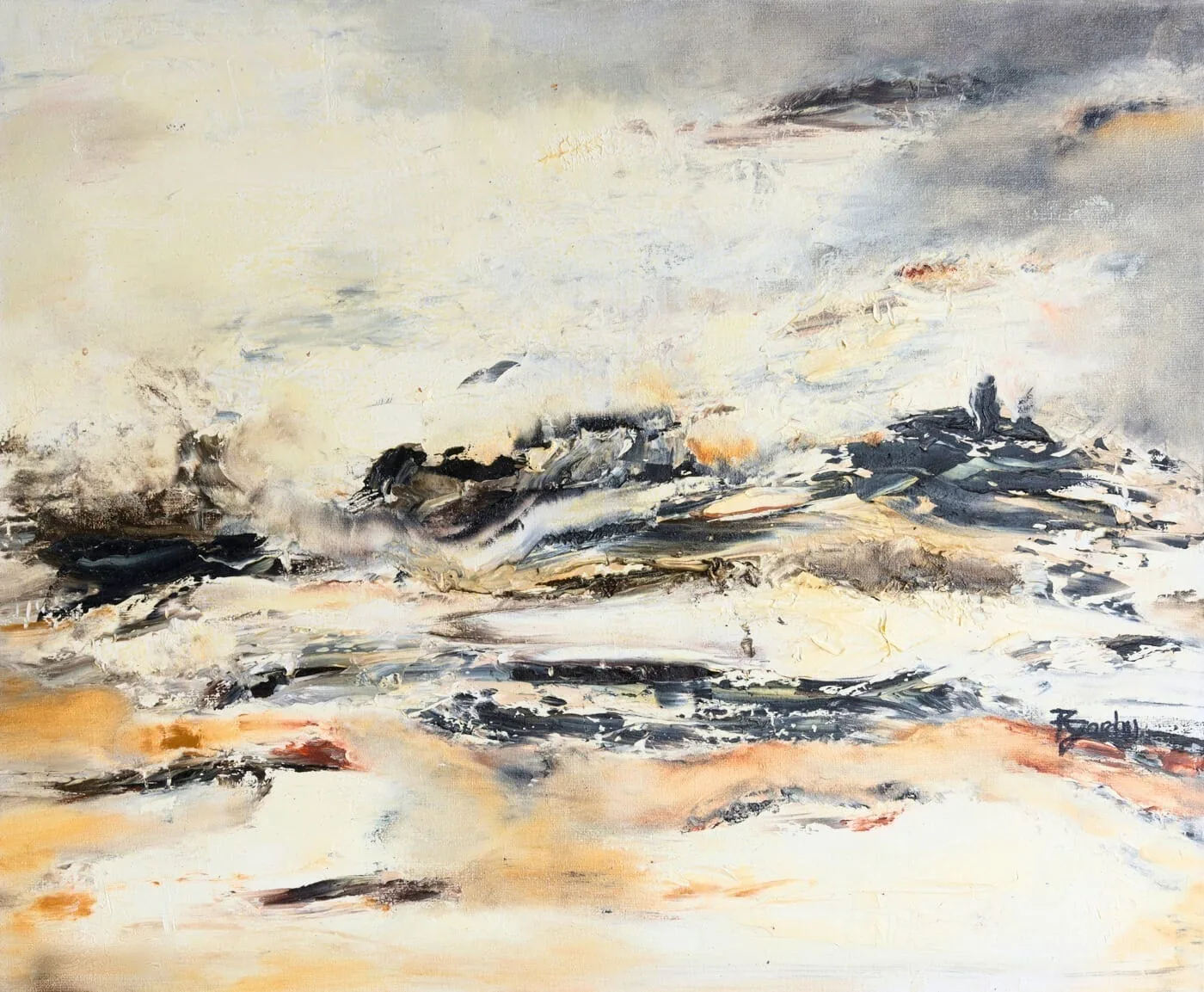
Here are the five elements in five of my mother's canvases, one per colour:



Why The Advice You Find Online Contradicts Itself
Look for the right colour for your living room and you will come across opposite answers. The reason lies in the schools. The compass school assigns an element to each real orientation of the room: south to fire and red, north to water and blue, east to wood and green. The Black Hat school, more widespread in the West, applies the same grid starting from the front door rather than from the cardinal points. Both exist, and they do not point at the same wall.
You do not have to settle that debate to get something out of it. Keep the question they both ask: what is missing from this room? A living room that is very white, very clean, very metal comes alive with wood or fire. A living room that is already warm, wooden and full of pattern breathes with water or metal.
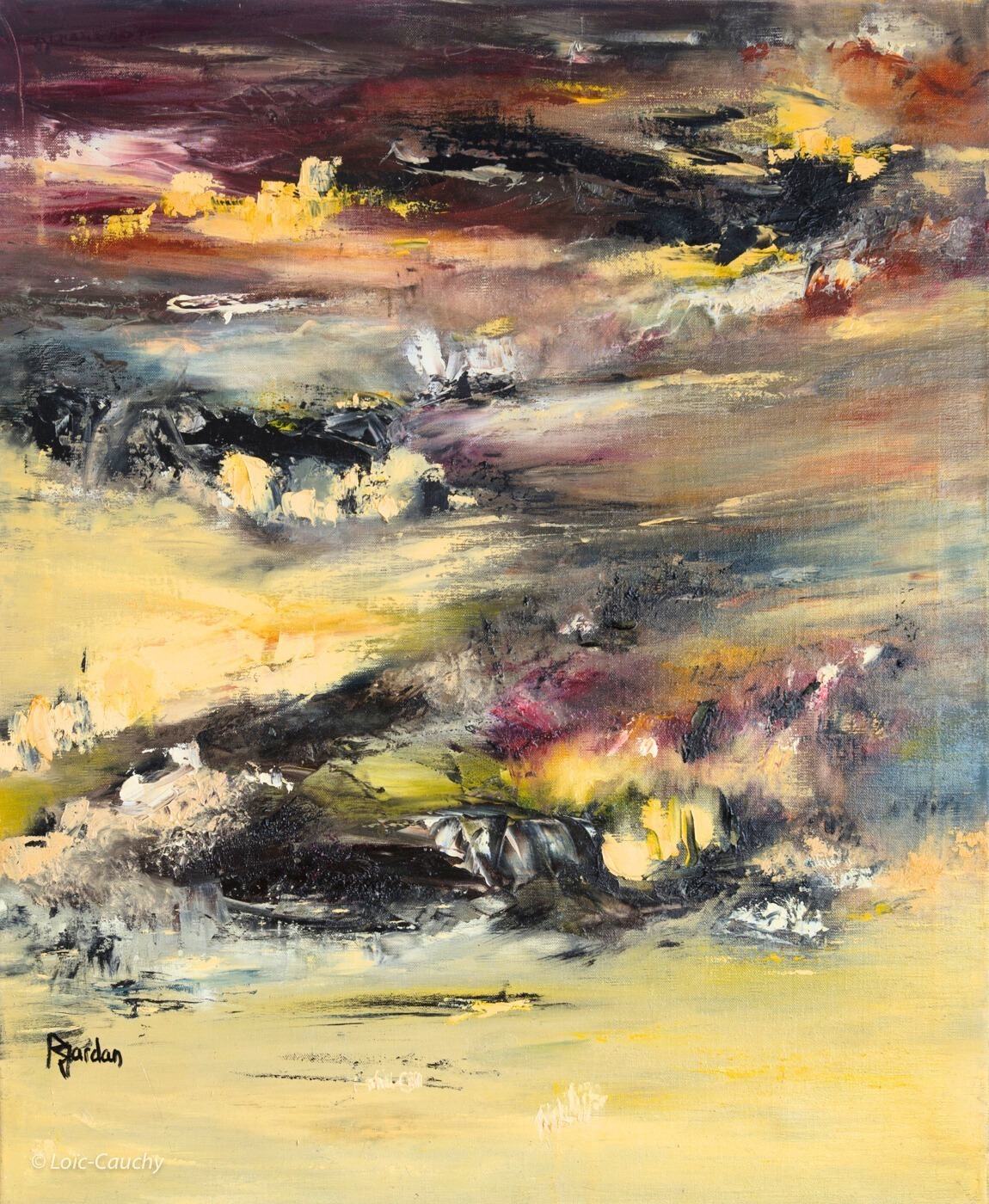
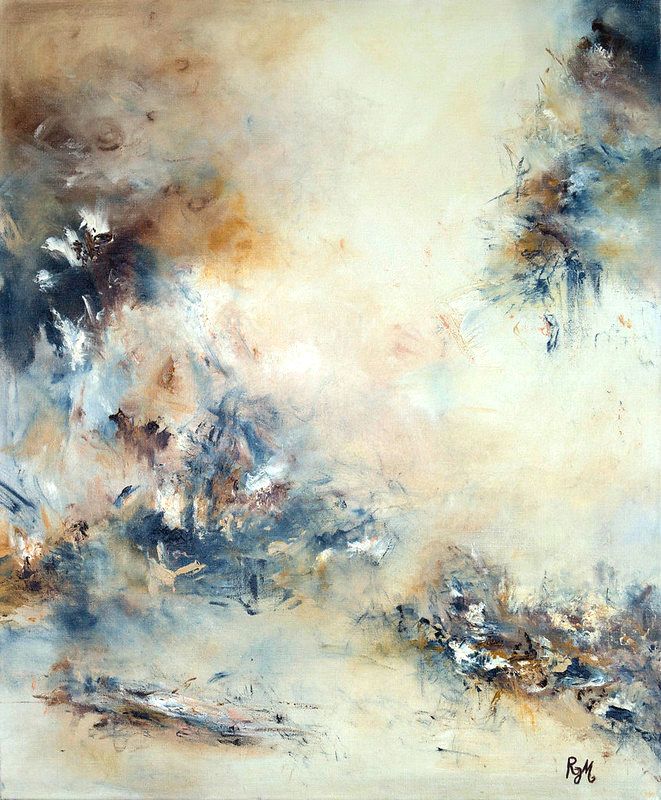
“Ying Yang” (60 × 73 cm) holds two elements in one canvas: the yellow of earth fills the ground, and almost black masses cross it like waves. Out of the two hundred and more canvases in the collection, it is the only one whose title names a Chinese idea.
A Canvas Rather Than A Repainted Wall
Painting a wall red to call in fire is a commitment: the colour then covers several square metres, and it stops moving. A canvas brings the same element in on a smaller surface, at eye level, and it can be moved the day the room changes purpose.
It also gives you a living colour rather than a flat one. My mother painted in oils, with a knife, and a red laid down that way holds several reds at once: morning light does not find the same thing in it as evening light. That is the felt side of what our article on colour psychology describes.
Start from the element your room is missing: green for wood, red for fire, yellow for earth, blue for water, and black and white when you need water and metal at once.
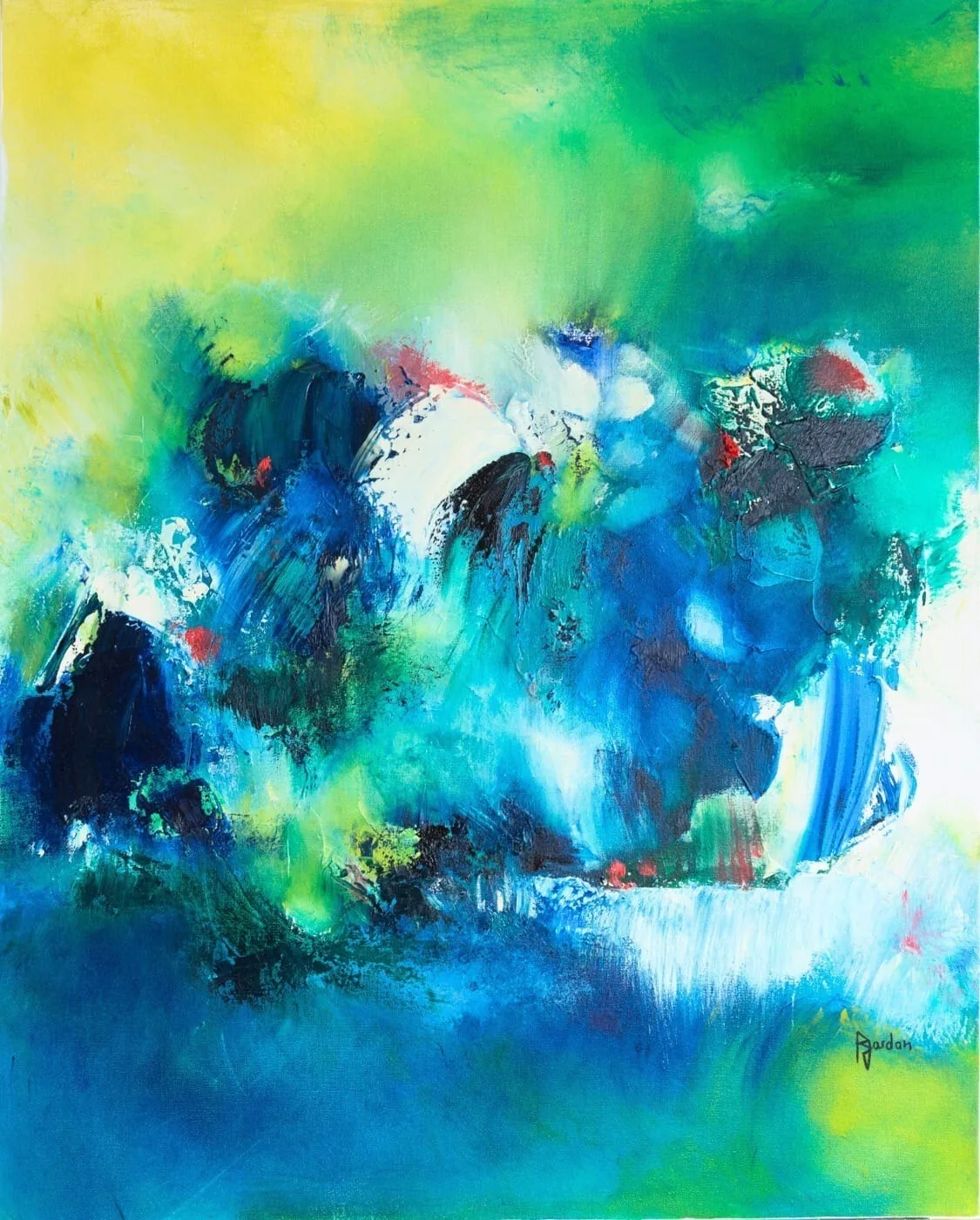
“Printemps” (65 × 80 cm) shows that cycle in a single image: greens rising out of a deep blue, under a yellow light. Water feeding wood, with a little earth above.
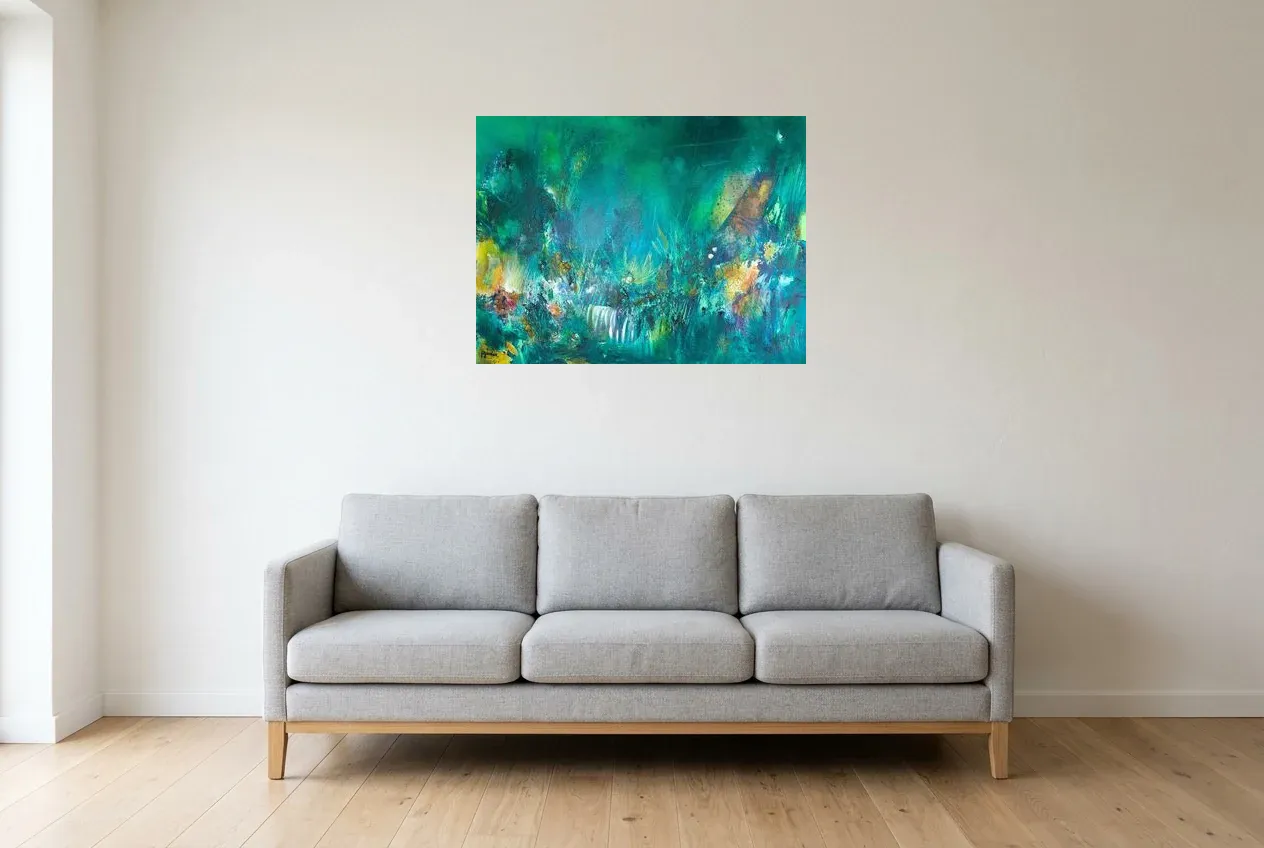
“I'm lucky enough to own a painting by Régine Gardan, very luminous and warm. It's a pleasure to look at it every day !”
Where To Hang It In The Living Room
The simplest rule fits in one line: at eye level, on the wall you see as you come in or from the main seat. Feng shui adds its taste for clear surfaces, since decluttering is one of its basic principles: a canvas breathes better alone on a stretch of wall than in the middle of a gallery of frames. The placement details are gathered on our page about abstract paintings in the living room, and the hanging method in how to hang a painting.
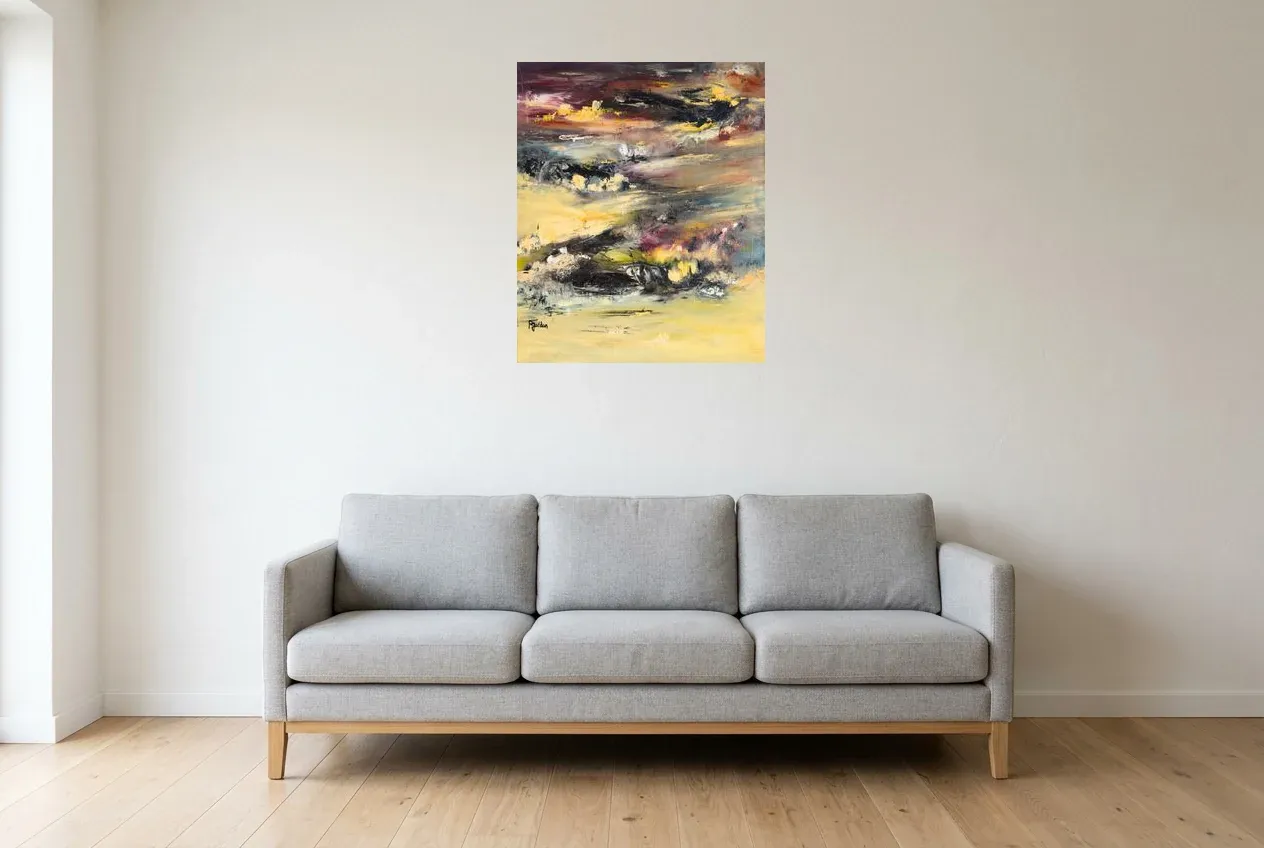
At one of her openings, Loïc Cauchy said this in front of my mother's canvases: “Go on, hang a work by Régine in your living room and you will see, every day for the next twenty or thirty years, it will talk to you, it will answer back, it will never wear out your eye, it will never push it away.” That is a fine definition of a room where something still circulates.
Frequently Asked Questions
Which Colour Should You Choose For A Feng Shui Living Room?
The colour of the element the room is missing. A light, mineral living room finds its balance with green (wood) or red (fire); a room that is already warm settles with blue (water) or white (metal). Tradition does not name one ideal colour that works for every living room.
Can You Apply Feng Shui Without Repainting?
Yes, and it is the most approachable place to start. A textile, an object and a canvas are enough to bring an element into the room, with no building work and no permanent decision.
Is Black Best Avoided In A Living Room?
In the grid of the five elements, black belongs to water, just as blue does, and it is associated with calm and depth. What tradition avoids is excess: a room that is entirely dark, like a room that is entirely red, leans to one side.
Should All Five Elements Appear In The Same Room?
Many practitioners recommend it, in measured doses: one dominant element, one or two in support, the others as touches. A multicoloured canvas does that on its own, since it carries several elements at once.
Bring In The Element That Is Missing
Look at your living room and name the colours that already dominate it. The element absent from that list is the one to go and find. Browse the collection: more than two hundred original canvases painted by hand, from green to blue. And if you are still hesitating, the guide to choosing a painting to match your personality gives you another way in.