Oil Or Acrylic Painting: Which To Choose For Your Canvas?
16 October 2026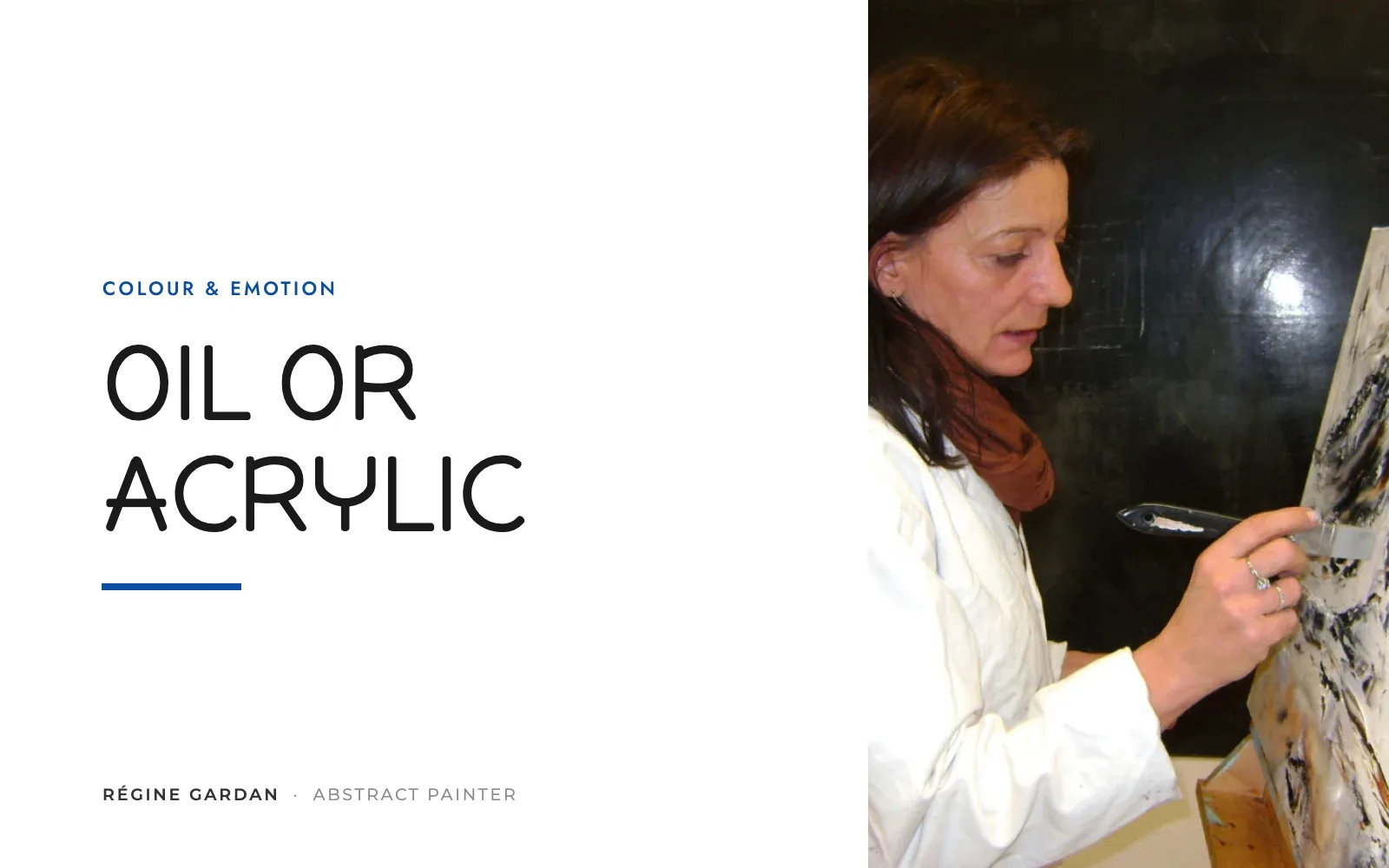
TL;DR
- Oil dries slowly on contact with air and allows blends; acrylic, bound by a resin, dries in under thirty minutes.
- 15th-century oils are still on display; acrylic dates from the 1950s and its ageing is only beginning to be understood.
- Acrylic stays flexible and cracks less, but it holds on to dust and turns brittle below zero.
- Régine Gardan's canvases are varnished oil paintings, worked mostly with a palette knife.
Hi, I'm Théo! My mum worked “in oil and mostly with a knife”, Le Courrier Liberté wrote on 12 June 2015, and every product page on this site says “oil on canvas”. If you are torn between an oil painting and an acrylic one, here is what museums and conservation institutes say about what matters once the canvas is in your home: the finish, the texture, time and care.

Régine Gardan
An Award-Winning Artist, 1964 - 2018
- 25+years of painting
- 200+hand-painted canvases
- 35+exhibitions
- 14awards & honours
Oil Or Acrylic: The Essentials In One Table
Each row is explained further down, with the institution that says it.
| Criterion | Oil | Acrylic |
|---|---|---|
| Drying | Slow, on contact with air | Fast, as the water evaporates |
| Finish | Blends and subtle shades | Can resemble watercolour as well as oil |
| Surface | Hardens over decades | Stays soft and holds on to dust |
| Track record | 15th-century works still on display | Appeared in the 1950s |
| Ageing | Tends to yellow and grows more brittle | Cracks less, but turns brittle below zero |
| Varnish | Protects against dirt and abrasion | Tricky: removing it can damage the paint |
The Finish: Blends On One Side, Fast-Drying Colour On The Other
Tate defines oil as a slow-drying paint: its pigments are suspended in a drying oil, most commonly linseed, which forms a tough, coloured film on exposure to air. That slow drying gives the painter time to build the picture gradually and correct it, and the colours blend well with each other, making subtle variations and effects of light and shadow possible.
Acrylic binds its pigments with a synthetic resin and dries as the water evaporates. The Smithsonian's Museum Conservation Institute (MCI) gives the order of magnitude: under thirty minutes, while oil is not dry to the touch for 48 hours. Depending on how much water is added, it can be used thinly or thickly, and Tate notes that it can then resemble watercolour, oil painting, or keep a character all of its own.
In front of a canvas, then, look at the transitions from one colour to the next: that is where the blends Tate associates with oil show.
Texture: Both Can Build Up In Relief
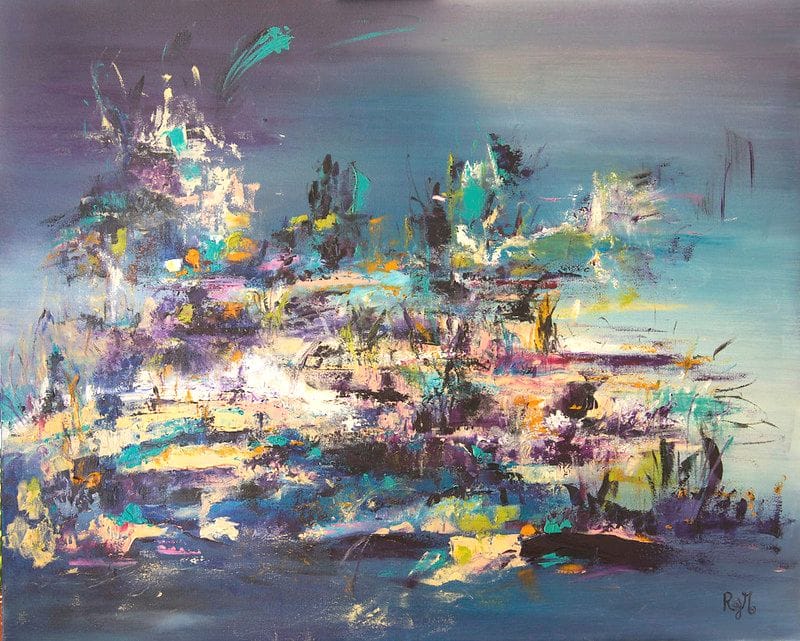
Relief alone will not tell you the technique. Tate notes that acrylic can be applied thickly or thinly depending on the water added, and that a diluted layer of oil is tack-free in a few days, while thicker layers, richer in oil, take longer. Look instead at how the paint was laid down.
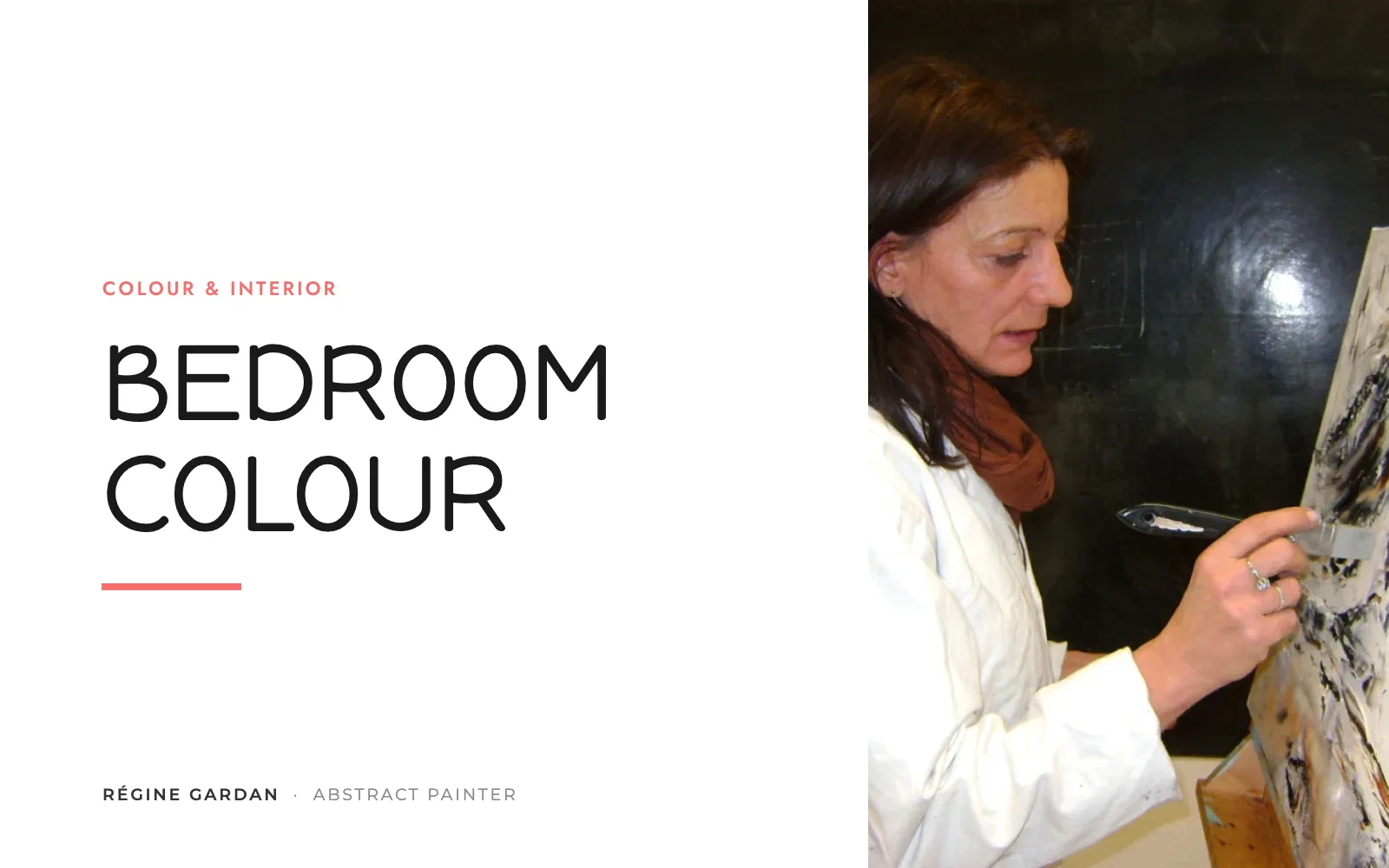
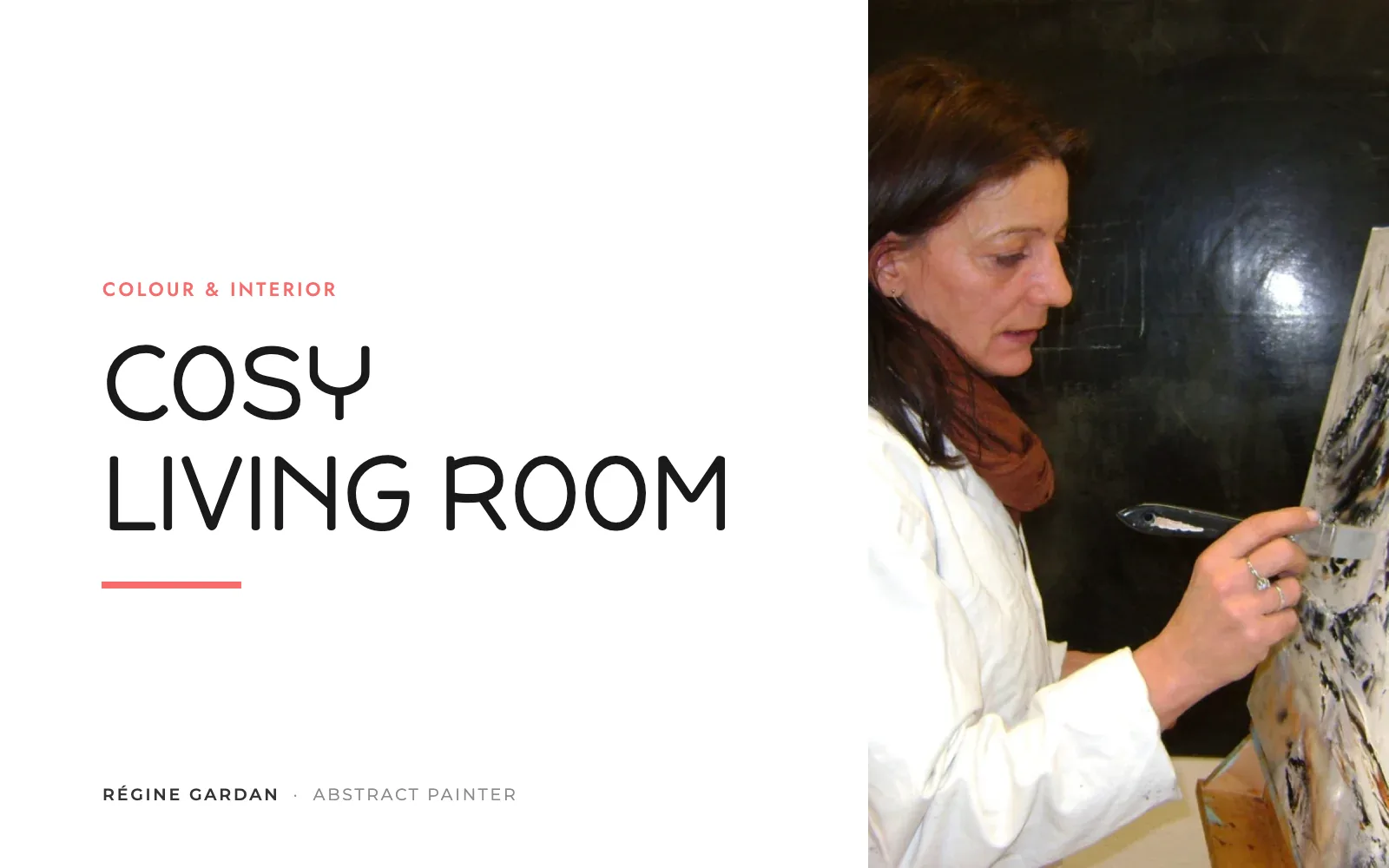
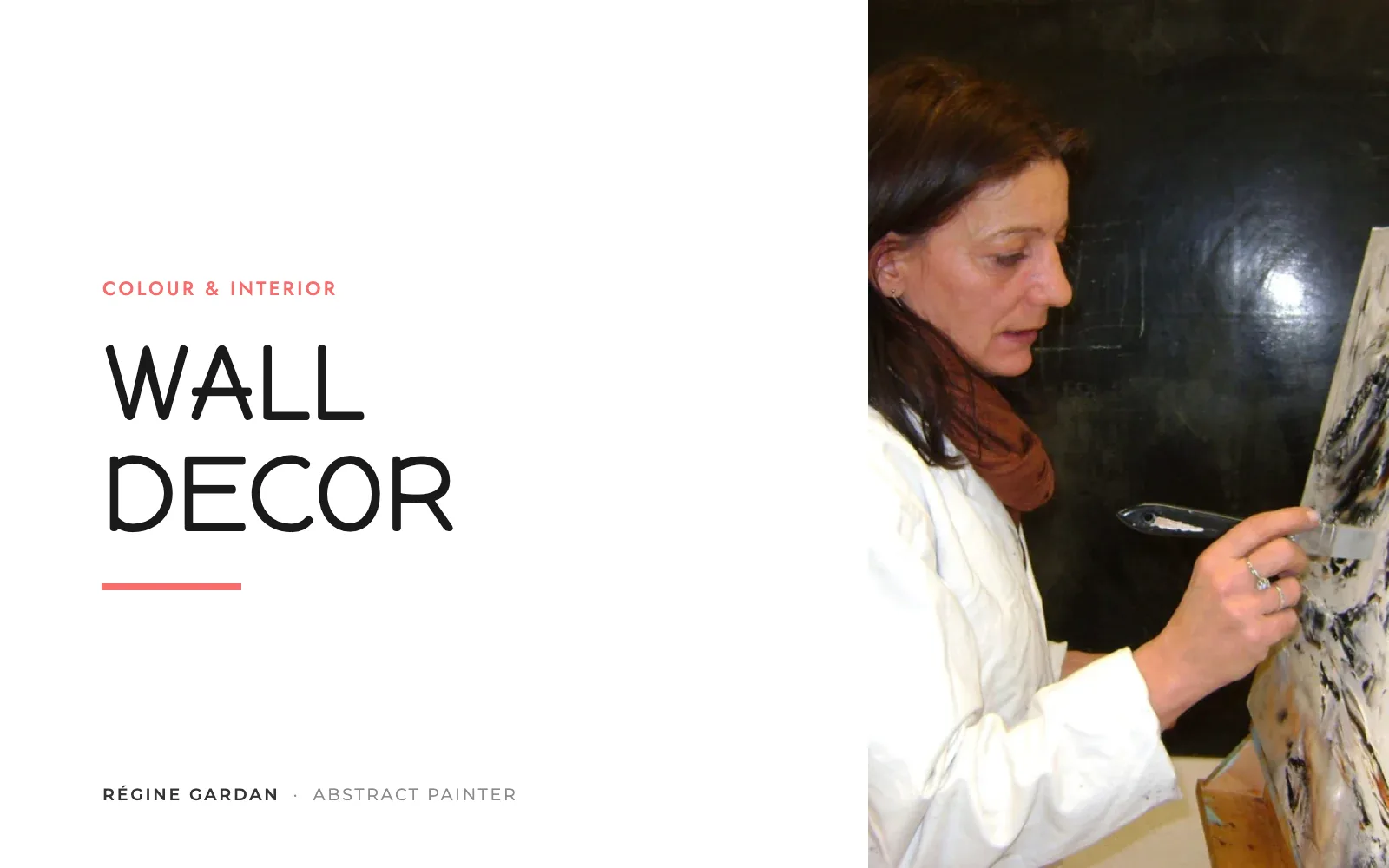
My mum started with figurative oil painting, five years at the Arc en ciel association, before moving to abstraction, as Vivre Villard reported in summer 2008. In the photos of her at work, she holds a painting knife with a broad, cranked blade. A text presenting her work put it in one sentence: “The knife stroke is incisive, inspired.”
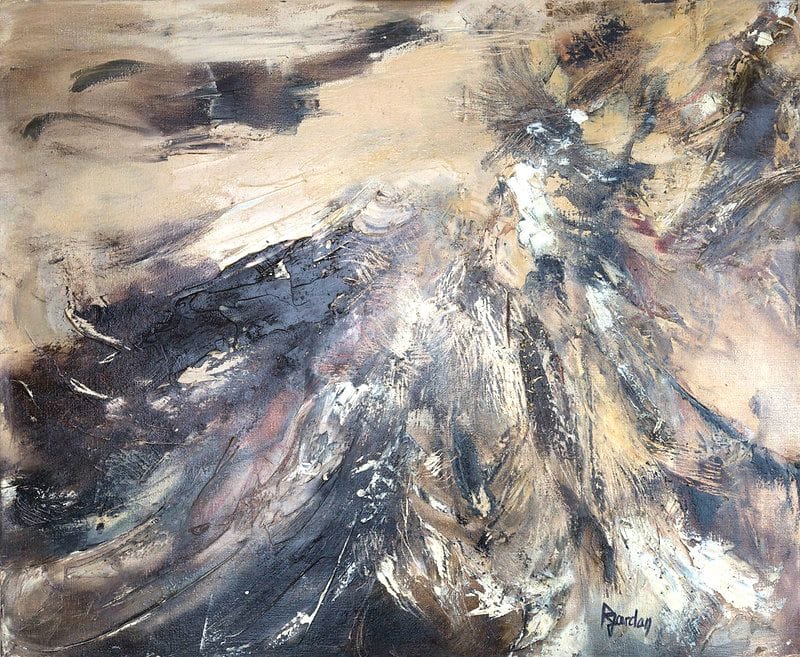
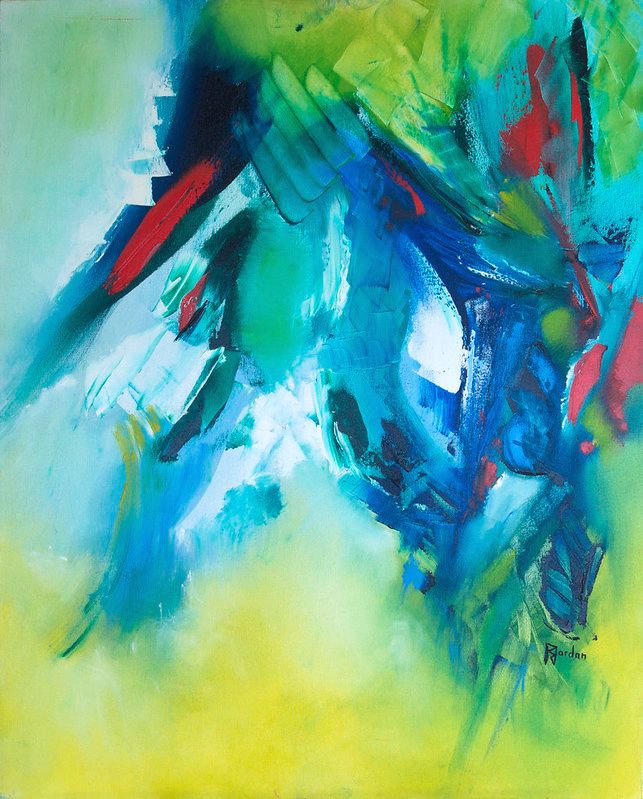
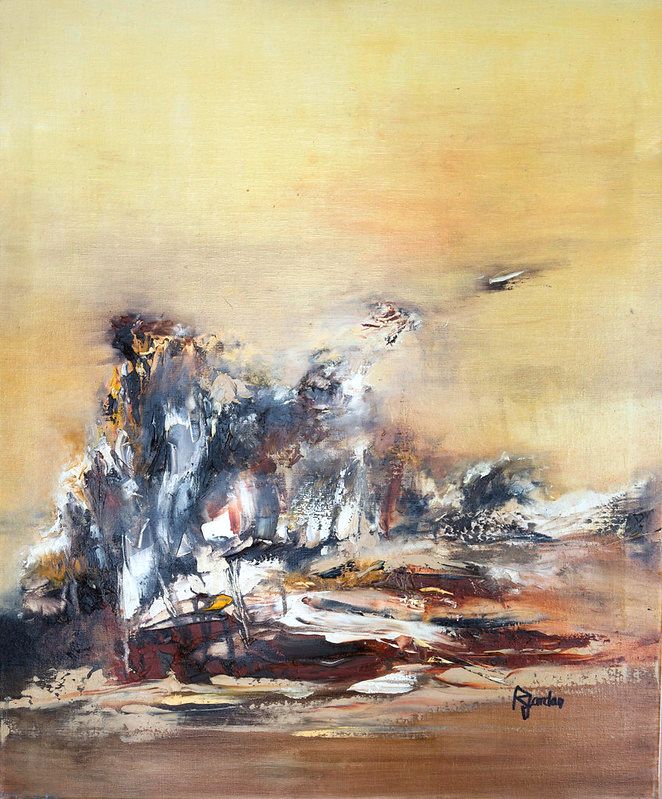
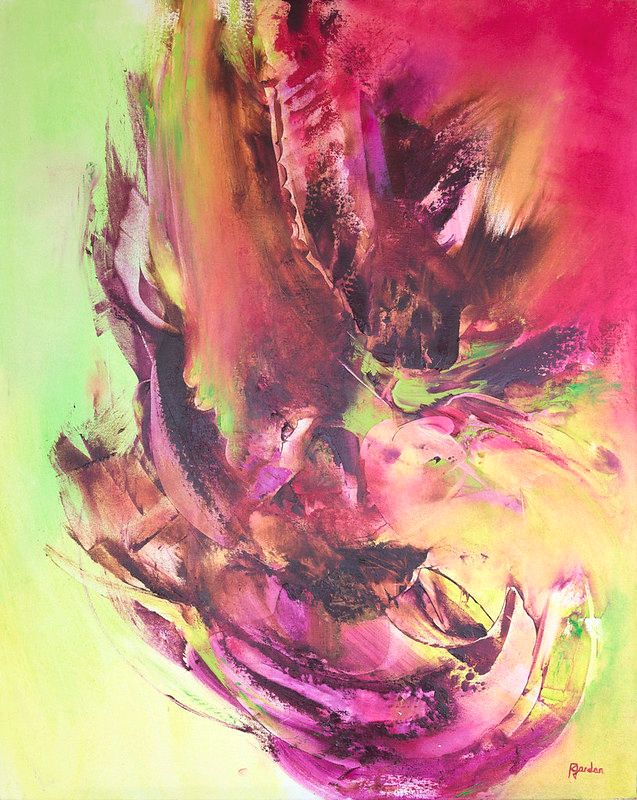
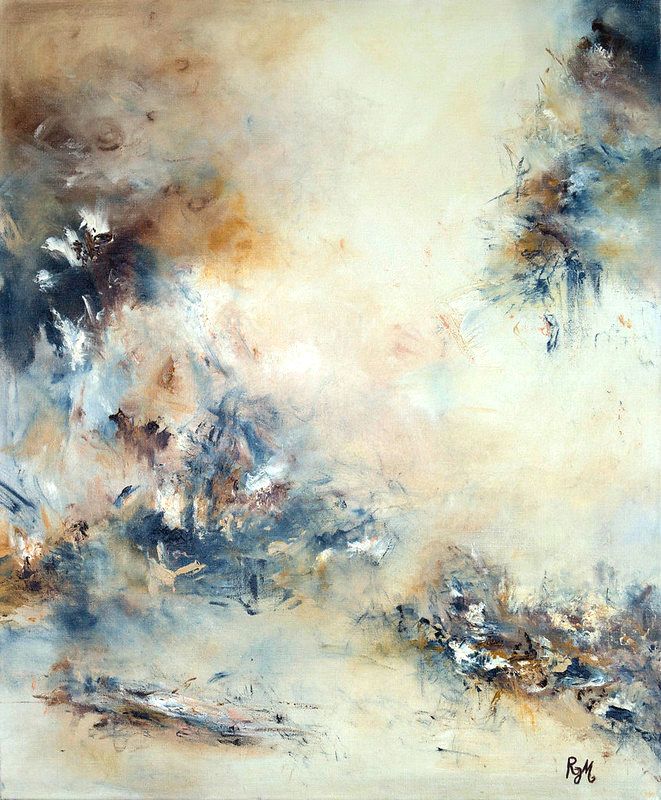
“Plumes”, “Reflets D’Étoiles” and “Paradoxe”, below, are among the fifteen canvases in the palette knife painting collection, chosen from the most textured in the catalogue. Their relief is best seen up close, as Anis Nedjar wrote after seeing some of the works in person:

“I was lucky enough to see a few of the works in person and they’re honestly stunning!”
Time: Nearly Six Centuries On One Side, The 1950s On The Other
At the Metropolitan Museum of Art in New York, Jan van Eyck's “The Crucifixion” and “The Last Judgment”, painted in oil around 1436-1438, are still on display. Artists' acrylic paint appeared in the 1950s, and the MCI writes that its ageing is only just beginning to be understood: for now, prevention seems to be the best care.
Time does not act the same way on both. According to Tate, oil keeps drying and grows harder over many decades. The Canadian Conservation Institute (CCI) adds that it becomes increasingly brittle with age and tends to yellow as its binder ages. Acrylic, being more flexible, is expected to crack much less often than oil, the MCI writes, but cracks do form, and the CCI notes that it remains prone to cracking when painted on canvas. Some acrylics develop a grey veil or yellow as they age, and below zero they become brittle and crack, a risk Museums Galleries Scotland also points out.
Care: A Surface That Hardens, Or A Surface That Stays Soft
An acrylic film is not as hard as an oil film, the MCI writes: at room temperature it stays soft, holds on to dust and dirt, and can even end up absorbing them. Fingernail pressure alone is enough to mark it. Museums Galleries Scotland adds that unvarnished surfaces, especially acrylic, attract and absorb dust until it becomes engrained, sometimes irreversibly. The MCI writes that there is currently no fully acceptable way to clean an acrylic painting, and mentions protective framing as a good way to keep dirt out.
Varnish protects the paint from dirt, abrasion and moisture and gives the colours saturation, according to the MCI, which adds that surface dirt is considered easier to remove from a varnished painting. Varnishing an acrylic is problematic, though: the solvents needed to remove such varnishes can damage the paint layer, and many artists insist on leaving their acrylics unvarnished. Every one of my mum's canvases is protected by a varnish. Over the years a varnish can yellow, markedly if it is made from natural resin, Museums Galleries Scotland notes: removing it is then a job for a conservator.
For dust, the MCI describes a simple routine for paintings: a clean, soft, natural-hair artist's brush, 3.5 to 5 cm wide, passed slowly, provided nothing is loose or flaking. Never a cloth, dry or damp, a stiff brush or a feather duster: threads can catch on raised paint, and stiff bristles and feathers can scratch the surface. Museums Galleries Scotland, which advises collections, goes further and recommends leaving the surface alone, even for dust, without expert advice. Finally, the CCI warns that cleaning with water or solvents without the right knowledge can have serious consequences.
What About Price?
None of the institutions cited here compares the price of an oil painting with that of an acrylic. On this site the question works differently: every canvas is an oil painted by hand, and its price, shown on each product page, varies first with the size.
So, Oil Or Acrylic?
Choose oil if you love blends and subtle shades, if you want a surface that hardens over the years and is protected by a varnish, and a technique with 15th-century works still on display.
Choose acrylic if the work that moves you is painted in acrylic, if you prefer a more flexible surface that cracks less, and if the canvas will live sheltered from frost and dust, or behind protective framing.
Either way, look at the canvas up close before you look at its technique.
Frequently Asked Questions
How Can You Tell An Oil Painting From An Acrylic?
By eye, not always: Tate points out that acrylic can resemble oil painting. The safest guide is the information the seller gives. Here, every product page says “oil on canvas”, and every canvas comes with its certificate of authenticity.
Palette Knife Painting: Oil Or Acrylic?
Both can be applied thickly, and Tate notes that a thick layer of oil takes longer to dry than a diluted one. My mum worked “in oil and mostly with a knife”: her most textured canvases are gathered in the palette knife painting collection.
How Do You Clean An Oil Painting?
For dust, a soft natural-hair brush, passed slowly and only if nothing is flaking, according to the MCI; never a cloth or a feather duster. For yellowed varnish or a stain, a conservator: the CCI warns against cleaning with water or solvents without the right knowledge.
See The Texture Up Close
My mum started with oil, and it was in the oil category that she won first prize at the Salagnon arts salon in 2014. If a canvas catches your eye, browse all the works or discover Régine Gardan's story.